TAAT e-catalog
for
government
https://e-catalogs.taat-africa.org/gov/technologies/bean-flour-and-flour-products-bean-processing-process
Bean Flour Made Easy
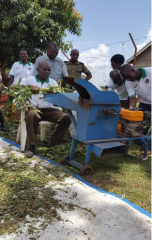
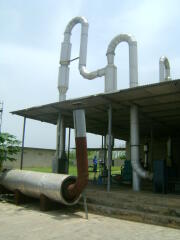
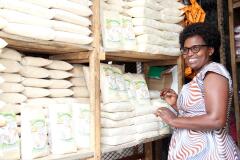
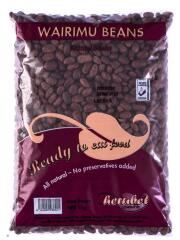
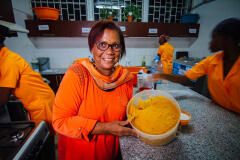
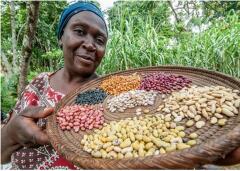
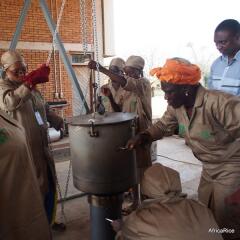
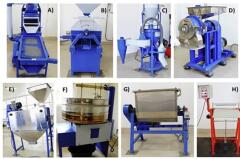
Bean flour and flour-based products" technology is a set of machines that facilitates the production of flour derived from common beans. It transforms whole beans into a finely ground, powdery form that can be used in the creation of a diverse range of food products. This technology improves the digestibility and nutritional qualities of common beans, increasing their appeal to consumers. It also extends the shelf life of bean products, and offers economic opportunities to farmers and entrepreneurs by creating a lucrative market for bean flour and related food products. The technology is applicable to both rural and urban communities, and can be implemented using a range of equipment, from small manual systems for cottage-level production to larger automated facilities for industrial-scale processing. It plays a key role in improving food self-sufficiency, business development and the overall use of common beans in a variety of food products.
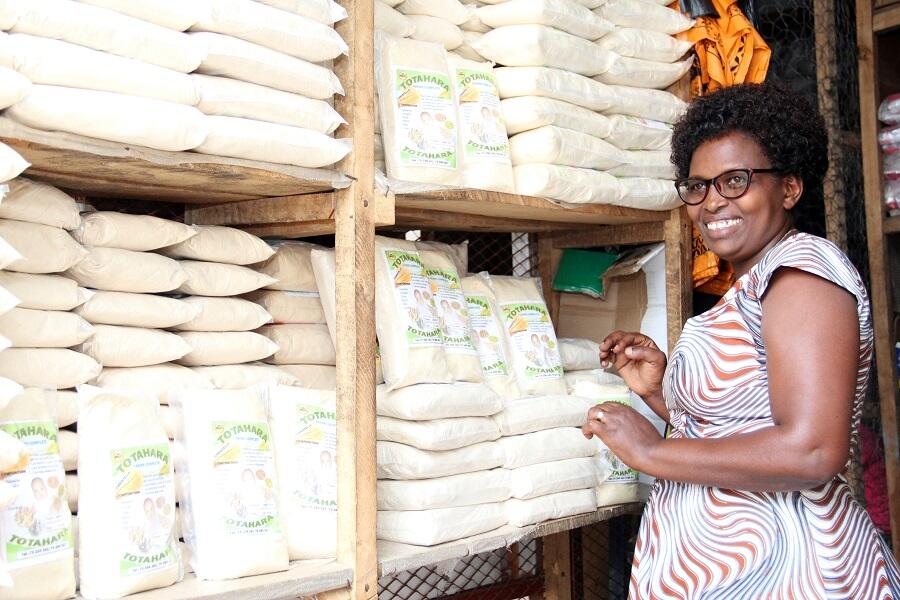
This technology is TAAT1 validated.
Adults 18 and over: Positive high
The poor: Positive low
Under 18: Positive low
Women: Positive high
Climate adaptability: Highly adaptable
Farmer climate change readiness: Significant improvement
Environmental health: Moderately improves environmental health
Soil quality: Does not affect soil health and fertility
Water use: Same amount of water used
Biodiversity: Not verified
Carbon footprint: More carbon released
Limited utilization of common beans: Long cooking times and high energy requirements reduce the convenience and wider consumption of beans.
Nutritional and digestibility constraints: Inadequate processing can limit nutrient bioavailability and make beans more difficult to digest and consume.
Limited local value addition: Limited diversification of processed bean products constrains opportunities to increase the use and market value of locally produced beans.
Bean flour per kg
Soaking tanks of 500 liter
Mills with a capacity of 300 kg hour-1
Open source / open access
Scaling Readiness describes how complete a technology's development is and its ability to be scaled. It produces a score that measures a technology's readiness along two axes: the level of maturity of the idea itself, and the level to which the technology has been used so far.
Each axis goes from 0 to 9 where 9 is the “ready-to-scale” status. For each technology profile in the e-catalogs we have documented the scaling readiness status from evidence given by the technology providers. The e-catalogs only showcase technologies for which the scaling readiness score is at least 8 for maturity of the idea and 7 for the level of use.
The graph below represents visually the scaling readiness status for this technology, you can see the label of each level by hovering your mouse cursor on the number.
Read more about scaling readiness ›
Semi-controlled environment: prototype
Common use by projects NOT connected to technology provider
| Maturity of the idea | Level of use | |||||||||
| 9 | ||||||||||
| 8 | ||||||||||
| 7 | ||||||||||
| 6 | ||||||||||
| 5 | ||||||||||
| 4 | ||||||||||
| 3 | ||||||||||
| 2 | ||||||||||
| 1 | ||||||||||
| 1 | 2 | 3 | 4 | 5 | 6 | 7 | 8 | 9 | ||
| Project | Countries | Beneficiaries | Budget (USD) & duration | Key figures |
|---|---|---|---|---|
|
ENSURE Enabling Environments for Sustainable Regional Agriculture Extension |
|
|
13.14 million 2024–2027 |
|
Figures in italic are from project plans and may change during implementation.
| Country | Testing ongoing | Tested | Adopted |
|---|---|---|---|
| Benin | –No ongoing testing | Tested | Adopted |
| Burkina Faso | –No ongoing testing | Tested | Adopted |
| Burundi | –No ongoing testing | Tested | Adopted |
| Central African Republic | –No ongoing testing | Tested | Adopted |
| Côte d’Ivoire | –No ongoing testing | Tested | Adopted |
| Democratic Republic of the Congo | –No ongoing testing | Tested | Adopted |
| Ethiopia | –No ongoing testing | Tested | Adopted |
| Kenya | –No ongoing testing | Tested | Adopted |
| Malawi | –No ongoing testing | Tested | Adopted |
| Nigeria | –No ongoing testing | Tested | Adopted |
| Rwanda | –No ongoing testing | Tested | Adopted |
| Senegal | –No ongoing testing | Tested | Adopted |
| Tanzania | –No ongoing testing | Tested | Adopted |
| Uganda | –No ongoing testing | Tested | Adopted |
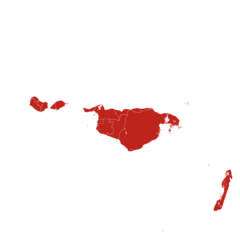
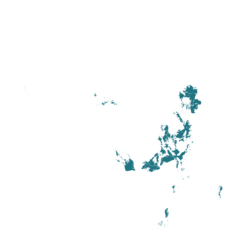
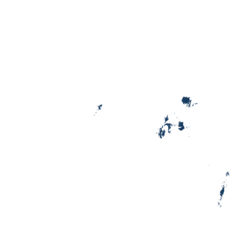
This technology can be used in the colored agro-ecological zones. Any zones shown in white are not suitable for this technology.
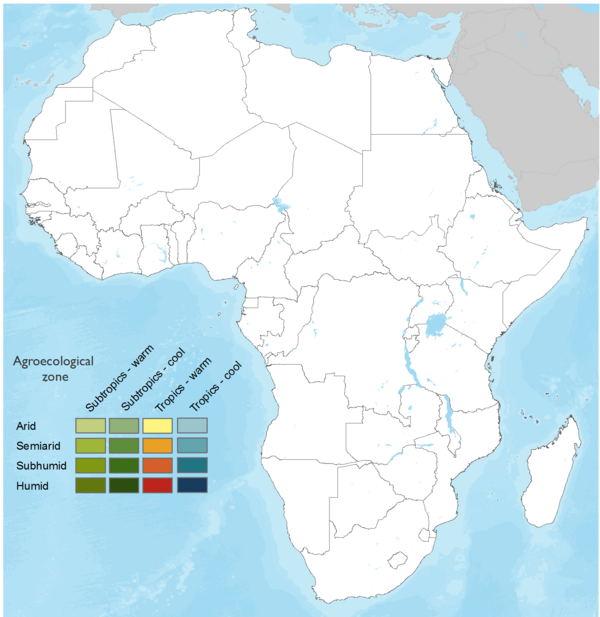




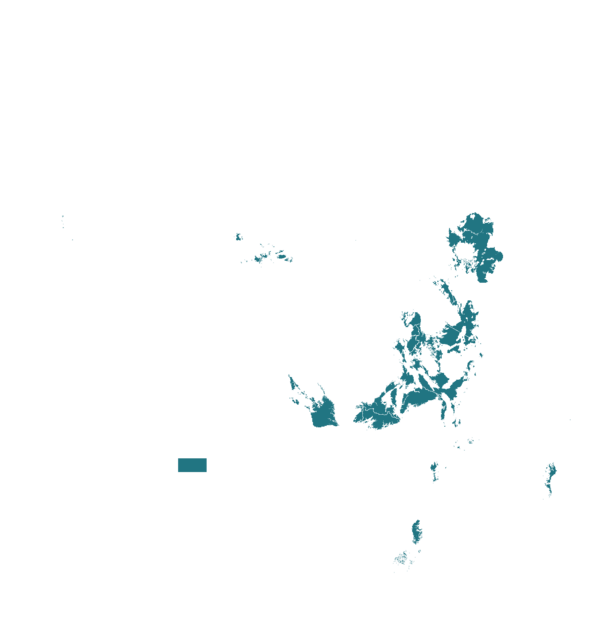

| AEZ | Subtropic - warm | Subtropic - cool | Tropic - warm | Tropic - cool |
|---|---|---|---|---|
| Arid | – | – | – | – |
| Semiarid | – | – | – | – |
| Subhumid | – | – | ||
| Humid |
Source: HarvestChoice/IFPRI 2009
The United Nations Sustainable Development Goals that are applicable to this technology.


The following steps are required to make most of bean flour for a wide range of culinary applications and food products, adding nutritional value and diversity to your cooking.
1. Choose Your Bean Flour: Select bean flour produced through either wet or dry milling, depending on your intended use.
2. Decide on Your Recipe: Determine the recipe or food product you want to prepare using bean flour.
3. Baking and Cooking: For Baking (Bread, Pastry, Porridge), If you're making bread, pastry, or porridge, use bean flour as an all-purpose, gluten-free ingredient. Blend it with cereal flour to achieve the desired texture and taste.
4. Food Texturing: For Food Texturing (Crisps, Pasta), Use pure bean flour as a texturing ingredient for crisps and pasta to enhance their texture and nutritional value.
5. Thickening Soups, Sauces, and Beverages: For Thickening (Soups, Sauces, Beverages), Incorporate bean flour as a thickener for soups, sauces, and beverages to add body and creaminess to your dishes.
6. Meat Analogues: For Meat Analogues (Protein Replacement), Utilize bean flour as a protein replacement in meat analogues, enhancing their nutritional content and making them suitable for vegetarians and vegans.
Last updated on Sep 22, 2026
This technology can be used in the colored agro-ecological zones.





Bean Flour and Flour Products: Bean processing process
https://e-catalogs.taat-africa.org/gov/technologies/bean-flour-and-flour-products-bean-processing-process
Last updated on 22 September 2026, printed on Sep 24, 2026
Enquiries e-catalogs@taat.africa