TAAT e-catalog
for
Development partners
https://e-catalogs.taat-africa.org/org/technologies/good-agronomic-practices-for-soybean-production-a-package-for-enhanced-yields-across-the-value-chain
Practical knowledge for profitable soybean farming!
This set of Good Agricultural Practices (GAPs) for soybean production aimed at strengthening smallholder resilience, improving productivity, and promoting sustainable and safe food systems. The GAPs focus on sustainable soil fertility management through nitrogen fixation and targeted fertilizer use, alongside crop rotation and integration of soybean into cereal-based systems. They also promote efficient resource use, environmentally friendly practices such as minimum tillage and residue retention, and safe management of pests and diseases. It includes guidance on harvesting, drying, storage, and basic processing methods to reduce losses, improve quality, and support local value addition.

This technology is pre-validated.
| Project | Countries | Beneficiaries | Budget (USD) & duration | Key figures |
|---|---|---|---|---|
|
ZEFPF Emergency Food Production Facility |
|
|
20.89 million 2022–2025 |
|
Figures in italic are from project plans and may change during implementation.
|
Target groups |
Positives impacts |
|
Smallholder Farmers with Limited Resources |
· Increased yields and income through adoption of improved varieties and better agronomic practices. · Reduced input costs over time due to biological nitrogen fixation (less dependence on nitrogen fertilizers). · Improved resilience through better soil fertility management and crop diversification (e.g., rotation with cereals). |
|
Women Farmers with low literacy |
· Improved access to knowledge and skills, enabling better farm management and productivity. · Income-generating opportunities through soybean production and value addition (e.g., milk, flour, oil). · Reduced labor burden over time through improved practices such as optimal spacing and better weed management strategies. |
|
Farmers in Poor Soil and High-Risk Agro-Ecological Areas |
· Improved soil fertility through nitrogen fixation and integration of soybean into cropping systems. · Enhanced productivity in marginal conditions using adapted and early-maturing soybean varieties. · Greater climate resilience through adoption of climate-smart practices and diversified farming systems. |
Farmer climate change readiness: Significant improvement
It helps farmers in resolving climate challenges
Biodiversity: Positive impact on biodiversity
This helps improve nature, with most positive impacts on plants and animals being a good source of protein for animal feeds
Soil quality: Improves soil health and fertility
The crop on its own helps ameliorate the soil health and fertility by fixing more of atmospherics nitrogen into the soil for the benefit of the plants, soil microbes and soil organism
These GAPs for soybean production are structured, capacity-building intervention that strengthens soybean-based farming systems by promoting climate-smart practices, improved productivity, and sustainable resource management. It contributes to key Sustainable Development Goals (SDGs), including SDG 2 by increasing food production and access to plant-based protein; SDG 1 by improving farmer incomes; and SDG 13 through sustainable soil management and nitrogen fixation.
To successfully integrate this approach into a development program, the following prerequisites should be considered:
Define target beneficiaries and delivery structure
Identify target farmer groups (e.g., smallholders, cooperatives) and define the number of extension agents or facilitators required to ensure effective training and outreach.
Establish partnerships with technical institutions
Collaborate with research organizations (e.g., IITA) and local implementing partners to access validated training modules, technical expertise, and field support.
Allocate adequate financial resources
Budget for training delivery, demonstration plots, extension services, inputs, monitoring activities, and knowledge dissemination.
Integrate awareness and community engagement strategies
Conduct sensitization campaigns to ensure farmers understand the benefits of soybean production, good practices, and participation in the program.
Ensure access to inputs and enabling services
Facilitate availability of improved seeds, inoculants, fertilizers, and advisory services to support adoption at scale.
Design monitoring, learning, and scaling mechanisms
Establish systems to track adoption, measure impact (productivity, income, soil fertility), and support scaling through farmer networks and institutional learning.
No formal IP rights
Scaling Readiness describes how complete a technology's development is and its ability to be scaled. It produces a score that measures a technology's readiness along two axes: the level of maturity of the idea itself, and the level to which the technology has been used so far.
Each axis goes from 0 to 9 where 9 is the “ready-to-scale” status. For each technology profile in the e-catalogs we have documented the scaling readiness status from evidence given by the technology providers. The e-catalogs only showcase technologies for which the scaling readiness score is at least 8 for maturity of the idea and 7 for the level of use.
The graph below represents visually the scaling readiness status for this technology, you can see the label of each level by hovering your mouse cursor on the number.
Read more about scaling readiness ›
Uncontrolled environment: tested
Common use by projects NOT connected to technology provider
| Maturity of the idea | Level of use | |||||||||
| 9 | ||||||||||
| 8 | ||||||||||
| 7 | ||||||||||
| 6 | ||||||||||
| 5 | ||||||||||
| 4 | ||||||||||
| 3 | ||||||||||
| 2 | ||||||||||
| 1 | ||||||||||
| 1 | 2 | 3 | 4 | 5 | 6 | 7 | 8 | 9 | ||
| Project | Countries | Beneficiaries | Budget (USD) & duration | Key figures |
|---|---|---|---|---|
|
ZEFPF Emergency Food Production Facility |
|
|
20.89 million 2022–2025 |
|
Figures in italic are from project plans and may change during implementation.
|
Target groups |
Positives impacts |
|
Smallholder Farmers with Limited Resources |
· Increased yields and income through adoption of improved varieties and better agronomic practices. · Reduced input costs over time due to biological nitrogen fixation (less dependence on nitrogen fertilizers). · Improved resilience through better soil fertility management and crop diversification (e.g., rotation with cereals). |
|
Women Farmers with low literacy |
· Improved access to knowledge and skills, enabling better farm management and productivity. · Income-generating opportunities through soybean production and value addition (e.g., milk, flour, oil). · Reduced labor burden over time through improved practices such as optimal spacing and better weed management strategies. |
|
Farmers in Poor Soil and High-Risk Agro-Ecological Areas |
· Improved soil fertility through nitrogen fixation and integration of soybean into cropping systems. · Enhanced productivity in marginal conditions using adapted and early-maturing soybean varieties. · Greater climate resilience through adoption of climate-smart practices and diversified farming systems. |
|
Target groups |
Unintended impacts |
Mitigation measures |
|
Smallholder Farmers with Limited Resources |
· Exclusion risk if farmers cannot afford inputs (improved seeds, inoculants, fertilizers). · Financial strain from adopting recommended practices without guaranteed returns. · Unequal benefits if better-resourced farmers adopt faster. |
· Facilitate access to inputs through subsidies, credit schemes, or group purchasing. · Promote low-cost and phased adoption options (e.g., prioritizing key practices first). · Target support to the most vulnerable farmers through inclusive selection criteria and monitoring. |
|
Women Farmers with low literacy |
· Increased labor burden, especially from manual weeding and farm operations. · Limited participation due to time constraints or restricted access to training sessions. · Risk of reduced control over income as soybean becomes more profitable. |
· Promote labor-saving practices (e.g., improved spacing, appropriate weed control methods). · Ensure inclusive training design (flexible schedules, local delivery, targeted outreach). · Support women’s access to markets and income control, including through group organization. |
|
Farmers in Poor Soil and High-Risk Agro-Ecological Areas |
· Low or variable returns if practices are not well adapted to local conditions. · Adoption failure risk due to climate variability (e.g., rainfall uncertainty). · Over-reliance on recommended inputs without sufficient soil or climate adaptation. |
· Promote locally adapted varieties and context-specific recommendations. · Integrate risk-reducing practices (e.g., crop rotation, early maturing varieties). · Provide continuous advisory support to adjust practices based on local conditions. |
|
Target groups |
Adoption Barriers |
Mitigation measures |
|
Smallholder Farmers with Limited Resources |
· Limited financial capacity to purchase improved seeds, inoculants, and fertilizers · Low access to extension services and technical guidance · Risk aversion due to uncertainty about returns |
· Provide input support mechanisms (subsidies, credit, group purchasing) · Strengthen extension and advisory services for continuous support · Promote stepwise adoption of practices to reduce financial risk |
|
Women Farmers with low literacy |
· Limited access to land, inputs, and training opportunities · Time constraints due to household responsibilities · Lower participation in decision-making and market access |
· Ensure targeted inclusion in training and input distribution · Adapt training delivery (timing, location) to improve accessibility · Support women’s groups and market linkages to strengthen participation and benefits |
|
Farmers in Poor Soil and High-Risk Agro-Ecological Areas |
· Low soil fertility limiting the effectiveness of improved practices · Climate variability (e.g., unreliable rainfall) affecting production outcomes · Limited access to adapted varieties and location-specific recommendations |
· Promote soil fertility management practices (inoculants, crop rotation, phosphorus application) · Encourage use of early-maturing and adapted soybean varieties · Provide localized advisory support to tailor practices to specific conditions |
| Country | Testing ongoing | Tested | Adopted |
|---|---|---|---|
| Cameroon | Testing ongoing | –Not tested | –Not adopted |
| Nigeria | –No ongoing testing | Tested | Adopted |
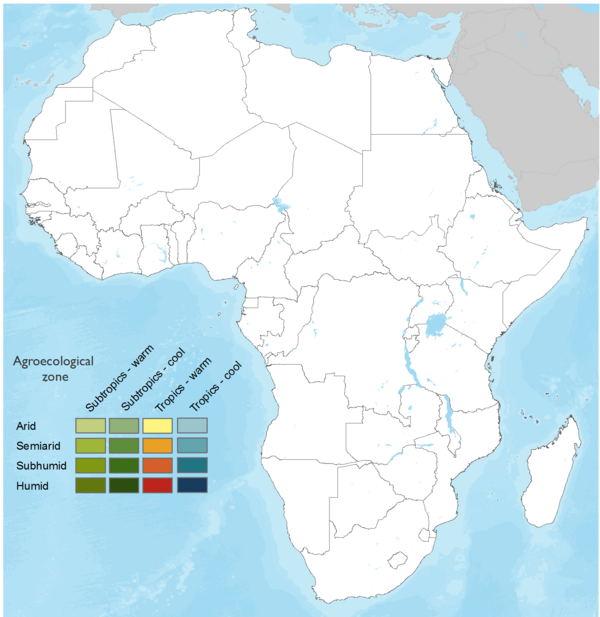
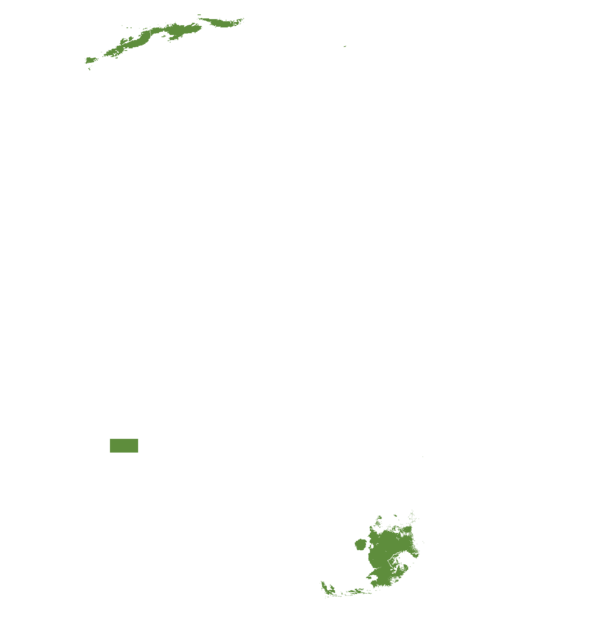
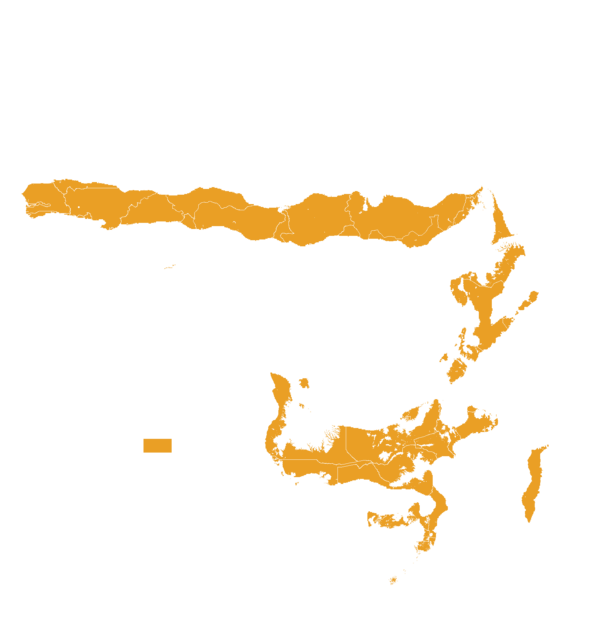
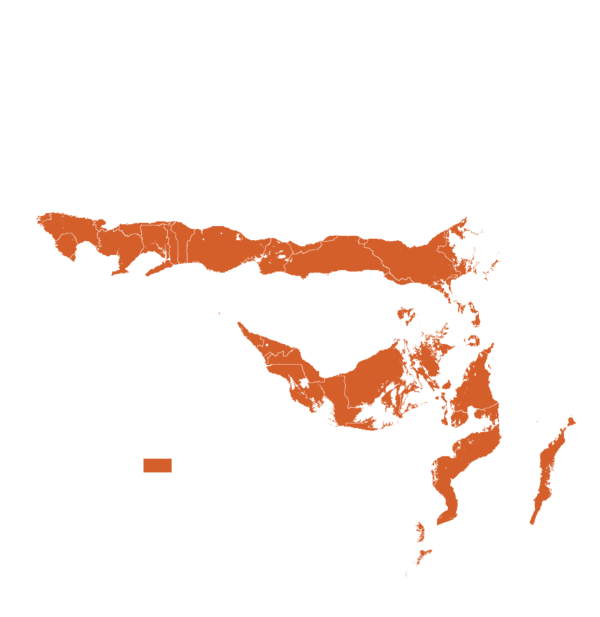
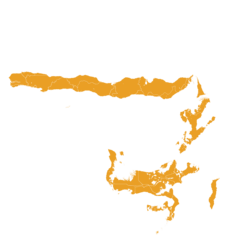
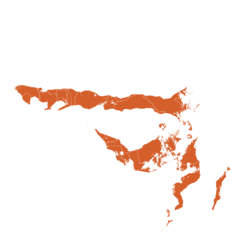
This technology can be used in the colored agro-ecological zones. Any zones shown in white are not suitable for this technology.



| AEZ | Subtropic - warm | Subtropic - cool | Tropic - warm | Tropic - cool |
|---|---|---|---|---|
| Arid | – | – | – | – |
| Semiarid | – | |||
| Subhumid | – | |||
| Humid | – | – | – | – |
Source: HarvestChoice/IFPRI 2009
The United Nations Sustainable Development Goals that are applicable to this technology.
Its reduces vulnerability of smallholder farmers by improving farm productivity and market participation.
Its increases soybean production and productivity, improving food availability and access to plant-based protein and nutrients.

Its supports biological nitrogen fixation, reducing reliance on synthetic fertilizers and improving environmental sustainability.
1. Site Selection and Land Preparation
2. Variety Selection
3. Seed Preparation and Planting
4. Soil Fertility Management
5. Cropping System Practices
6. Weed Management
7. Pest and Disease Management
8. Harvesting
9. Post-harvest Handling and Storage
Last updated on Sep 9, 2026
This technology can be used in the colored agro-ecological zones.






Good Agronomic Practices for Soybean Production: A Package for Enhanced Yields across the Value Chain
https://e-catalogs.taat-africa.org/org/technologies/good-agronomic-practices-for-soybean-production-a-package-for-enhanced-yields-across-the-value-chain
Last updated on 9 September 2026, printed on Oct 20, 2026
Enquiries e-catalogs@taat.africa