
TAAT e-catalog
for
Development partners
https://e-catalogs.taat-africa.org/org/technologies/nutusweetleaves-consumption-of-sweet-potato-leaves-as-relish-for-nutrition-and-food-security
Edible Sweetpotato Leaves for Food Security
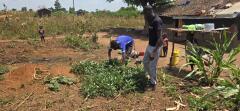
Nutusweetleaves is a low-cost, scalable nutrition practice that promotes the use of sweetpotato leaves for household consumption to improve nutrition and resilience. The practice addresses low vegetable intake and micronutrient deficiencies by encouraging the use of a readily available, nutrient-rich food source. Sweetpotato leaves provide vitamins A, C, and E, B-vitamins, iron, calcium, and antioxidants, contributing to improved immunity, eye health, and prevention of nutrient deficiencies. Implemented through homestead gardens and farmer training, the practice supports continuous access to both food (leaves) and planting material (vines). It is particularly suitable for women and vulnerable households, as it requires minimal resources and fits within existing farming systems.
This technology is pre-validated.
|
Vulnerable Group |
Positive Impacts |
|
Women Smallholders |
• Increased household income through sale of leaves and vines |
|
Women-Headed Households |
• Strengthened household food security |
|
Children (under 5 years) |
• Better vitamin A, iron, and micronutrient intake |
|
Pregnant & Lactating Women |
• Improved maternal micronutrient intake |
Climate adaptability: Highly adaptable
The sweetpotato withstands the adverse climate effects such as droughts and floods, regenerates quickly and can be maintained in kitchen gardens
Farmer climate change readiness: Significant improvement
By keeping the sweetpotato in kitchen gardens, they serve as food all time while serving as source of material as soon as conditions e.g when rain resumes
Biodiversity: Positive impact on biodiversity
It keeps the green around homesteads even during dry periods
Carbon footprint: Much less carbon released
Produces more food per unit area, no heavy tillage is involved in is cultivation
Environmental health: Greatly improves environmental health
It forms a dense canopy which reduces erosion; improves soil organic matter; supports soil biodata
Soil quality: Improves soil health and fertility
It helps in improving soil structure, and through decomposition, organic matter is added to the soil
Water use: Much less water used
It benefits from refuse water produced from households, thus helping in recycling water and putting it to use in the most difficult dry periods
Household Nutrition & Food Security: Promote homestead gardens to provide year-round access to nutrient-dense leaves for women, children, and vulnerable households.
Capacity Building: Train communities on leaf harvesting, preparation, vine conservation, and pest management.
Resilience & Sustainability: Support adoption of climate-resilient dual-purpose sweetpotato varieties, ensuring continuous supply even during droughts.
Key Activities:
Target Beneficiaries: Smallholder farmers, women-headed households, local communities.
Partners: NGOs, community-based organizations, research institutions, local authorities.
Resources & Budget: Training materials, demonstration garden inputs, monitoring and evaluation tools, operational costs for community engagement.
Unknown
Scaling Readiness describes how complete a technology's development is and its ability to be scaled. It produces a score that measures a technology's readiness along two axes: the level of maturity of the idea itself, and the level to which the technology has been used so far.
Each axis goes from 0 to 9 where 9 is the “ready-to-scale” status. For each technology profile in the e-catalogs we have documented the scaling readiness status from evidence given by the technology providers. The e-catalogs only showcase technologies for which the scaling readiness score is at least 8 for maturity of the idea and 7 for the level of use.
The graph below represents visually the scaling readiness status for this technology, you can see the label of each level by hovering your mouse cursor on the number.
Read more about scaling readiness ›
Uncontrolled environment: validated
Common use by intended users, in the real world
| Maturity of the idea | Level of use | |||||||||
| 9 | ||||||||||
| 8 | ||||||||||
| 7 | ||||||||||
| 6 | ||||||||||
| 5 | ||||||||||
| 4 | ||||||||||
| 3 | ||||||||||
| 2 | ||||||||||
| 1 | ||||||||||
| 1 | 2 | 3 | 4 | 5 | 6 | 7 | 8 | 9 | ||
|
Vulnerable Group |
Positive Impacts |
|
Women Smallholders |
• Increased household income through sale of leaves and vines |
|
Women-Headed Households |
• Strengthened household food security |
|
Children (under 5 years) |
• Better vitamin A, iron, and micronutrient intake |
|
Pregnant & Lactating Women |
• Improved maternal micronutrient intake |
|
Vulnerable Group |
Unintended Impacts |
Mitigation Strategies |
|
Women Smallholders |
• Overharvesting may reduce root yield |
• Train on balanced leaf harvesting |
|
Women-Headed Households |
• Market saturation reducing leaf income |
• Encourage value-added products and diverse market linkages |
|
Children (under 5 years) |
• Leaves undercooked, reducing nutrient absorption |
• Promote correct cooking methods (brief wilting, moderate cooking) |
|
Pregnant & Lactating Women |
• Misconceptions about leaf safety |
• Conduct community awareness campaigns |
|
Vulnerable Group |
Barriers |
Mitigation Strategies |
|
Women Smallholders |
• Limited access to improved/clean planting material |
• Provide high-quality disease-free vines |
|
Women-Headed Households |
• Limited financial resources for garden establishment |
• Support small grants, inputs, or community shared gardens |
|
Children (under 5 years) |
• Low household awareness of nutritional needs |
• Conduct nutrition education campaigns for caregivers |
|
Pregnant & Lactating Women |
• Cultural beliefs or dietary habits limiting consumption |
• Promote awareness of health benefits and proper preparation |
| Country | Testing ongoing | Tested | Adopted |
|---|---|---|---|
| Kenya | –No ongoing testing | –Not tested | Adopted |
| Tanzania | –No ongoing testing | –Not tested | Adopted |
| Uganda | –No ongoing testing | –Not tested | Adopted |
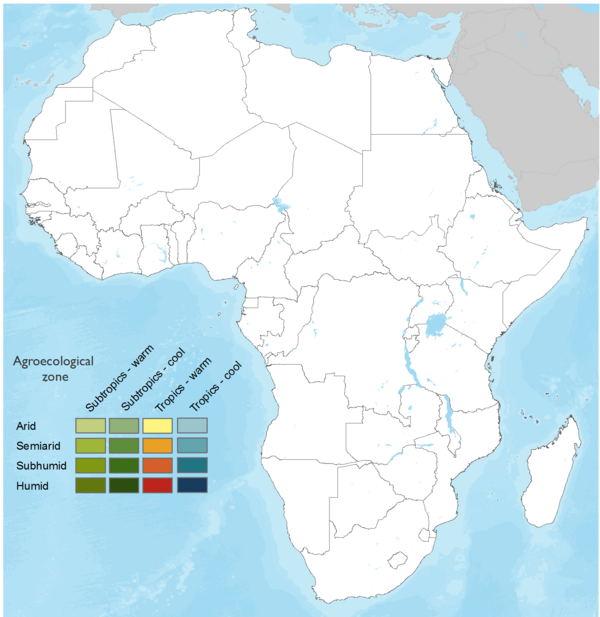
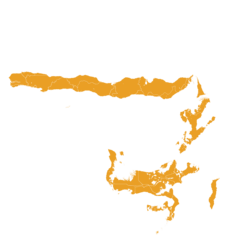
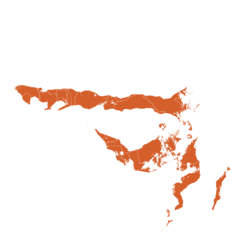
This technology can be used in the colored agro-ecological zones. Any zones shown in white are not suitable for this technology.
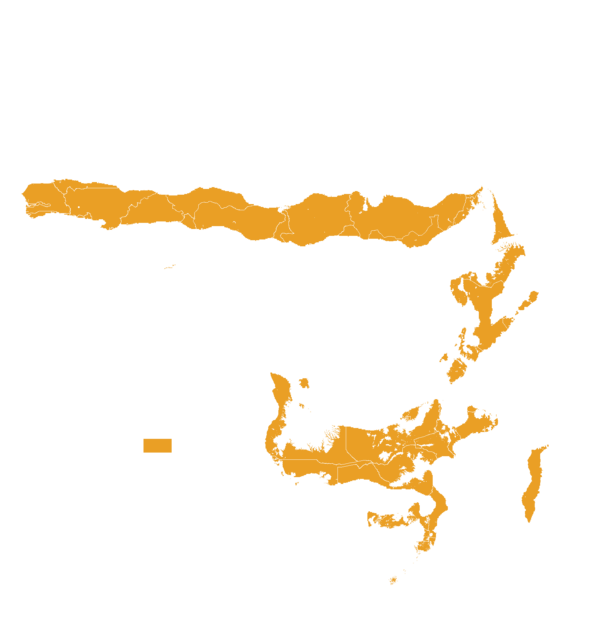
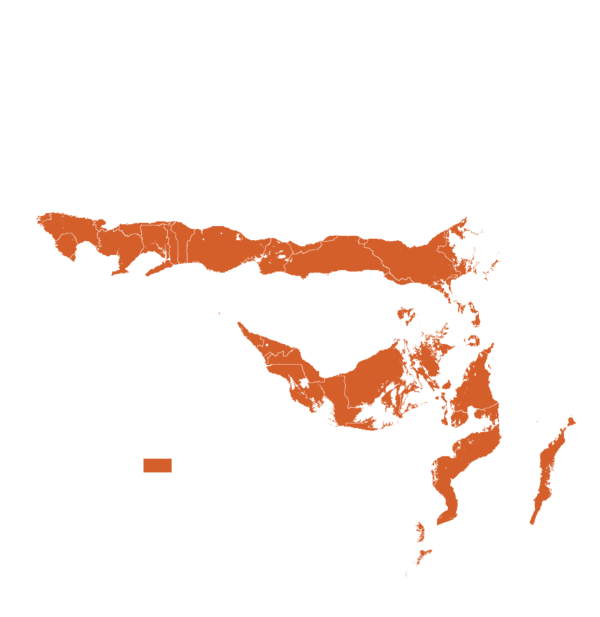
| AEZ | Subtropic - warm | Subtropic - cool | Tropic - warm | Tropic - cool |
|---|---|---|---|---|
| Arid | – | – | – | – |
| Semiarid | – | – | – | |
| Subhumid | – | – | – | |
| Humid | – | – | – | – |
Source: HarvestChoice/IFPRI 2009
The United Nations Sustainable Development Goals that are applicable to this technology.
It provides a nutrient-rich vegetable that improves household food security, especially during seasonal hunger periods.
Leaves are rich in vitamin A, iron, calcium, and antioxidants, supporting immunity, eye health, and overall nutrition.
Women smallholders and women-headed households, who typically manage home gardens, gain income and skills through leaf production.
Utilizing sweetpotato leaves reduces food waste since leaves are often discarded.
Last updated on Sep 14, 2026
This technology can be used in the colored agro-ecological zones.


Nutusweetleaves: Consumption of sweet potato leaves as relish for Nutrition and food security
https://e-catalogs.taat-africa.org/org/technologies/nutusweetleaves-consumption-of-sweet-potato-leaves-as-relish-for-nutrition-and-food-security
Last updated on 14 September 2026, printed on Oct 9, 2026
Enquiries e-catalogs@taat.africa