
TAAT e-catalog
for
Development partners
https://e-catalogs.taat-africa.org/org/technologies/induced-ripening-of-banana-for-increased-marketability-and-storage
Ripening Solutions for Quality and Efficiency
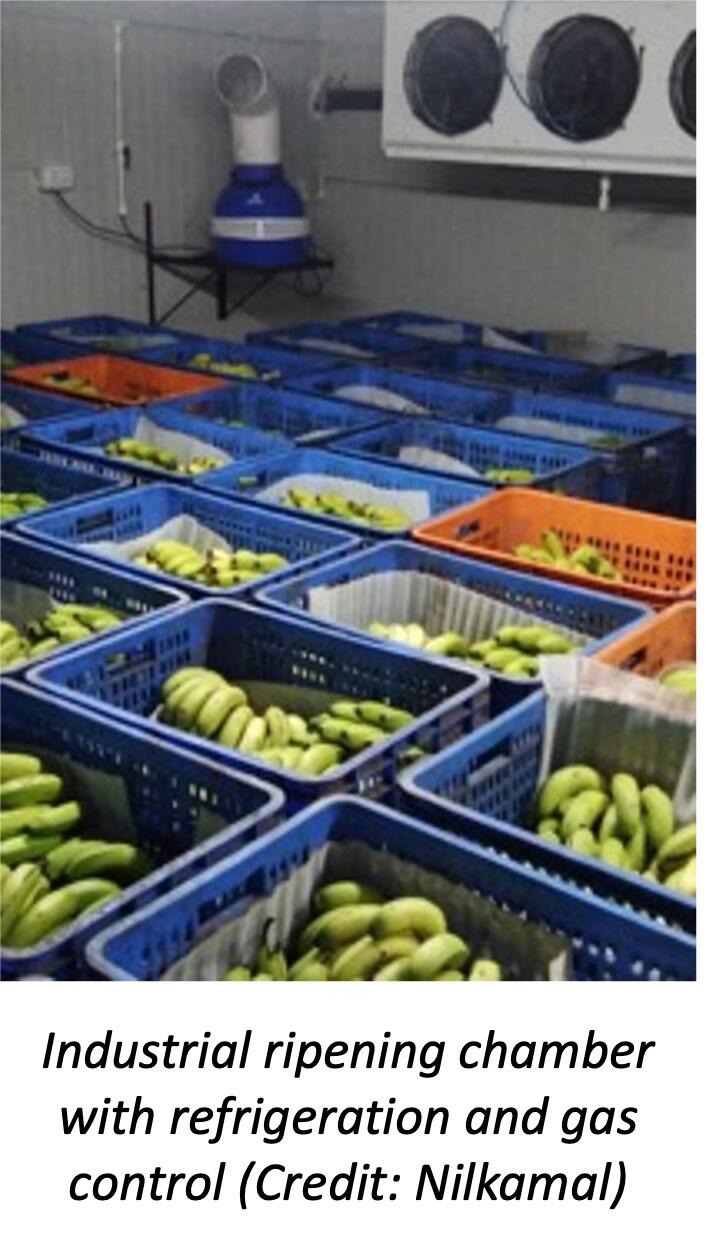
The technology of "Induced Ripening of Banana for Increased Marketability and Storage" is a method designed to enhance the ripening process of bananas, specifically dessert bananas, to ensure they are market-ready and have an extended shelf life. This technology is crucial for the banana industry, which often harvests bananas prematurely to minimize transportation damage. In this process, bananas are artificially ripened using various chemical agents, most notably ethylene gas. Commercial ripening chambers provide controlled environments where temperature, humidity, and ethylene gas concentration are precisely regulated. This controlled ripening ensures that bananas reach optimal ripeness and maintain uniform quality.
This technology is TAAT1 validated.
Adults 18 and over: Positive high
The poor: Positive low
Under 18: Positive low
Women: Positive low
Farmer climate change readiness: Significant improvement
Environmental health: Greatly improves environmental health
Soil quality: Does not affect soil health and fertility
Water use: Same amount of water used
Carbon footprint: More carbon released
Induced Ripening of Banana replaces unsafe and inconsistent traditional ripening practices with controlled ripening systems that produce uniform, high-quality, market-ready fruit. It strengthens post-harvest value chains by reducing losses, improving food safety, enhancing fruit quality, and enabling producers, traders, wholesalers, retailers, processors, and ripening service providers to supply markets more efficiently. The technology can be integrated into post-harvest management, market development, food security, and agri-food processing programmes, supporting SDGs 1 (No Poverty), 2 (Zero Hunger), 3 (Good Health and Well-being), and 8 (Decent Work and Economic Growth). It also creates entrepreneurship opportunities for women and youth through ripening services, fruit aggregation, storage, trading, and marketing.
To successfully integrate this technology, consider the following key actions:
Industrial semi-automated ripening chambers of 5 tones of banana
Trademark
Scaling Readiness describes how complete a technology's development is and its ability to be scaled. It produces a score that measures a technology's readiness along two axes: the level of maturity of the idea itself, and the level to which the technology has been used so far.
Each axis goes from 0 to 9 where 9 is the “ready-to-scale” status. For each technology profile in the e-catalogs we have documented the scaling readiness status from evidence given by the technology providers. The e-catalogs only showcase technologies for which the scaling readiness score is at least 8 for maturity of the idea and 7 for the level of use.
The graph below represents visually the scaling readiness status for this technology, you can see the label of each level by hovering your mouse cursor on the number.
Read more about scaling readiness ›
Uncontrolled environment: tested
Used by some intended users, in the real world
| Maturity of the idea | Level of use | |||||||||
| 9 | ||||||||||
| 8 | ||||||||||
| 7 | ||||||||||
| 6 | ||||||||||
| 5 | ||||||||||
| 4 | ||||||||||
| 3 | ||||||||||
| 2 | ||||||||||
| 1 | ||||||||||
| 1 | 2 | 3 | 4 | 5 | 6 | 7 | 8 | 9 | ||
| Country | Testing ongoing | Tested | Adopted |
|---|---|---|---|
| Benin | –No ongoing testing | Tested | Adopted |
| Burkina Faso | –No ongoing testing | Tested | Adopted |
| Burundi | –No ongoing testing | Tested | Adopted |
| Cameroon | –No ongoing testing | Tested | Adopted |
| Côte d’Ivoire | –No ongoing testing | Tested | Adopted |
| Democratic Republic of the Congo | –No ongoing testing | Tested | Adopted |
| Ethiopia | –No ongoing testing | Tested | Adopted |
| Ghana | –No ongoing testing | Tested | Adopted |
| Guinea | –No ongoing testing | Tested | Adopted |
| Kenya | –No ongoing testing | Tested | Adopted |
| Malawi | –No ongoing testing | Tested | Adopted |
| Nigeria | –No ongoing testing | Tested | Adopted |
| Rwanda | –No ongoing testing | Tested | Adopted |
| Sierra Leone | –No ongoing testing | Tested | Adopted |
| Somalia | –No ongoing testing | Tested | Adopted |
| Tanzania | –No ongoing testing | Tested | Adopted |
| Togo | –No ongoing testing | Tested | Adopted |
| Uganda | –No ongoing testing | Tested | Adopted |
| Zambia | –No ongoing testing | Tested | Adopted |
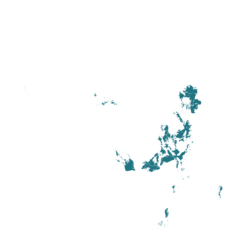
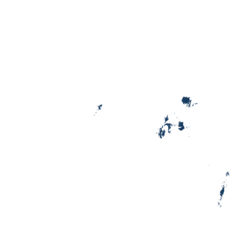
This technology can be used in the colored agro-ecological zones. Any zones shown in white are not suitable for this technology.
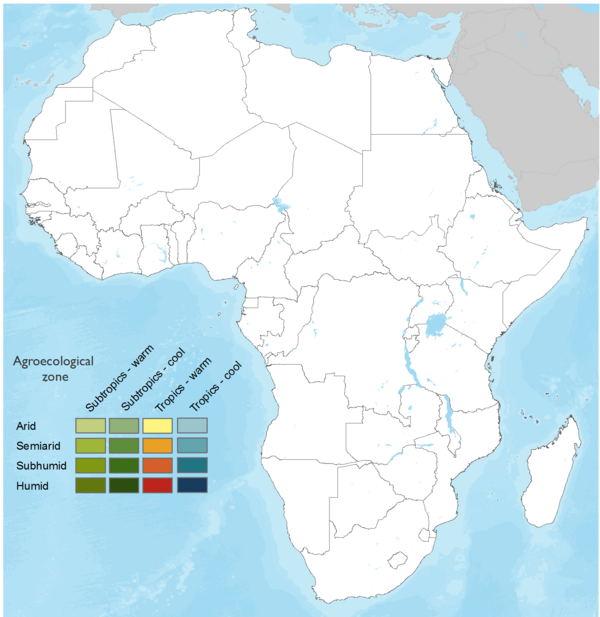




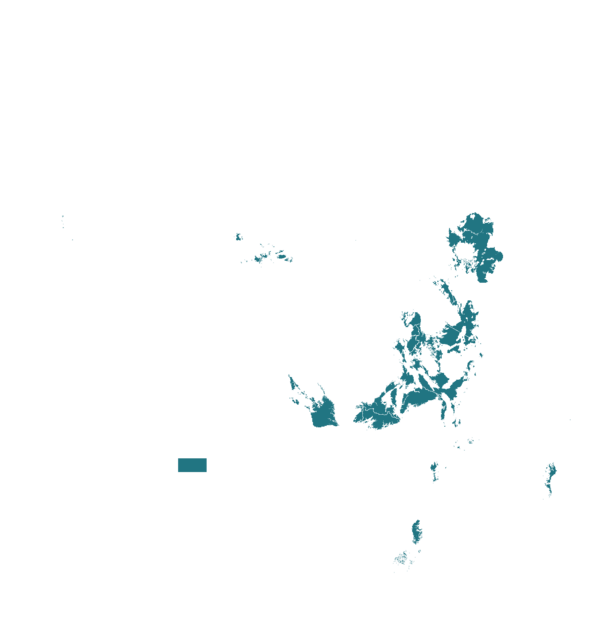

| AEZ | Subtropic - warm | Subtropic - cool | Tropic - warm | Tropic - cool |
|---|---|---|---|---|
| Arid | – | – | – | – |
| Semiarid | – | – | – | – |
| Subhumid | – | – | ||
| Humid |
Source: HarvestChoice/IFPRI 2009
The United Nations Sustainable Development Goals that are applicable to this technology.



1. Introduction of Ethylene
2. Control Humidity
3. Temperature Control
Adjust the temperature within the ripening chamber according to the desired ripening speed:
4. Use of Water Basins (for simple chambers)
In simple, passive, closed chambers, humidity can be achieved by using basins of water.
5. Use of Humidifiers (for industrial-scale rooms)
In industrial-scale ripening rooms, maintain humidity using humidifiers to create the ideal environment.
Last updated on Oct 1, 2026
This technology can be used in the colored agro-ecological zones.






Induced Ripening of Banana for Increased Marketability and Storage
https://e-catalogs.taat-africa.org/org/technologies/induced-ripening-of-banana-for-increased-marketability-and-storage
Last updated on 1 October 2026, printed on Oct 16, 2026
Enquiries e-catalogs@taat.africa