TAAT e-catalog
for
government
https://e-catalogs.taat-africa.org/gov/technologies/eco-sika-clean-cooking-innovation-for-gari-and-salt-processing
An affordable clean-energy solution that empowers women salt and gari producers to adapt to climate change!
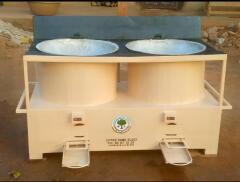
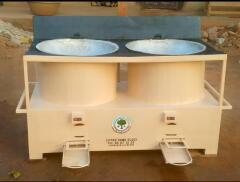
The cooking stove is a rectangular structure designed for agrifood processing. It measures approximately 2.5 meters in length and efficiently integrates two to four independent combustion chambers within a single frame. This system relies on a controlled air injection to manage the fire. A fan, positioned at the rear of each chamber and powered by batteries or solar panels, is manually operated via a switch to regulate the air supply for the combustion. This controlled process ensures a more complete combustion, which minimizes the release of toxic smoke and pollution compared to traditional methods. The stove utilizes locally available sustainable fuels, such as ecological charcoal or carbonized palm nut shells.
This technology is not yet validated.
|
Target Groups |
Positive Impacts |
|
Women engaged in salt and gari production |
|
|
Youth entrepreneurs engaged in salt and gari production |
|
|
Low-income rural households |
|
|
Women-led cooperatives and associations |
|
Climate adaptability: Highly adaptable
Can operate with or without batteries, meaning it adapts both to weather variability and to households’ financial capacity.
Biodiversity: Positive impact on biodiversity
Significant reduction of wood fuel use and forest logging
Carbon footprint: Much less carbon released
The technology releases much less carbon compared to traditional methods such as wood fuel use. ECO SIKA produces no direct emissions during cooking, while traditional fuels continuously release significant amounts of CO₂. Additionally, the reduction in fuelwood demand helps prevent deforestation, further lowering carbon emissions
Environmental health: Greatly improves environmental health
To maximize the socio-economic, environmental, and commercial benefits of ECO SIKA and support scalable adoption, governments and decision-makers should consider:
Every USD invested returns USD 0.05 net income.
Open source / open access
Scaling Readiness describes how complete a technology's development is and its ability to be scaled. It produces a score that measures a technology's readiness along two axes: the level of maturity of the idea itself, and the level to which the technology has been used so far.
Each axis goes from 0 to 9 where 9 is the “ready-to-scale” status. For each technology profile in the e-catalogs we have documented the scaling readiness status from evidence given by the technology providers. The e-catalogs only showcase technologies for which the scaling readiness score is at least 8 for maturity of the idea and 7 for the level of use.
The graph below represents visually the scaling readiness status for this technology, you can see the label of each level by hovering your mouse cursor on the number.
Read more about scaling readiness ›
Uncontrolled environment: tested
By some projects connected to technology providers
| Maturity of the idea | Level of use | |||||||||
| 9 | ||||||||||
| 8 | ||||||||||
| 7 | ||||||||||
| 6 | ||||||||||
| 5 | ||||||||||
| 4 | ||||||||||
| 3 | ||||||||||
| 2 | ||||||||||
| 1 | ||||||||||
| 1 | 2 | 3 | 4 | 5 | 6 | 7 | 8 | 9 | ||
|
Target Groups |
Positive Impacts |
|
Women engaged in salt and gari production |
|
|
Youth entrepreneurs engaged in salt and gari production |
|
|
Low-income rural households |
|
|
Women-led cooperatives and associations |
|
|
Target Groups |
Unintended Impacts |
Mitigation Measures |
|
Women engaged in salt and gari production |
|
|
|
Youth entrepreneurs engaged in salt and gari production |
|
|
|
Low-income rural households |
|
|
|
Women-led cooperatives and associations |
|
|
|
Target Groups |
Barriers to Adoption |
Mitigation Measures |
|
Women engaged in salt and gari production |
|
|
|
Youth entrepreneurs engaged in salt and gari production |
|
|
|
Low-income rural households |
|
|
|
Women-led cooperatives and associations |
|
|
|
Cost of the investment Sum of all fixed and operational expenses.. |
USD 1,088 per unit |
|---|---|
|
Gross revenue Sum of all income before subtracting costs. |
USD 142 per unit |
|
Net income Gross revenue minus total cost. |
USD 54 per unit |
|
Return on investment Percentage of income earned for each dollar invested, calculated as: (income ÷ cost of investment) × 100 |
5 % Per year |
| Country | Testing ongoing | Tested | Adopted |
|---|---|---|---|
| Benin | –No ongoing testing | Tested | Adopted |
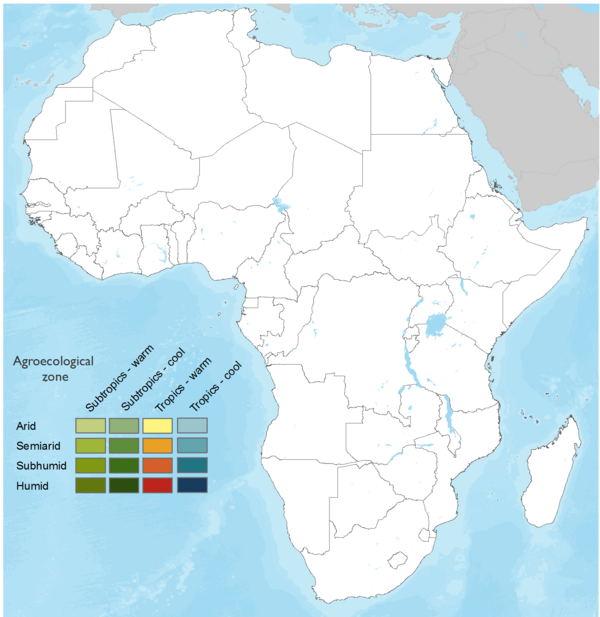
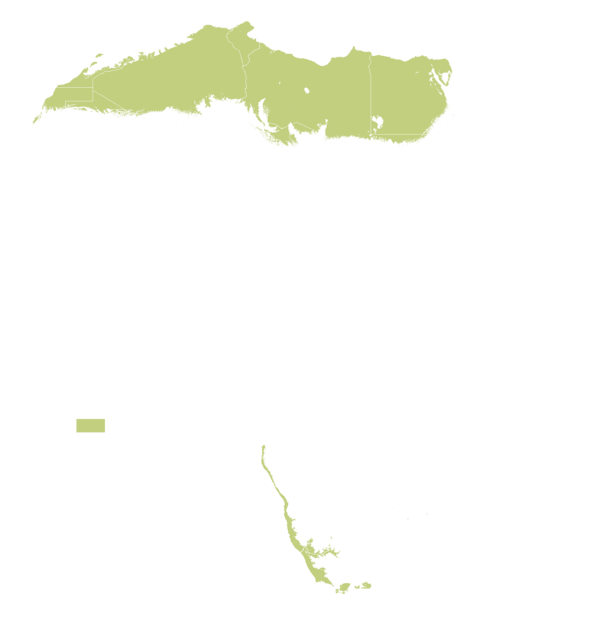
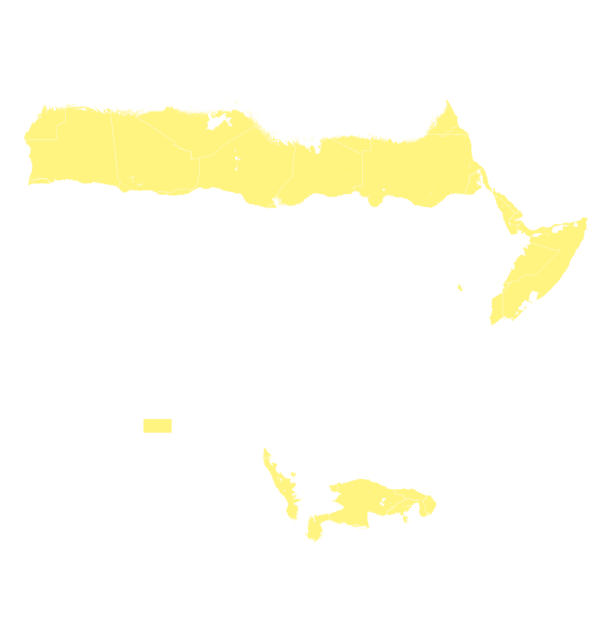
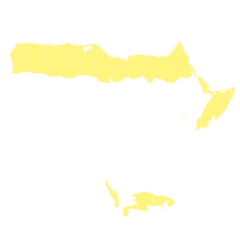
This technology can be used in the colored agro-ecological zones. Any zones shown in white are not suitable for this technology.






| AEZ | Subtropic - warm | Subtropic - cool | Tropic - warm | Tropic - cool |
|---|---|---|---|---|
| Arid | – | – | ||
| Semiarid | – | – | ||
| Subhumid | – | – | ||
| Humid | – | – |
Source: HarvestChoice/IFPRI 2009
The United Nations Sustainable Development Goals that are applicable to this technology.
ECO SIKA reduces the cost of buying firewood, charcoal, or kerosene, allowing poor families to save money for other essential needs. The resulting economic benefits can increase family savings and resources.
Using ECO SIKA helps improve children’s nutrition when meals are cooked safely

ECO SIKA reduces air pollution and associated health risks from traditional cooking methods.
ECO SIKA produces energy without greenhouse gas emissions, unlike wood fuel.

ECO SIKA helps mitigate climate change by decreasing reliance on carbon-intensive fuels.
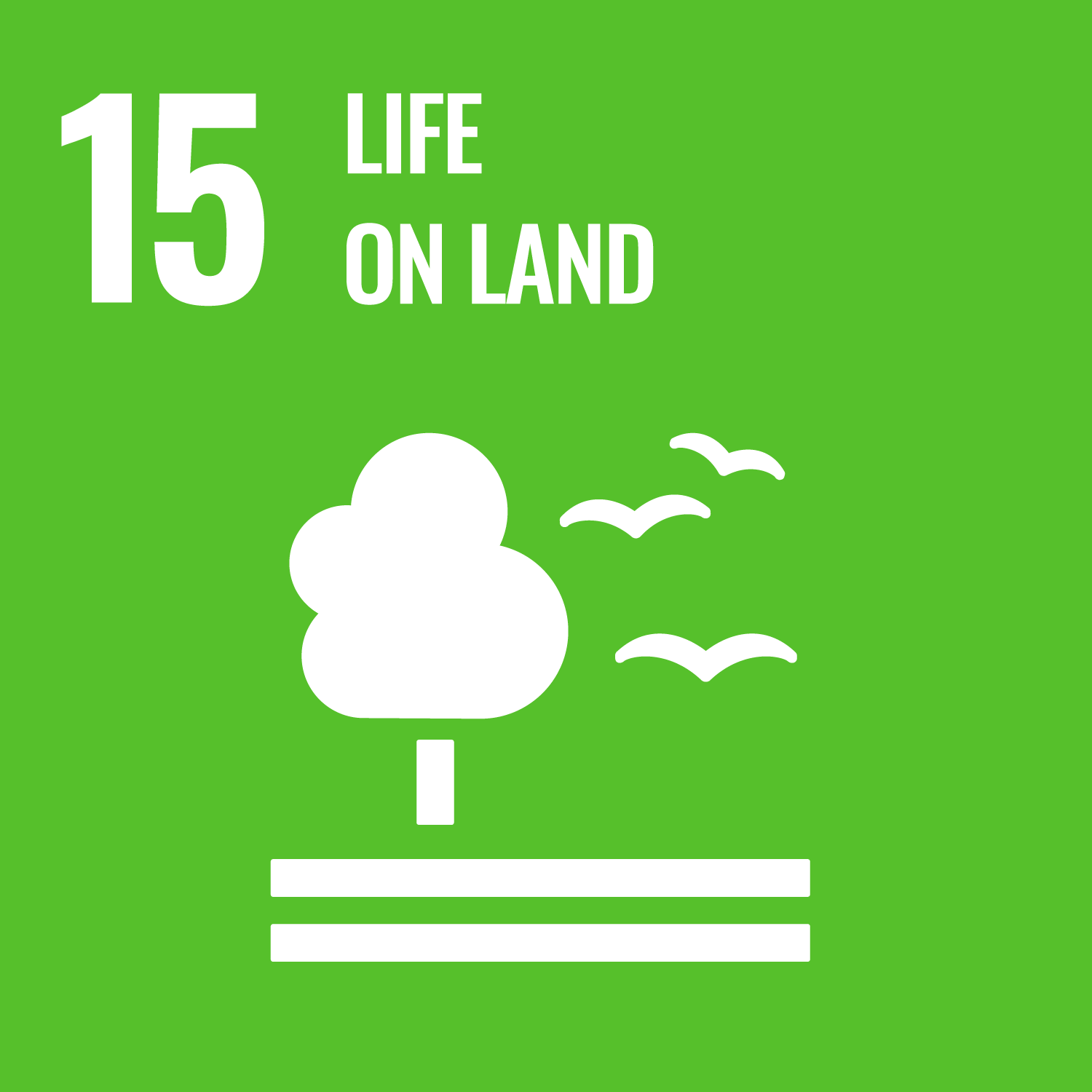
ECO SIKA helps reduce deforestation.
Last updated on Sep 9, 2026
This technology can be used in the colored agro-ecological zones.









ECO SIKA: Clean Cooking Innovation for Gari and Salt Processing
https://e-catalogs.taat-africa.org/gov/technologies/eco-sika-clean-cooking-innovation-for-gari-and-salt-processing
Last updated on 9 September 2026, printed on Sep 21, 2026
Enquiries e-catalogs@taat.africa