TAAT e-catalog
for
government
https://e-catalogs.taat-africa.org/gov/technologies/agwise-specific-fertilizer-recommendations
Farm Smarter, Not Harder
AgWise is a free, modular digital agronomy platform that provides site-specific advice on fertilizer, planting dates, varieties and weather to support national food-security goals. Its Specific Fertilizer Recommendations module combines national soil maps, seasonal weather forecasts, local fertilizer prices and farmer yield targets to generate the exact N-P-K product and dose for every field. Governments can feed these prescriptions into subsidy schemes and e-voucher systems, making public spending smarter and cutting waste from blanket rates. Extension officers receive the recommendations on tablets or by SMS, then translate them into practical guidance during farm visits and group trainings—an approach already scaled to more than 70,000 farmers in Ethiopia and piloted nationwide in Rwanda.

This technology is not yet validated.
Adults 18 and over: Positive high
Adult farmers are the primary users; trials report large yield and profit gains when adults follow the site-specific recommendations.
The poor: Positive medium
AgWise is free and designed for smallholders; however, some very poor farmers still face handset and data-cost barriers, so impact is moderated.
Under 18: Positive low
Children gain indirectly when household food security and income improve, but they are not direct users of the digital advisory.
Women: Positive medium
Digital advisories are equally relevant to women farmers, but access gaps (phone ownership, literacy) can reduce uptake. Programmes are adding gender-targeted training to bridge this.
Climate adaptability: Highly adaptable
AgWise updates prescriptions with local weather forecasts, making nutrient plans resilient to shifting rainfall patterns.
Farmer climate change readiness: Significant improvement
Timely, location-specific advice helps farmers adjust input timing and rates, a key adaptation measure cited in national CSA strategies
Biodiversity: Positive impact on biodiversity
Reduced excess fertilizer lowers nutrient run-off that can damage downstream ecosystems.
Carbon footprint: Much less carbon released
Lower nitrogen over-application directly cuts N₂O, a potent GHG; precision dosing is highlighted as a mitigation lever in recent NUE studies.
Environmental health: Greatly improves environmental health
Less leaching and volatilisation reduce water-body eutrophication and ammonia pollution.
Soil quality: Improves soil health and fertility
Matching nutrients to crop need slows soil mining and promotes balanced fertilisation, improving organic-matter levels over time.
Water use: Same amount of water used
The module focuses on nutrient management; it does not change irrigation volume, though cleaner run-off indirectly benefits water resources.
AgWise is a comprehensive digital platform that provides precise agronomic recommendations, including weather advisories, variety selection, fertilizer recommendations, and optimal planting dates. By leveraging empirical and process-based analytics, AgWise addresses key agricultural challenges, enhancing productivity, profitability, and sustainability for smallholder farmers.
Integrating AgWise into your project will enhance its overall impact. This requires strategic partnerships, effective training and support, accessible technology, demonstrable results, and a commitment to continuous improvement based on farmer feedback.
Partnership:
Collaborate with agricultural research institutions and EiA experts to integrate AgWise’s advanced analytics and agronomic expertise into your project. Partner with local extension agents to ensure effective dissemination and optimal use of AgWise by farmers.
Awareness and Training:
Organize dissemination events and training sessions for farmers and extension agents to demonstrate the benefits of AgWise. Provide hands-on training on how to use AgWise effectively, focusing on weather advisories, variety selection, fertilizer recommendations, and planting dates.
Evaluate the existing infrastructure in the areas where the project will be implemented. This includes internet connectivity, availability of hardware, and the digital literacy of the farmers. Infrastructure upgrades may be necessary for the successful implementation of AgWise.
On-field Assistance:
Deploy extension agents to provide on-field assistance, helping farmers navigate the AgWise platform and implement the advice provided. Ensure continuous support and troubleshooting to maximize the effectiveness of AgWise in farming practices.
Accessible Interfaces:
Make AgWise available through multiple user-friendly interfaces, such as a smartphone app, interactive voice response (IVR) system, and a hatbot. Ensure that these interfaces are accessible even in remote areas, potentially providing printed guides where digital access is limited.
Demonstration Plots:
Establish demonstration plots to showcase the effectiveness of AgWise recommendations in real-world farming conditions. Use these plots to build trust among farmers and encourage wider adoption of the technology.
Feedback Mechanism:
Implement a robust feedback mechanism to gather input from farmers on their experience with AgWise. Use this feedback to make continuous improvements and adaptations to the platform, ensuring it meets the evolving needs of farmers.
Expansion:
Plan for the expansion of AgWise to additional regions and crops to increase its reach and impact. Develop region-specific recommendations to ensure relevance and effectiveness across diverse agricultural contexts.
This technology was developed through a collaborative effort by Wuletawu Abera and Siyabusa Mkuhlani.
Potato yield increase
Unknown
Scaling Readiness describes how complete a technology's development is and its ability to be scaled. It produces a score that measures a technology's readiness along two axes: the level of maturity of the idea itself, and the level to which the technology has been used so far.
Each axis goes from 0 to 9 where 9 is the “ready-to-scale” status. For each technology profile in the e-catalogs we have documented the scaling readiness status from evidence given by the technology providers. The e-catalogs only showcase technologies for which the scaling readiness score is at least 8 for maturity of the idea and 7 for the level of use.
The graph below represents visually the scaling readiness status for this technology, you can see the label of each level by hovering your mouse cursor on the number.
Read more about scaling readiness ›
Semi-controlled environment: prototype
Common use by projects connected to technology providers
| Maturity of the idea | Level of use | |||||||||
| 9 | ||||||||||
| 8 | ||||||||||
| 7 | ||||||||||
| 6 | ||||||||||
| 5 | ||||||||||
| 4 | ||||||||||
| 3 | ||||||||||
| 2 | ||||||||||
| 1 | ||||||||||
| 1 | 2 | 3 | 4 | 5 | 6 | 7 | 8 | 9 | ||
| Country | Testing ongoing | Tested | Adopted |
|---|---|---|---|
| Ethiopia | –No ongoing testing | Tested | –Not adopted |
| Ghana | –No ongoing testing | Tested | –Not adopted |
| Kenya | –No ongoing testing | Tested | –Not adopted |
| Malawi | –No ongoing testing | Tested | Adopted |
| Mali | –No ongoing testing | Tested | –Not adopted |
| Mozambique | –No ongoing testing | Tested | Adopted |
| Nigeria | –No ongoing testing | Tested | Adopted |
| Rwanda | –No ongoing testing | Tested | Adopted |
| Senegal | –No ongoing testing | Tested | –Not adopted |
| Tanzania | –No ongoing testing | Tested | –Not adopted |
| Zambia | –No ongoing testing | Tested | Adopted |
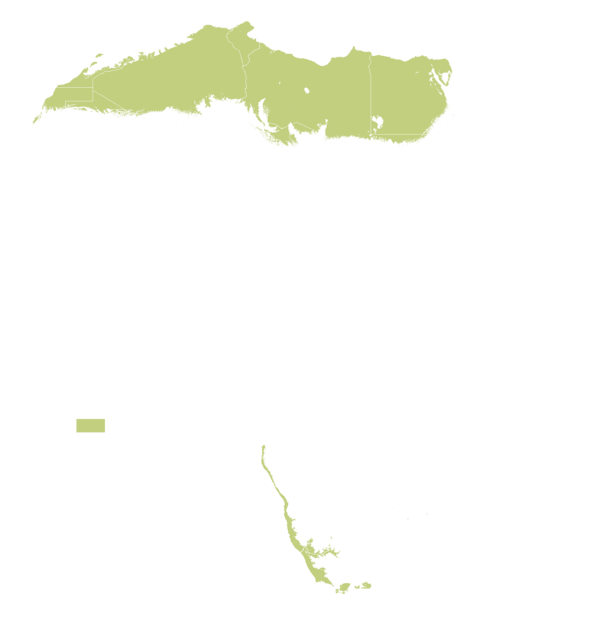
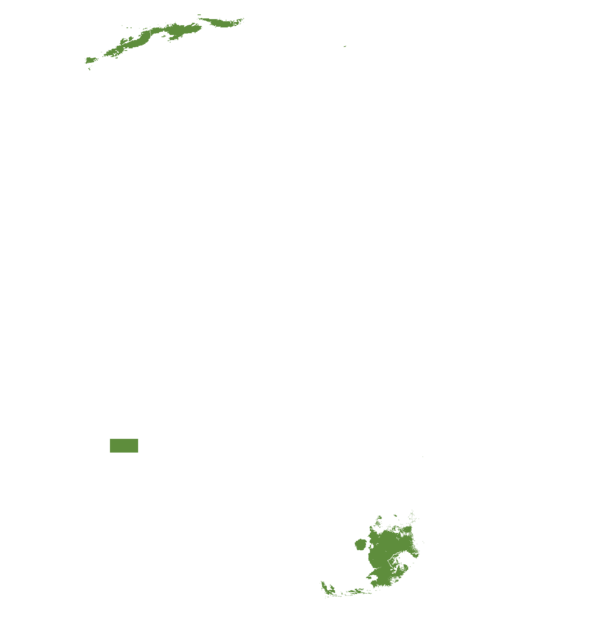
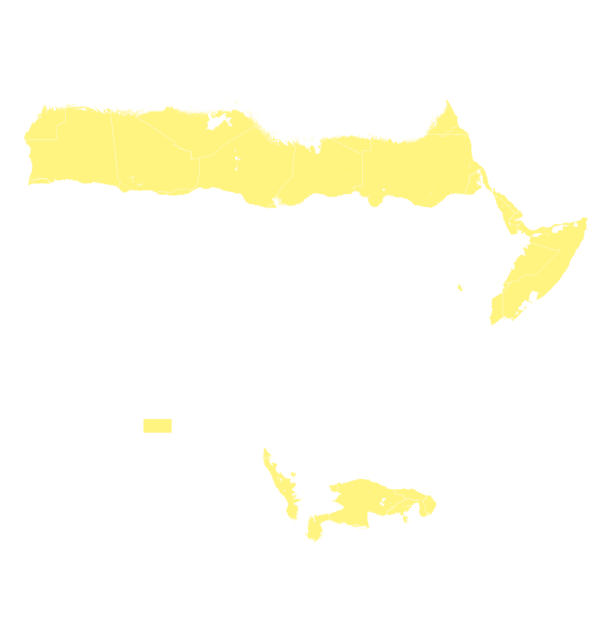
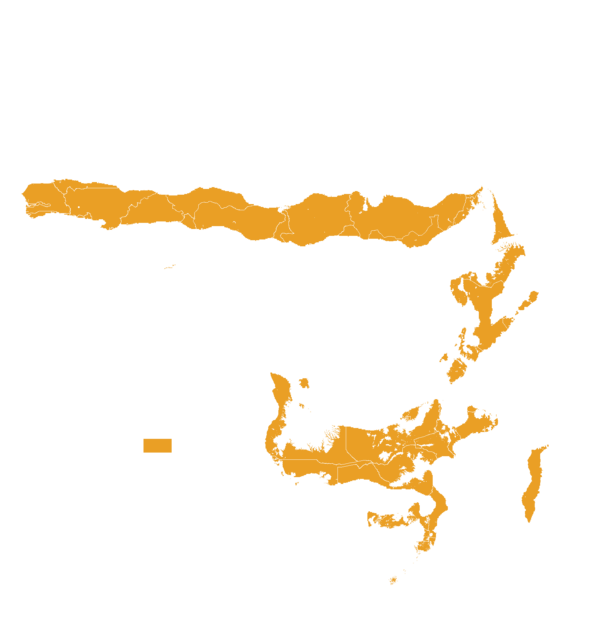
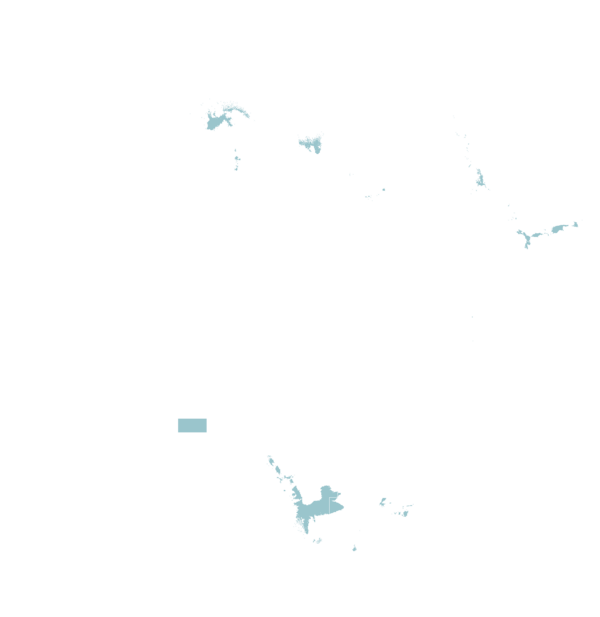
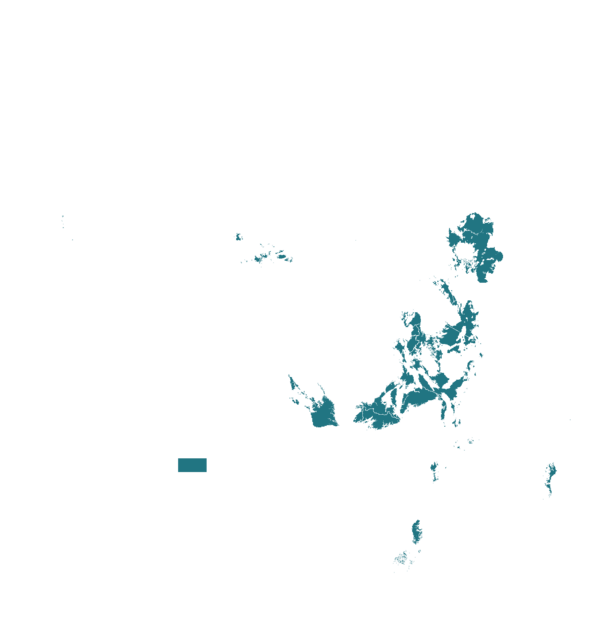
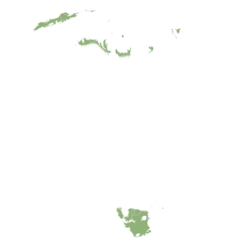
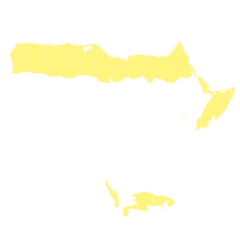
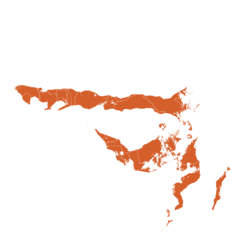
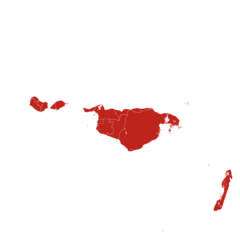
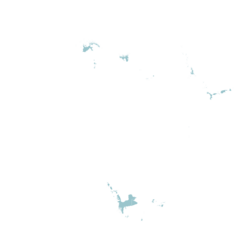
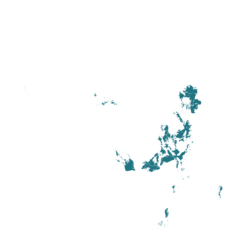
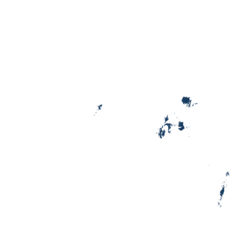
This technology can be used in the colored agro-ecological zones. Any zones shown in white are not suitable for this technology.
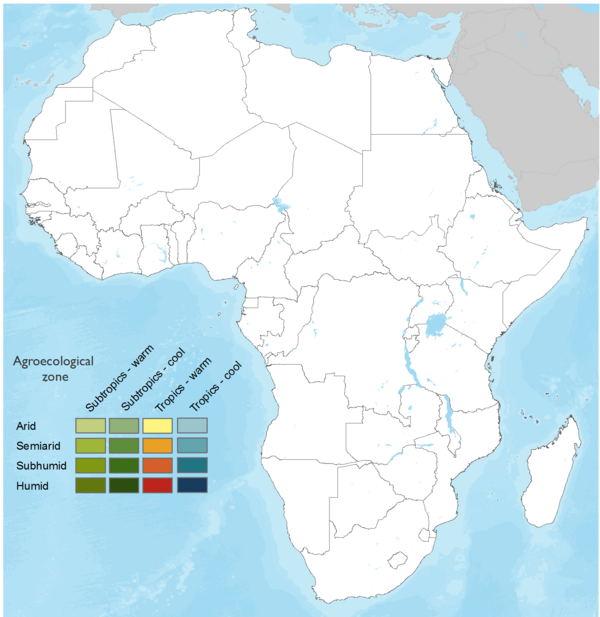










| AEZ | Subtropic - warm | Subtropic - cool | Tropic - warm | Tropic - cool |
|---|---|---|---|---|
| Arid | ||||
| Semiarid | ||||
| Subhumid | ||||
| Humid |
Source: HarvestChoice/IFPRI 2009
The United Nations Sustainable Development Goals that are applicable to this technology.

Open-source model promotes collaboration among governments, NGOs, research bodies, and the private sector.

Profit gains for resource-poor farmers support income growth.
Higher, more reliable yields for smallholders.

Inclusive design efforts aim to narrow digital advisory gaps for women.
Precision input use reduces waste and pollution.

Cuts N₂O emissions and improves adaptation capacity.
AgWise — Specific Fertilizer Recommendations is an R-based decision-support module that uses advanced data analytics and machine learning to convert soil tests, crop/variety data, weather signals and economic inputs into site-specific fertilizer rates, blends and timing. Outputs are reproducible, back-testable and delivered via API, app, SMS/USSD or partner dashboards.
Step 1 — Set up the environment
Install R and RStudio (CRAN / rstudio.com).
Prepare a server or cloud instance for scheduled runs (cron / scheduler).
Clone the AgWise GitHub repository (scripts, docs, workflows). Ensure version control is active.
Step 2 — Prepare and store input data (FAIR)
Collect and standardise: soil tests (pH, organic C, available N, P, K, micronutrients with depth and date), field metadata (location, area, crop, variety, previous crop), target yield, local fertilizer products (N-P-K, availability factors, price), and weather/soil-moisture forecasts. Store with clear metadata and provenance (FAIR).
Step 3 — Install dependencies & run initial tests
Open RStudio, install required R packages listed in the repo, and run the example/test scripts to confirm environment and data access. Resolve any dependency or API key issues before full runs.
Step 4 — Configure parameters and run analytics
Set site and crop parameters (crop uptake, removal coefficients, recovery efficiencies, indigenous supply). Run the AgWise workflows—these combine deterministic rules, ML models and economic checks to:
estimate crop nutrient demand for the yield target;
subtract indigenous supply to compute fertilizer need;
recommend blends, rates, split timing and placement optimized for agronomy and cost.
Schedule pre-season (full plan) and in-season updates (sensor or weather triggers).
Step 5 — Validate, QA and economic screening
Back-test recommendations with historical data and run field validation (trials or extension feedback). Perform simple ROI/marginal return checks and flag low-value scenarios. Adjust model parameters or ML thresholds where validation shows bias.
Step 6 — Format outputs & disseminate
Produce channel-specific outputs: API/JSON for integrators; short SMS/USSD for farmers (rate, timing, method); technical bulletins for extension (split schedule, placement); CSV/Excel for procurement and M&E. Include confidence scores, assumptions and substitution guidance where products are unavailable.
Last updated on Sep 9, 2026
This technology can be used in the colored agro-ecological zones.











AgWise: Specific Fertilizer Recommendations
https://e-catalogs.taat-africa.org/gov/technologies/agwise-specific-fertilizer-recommendations
Last updated on 9 September 2026, printed on Sep 21, 2026
Enquiries e-catalogs@taat.africa