Logo
TAAT e-catalog for Development partners
https://e-catalogs.taat-africa.org/org/technologies/sahel-potato-innovation-package-high-performing-potato-varieties-and-quality-seed-potato-production-system-for-west-africa
Request information View pitch brochure

Sahel Potato Innovation Package: High-Performing Potato Varieties and Quality Seed Potato Production System for West Africa

High-quality, disease-free seed potatoes for African farmers

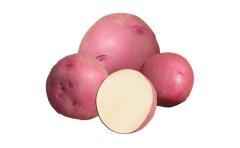
This technology is a farmer-focused potato production package that combines access to disease-free Elite III seed potatoes, improved varieties, integrated pest management, and technical guidance on best production and storage practices. It supports smallholder farmers by improving productivity, reducing crop losses, increasing access to quality markets, and strengthening sustainable potato-based livelihoods through capacity building and extension support.
2

This technology is pre-validated.

9•7

Scaling readiness: idea maturity 9/9; level of use 7/9

Positive impacts: 12

Social group

Positive impacts

Women smallholder farmers

  • Improved income opportunities: Off-season potato production creates additional revenue sources during periods when other crops are not cultivated.
  • Increased productivity: Access to disease-free seed potatoes and improved varieties can increase yields and reduce production losses.
  • Greater participation in value chains: Opportunities in seed multiplication, processing, aggregation, and marketing can strengthen women’s economic participation.

Youth agripreneurs

  • Employment creation: The technology generates opportunities in seed production, mechanization, irrigation services, storage, transport, and processing.
  • New business opportunities: Youth can develop enterprises around seed multiplication, input supply, and potato marketing services.
  • Skills development: Training on modern production, storage, and value chain management builds technical and entrepreneurial capacity.

Resource-constrained smallholder farmers

  • Improved access to quality inputs: Disease-free Elite III seed potatoes improve crop establishment and reduce losses caused by poor planting material.
  • Higher farm productivity and resilience: Short-cycle, adapted varieties help farmers increase production under Sahelian conditions.
  • Improved livelihoods: Higher yields, reduced losses, and better market access can increase household income and food security.

Producer organisations and rural communities

  • Strengthened collective action: Farmer organisations can facilitate access to seed, training, inputs, and markets.
  • Local economic development: Increased potato production can stimulate employment and business activities in rural areas.
  • Improved food availability: Higher domestic potato production contributes to local and national food security.
More...

Climate adaptability: Highly adaptable

Short-cycle varieties (90–105 days) are adapted to Sahelian dry-season conditions, reducing exposure to end-of-season water shortages and climate variability.

Farmer climate change readiness: Moderate improvement

The technology improves resilience through adapted varieties and improved practices, but requires access to irrigation, technical support, and inputs that may not be available to all farmers.

Biodiversity: Positive impact on biodiversity

The introduction of multiple potato varieties can increase crop diversity, but intensive production systems and reliance on a limited number of improved varieties may reduce genetic diversity if not managed.

Carbon footprint: A bit less carbon released

Local seed multiplication can reduce emissions linked to imported seed transport, but production may generate emissions from machinery, fertilizers, and irrigation.

Environmental health: Moderately improves environmental health

Integrated Pest Management (IPM) and improved agronomic practices can reduce environmental risks, although fertilizer and pesticide use require proper management.

Soil quality: Does not affect soil health and fertility

Soil testing, organic manure application, and balanced fertilization support soil health, but intensive potato cultivation can degrade soils if crop rotation and nutrient management are not followed.

Water use: A bit less water used

Potato production requires regular irrigation (25–40 mm/week), but short-cycle varieties improve water-use efficiency by completing production within a shorter growing period.

Problem

  • Poor access to quality planting material: Smallholder farmers have limited availability of affordable, disease-free seed potatoes.
  • Low farmer productivity: Poor-quality seed and outdated production practices result in low yields and incomes.
  • Weak extension reach: Limited access to technical guidance reduces adoption of improved production, pest management, and storage practices.
  • Climate resilience challenges: Farmers require short-cycle, adaptable varieties to cope with water scarcity and variable growing conditions.
  • High post-harvest losses: Inadequate storage practices reduce food availability and household incomes.
  • Limited market opportunities: Farmers lack access to varieties that meet the quality requirements of fresh and processing markets.
  • Low livelihood resilience: Limited access to improved technologies and quality inputs restricts income diversification and sustainable potato production.
  • Insufficient value chain integration: Weak links between seed systems, producers, extension services, and markets constrain scaling and long-term impact.

Solution

  • Improved access to quality seed: Delivers affordable, disease-free Elite III seed potatoes to increase smallholder access to quality planting material.
  • Higher farmer productivity: Introduces improved potato varieties that significantly increase yields and farm incomes.
  • Strengthened extension support: Provides integrated training on good agricultural practices, integrated pest management, soil fertility, and post-harvest management.
  • Greater climate resilience: Promotes short-cycle, adaptable varieties that help farmers manage water scarcity and changing climatic conditions.
  • Reduced post-harvest losses: Encourages improved storage practices and storage-tolerant varieties to preserve harvest quality and quantity.
  • Better market integration: Links farmers to fresh and processing markets through varieties that meet commercial quality requirements.
  • Improved livelihoods: Increases income opportunities through higher productivity, reduced losses, and profitable off-season potato production.
  • Stronger value chain development: Integrates quality seed, technical support, and market-oriented production to strengthen sustainable potato value chains and facilitate scaling.

Key points to design your program

The Integrated Industrial Seed Production and Support for High-Performing Potato Varieties (Chieftain, AC Chaleur, and Kennebec) is suitable for agricultural development programmes focused on seed system strengthening, food security, climate-resilient production, and potato value chain development. It is particularly relevant for Sahelian regions where off-season production can improve land productivity and farmer incomes.

The technology addresses major constraints in potato production, including limited access to quality disease-free seed, low productivity, high post-harvest losses, and weak market linkages. By providing Elite III seed potatoes, improved varieties, and technical support, programmes can increase farmer access to quality planting material, improve yields, reduce losses, and strengthen connections with fresh and processing markets.

Development programmes integrating this technology can contribute to SDG 1 (No Poverty) by creating additional income opportunities through profitable off-season production, SDG 2 (Zero Hunger) by increasing domestic potato production and food availability, and SDG 12 (Responsible Consumption and Production) by reducing post-harvest losses through improved storage varieties and practices.

Implementation should combine quality seed distribution, farmer capacity building, extension support, and value chain development. Key activities include access to Elite III seed potatoes, training on improved production practices, integrated pest management, soil fertility management, irrigation management, harvesting, and storage techniques. Programmes should also consider investments in seed multiplication systems, storage facilities, and producer organization strengthening.

The technology is suitable for programmes targeting smallholder farmers, producer organisations, and rural communities, including women and youth groups involved in agricultural production and value chain activities. Engagement with organised producer networks can facilitate adoption, collective marketing, and sustainable scaling.

Key implementation partners include ROYVALLEY Inc. and FASOBAARA SAS (technology providers), INERA (research and technical validation), and producer organisations such as FNGN for local deployment. Collaboration with government institutions and regulatory bodies such as CREVAO can support variety registration, quality assurance, and regional scaling.

Monitoring should focus on key indicators such as yield improvement, adoption of improved seed, reduction in storage losses, farmer income changes, and market access for quality potatoes. Long-term sustainability is supported by establishing local seed multiplication capacity and enabling official registration and commercialization of the varieties through national and regional seed systems.

IP

No formal IP rights

Scaling Readiness describes how complete a technology\’s development is and its ability to be scaled. It produces a score that measures a technology\’s readiness along two axes: the level of maturity of the idea itself, and the level to which the technology has been used so far.

Each axis goes from 0 to 9 where 9 is the “ready-to-scale” status. For each technology profile in the e-catalogs we have documented the scaling readiness status from evidence given by the technology providers. The e-catalogs only showcase technologies for which the scaling readiness score is at least 8 for maturity of the idea and 7 for the level of use.

The graph below represents visually the scaling readiness status for this technology, you can see the label of each level by hovering your mouse cursor on the number.

Read more about scaling readiness ›

Scaling readiness score of this technology

Maturity of the idea 9 out of 9

Uncontrolled environment: validated

Level of use 9 out of 9

Common use by projects NOT connected to technology provider

Maturity of the idea Level of use
9
8
7
6
5
4
3
2
1
1 2 3 4 5 6 7 8 9

Positive impact 12

Social group

Positive impacts

Women smallholder farmers

  • Improved income opportunities: Off-season potato production creates additional revenue sources during periods when other crops are not cultivated.
  • Increased productivity: Access to disease-free seed potatoes and improved varieties can increase yields and reduce production losses.
  • Greater participation in value chains: Opportunities in seed multiplication, processing, aggregation, and marketing can strengthen women’s economic participation.

Youth agripreneurs

  • Employment creation: The technology generates opportunities in seed production, mechanization, irrigation services, storage, transport, and processing.
  • New business opportunities: Youth can develop enterprises around seed multiplication, input supply, and potato marketing services.
  • Skills development: Training on modern production, storage, and value chain management builds technical and entrepreneurial capacity.

Resource-constrained smallholder farmers

  • Improved access to quality inputs: Disease-free Elite III seed potatoes improve crop establishment and reduce losses caused by poor planting material.
  • Higher farm productivity and resilience: Short-cycle, adapted varieties help farmers increase production under Sahelian conditions.
  • Improved livelihoods: Higher yields, reduced losses, and better market access can increase household income and food security.

Producer organisations and rural communities

  • Strengthened collective action: Farmer organisations can facilitate access to seed, training, inputs, and markets.
  • Local economic development: Increased potato production can stimulate employment and business activities in rural areas.
  • Improved food availability: Higher domestic potato production contributes to local and national food security.

Unintended impact 12

Social group Unintended impacts Mitigation measures
Women smallholder farmers
  • Increased workload: Potato production may add labour demands, particularly for women already responsible for household activities.
  •  Unequal control over income: Increased revenues may not always translate into greater decision-making power for women.
  • Limited access to productive resources: Women may face constraints accessing land, finance, irrigation, or inputs.
  • Promote labour-saving practices and technologies such as mechanisation and improved storage systems.
  • Support women’s groups and strengthen women’s control over production decisions and income management.
  • Facilitate women’s access to credit, land, inputs, and extension services through targeted programmes.
Youth agripreneurs
  • Financial risks: Young entrepreneurs may face difficulties investing in equipment, storage facilities, or seed production businesses.
  • Market uncertainty: Increased production without reliable buyers may expose youth businesses to economic risks.
  • High technical requirements: Seed multiplication and commercial production require specialised knowledge and skills.
  • Provide access to business development services, financing mechanisms, and investment support.
  • Develop partnerships with processors, aggregators, and buyers to secure market opportunities.
  • Provide technical training, mentorship, and certification support for youth enterprises.
Resource-constrained smallholder farmers
  • Risk of indebtedness: Farmers may invest in inputs and irrigation without guaranteed production success.
  • Exclusion of poorer farmers: High-quality seed and production requirements may initially favour better-resourced farmers.
  • Dependence on external inputs: Increased reliance on purchased seed and fertilizers may increase production costs.
  • Promote inclusive financing schemes and gradual adoption models.
  • Support farmer groups to reduce input costs through collective purchasing and access to services.
  • Encourage integrated nutrient management and local seed multiplication systems to reduce dependency.
Producer organisations and rural communities
  • Unequal benefit distribution: Better-connected farmers or larger producers may capture more market opportunities.
  • Pressure on local resources: Increased potato production may increase demand for water and land resources.
  • Market saturation risks: Rapid production growth may create price fluctuations if markets are not developed.
  • Establish transparent inclusion mechanisms within producer organisations.
  • Promote sustainable water management and climate-smart production practices.
  • Strengthen market planning, storage capacity, and processing linkages to absorb increased production.

Barriers 12

Social group Barriers to adoption Mitigation measures
Women smallholder farmers
  • Limited access to finance: High initial costs for seed, irrigation, and inputs may restrict adoption.
  • Limited access to training: Women may have less access to extension services and technical information.
  • Limited access to land and decision-making: Social norms may restrict women’s ability to adopt new technologies.
  • Develop gender-responsive financing mechanisms and input support programmes.
  • Provide targeted training through women’s groups and accessible extension approaches.
  • Engage communities and institutions to improve women’s access to land and productive resources.
Youth agripreneurs
  • Limited start-up capital: Young entrepreneurs may lack resources to invest in potato businesses.
  • Limited technical experience: Lack of expertise in seed production, storage, and commercial farming can slow adoption.
  • Weak market connections: Difficulty accessing buyers and value chain partners may reduce incentives.
  • Provide youth-focused grants, loans, and entrepreneurship programmes.
  • Strengthen mentorship, technical training, and incubation support.
  • Facilitate partnerships with processors, seed companies, and market actors.
Resource-constrained smallholder farmers
  • High input requirements: Quality seed, fertilizers, irrigation, and storage infrastructure may be difficult to access.
  • Limited technical knowledge: Farmers may lack experience with improved potato production practices.
  • Production risks: Climate variability, pests, and diseases may discourage adoption.
  • Support access to affordable inputs through cooperatives and development programmes.
  • Strengthen extension services and farmer field training.
  • Promote climate-smart practices, insurance mechanisms, and integrated pest management.
Producer organisations and rural communities
  • Limited organisational capacity: Weak farmer organisations may struggle to coordinate seed access and marketing.
  • Poor infrastructure: Lack of storage, irrigation, and transport facilities can limit scaling.
  • Limited market integration: Weak links with processors and buyers reduce commercial incentives.
  • Strengthen cooperative management, governance, and business skills.
  • Support investment in storage, irrigation, and market infrastructure.
  • Develop partnerships between producers, agribusinesses, processors, and public institutions.

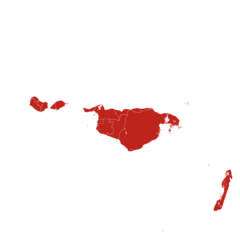
Countries with a green colour
Tested & adopted
Countries with a bright green colour
Adopted
Countries with a yellow colour
Tested
Countries with a blue colour
Testing ongoing
Egypt Equatorial Guinea Ethiopia Algeria Angola Benin Botswana Burundi Burkina Faso Democratic Republic of the Congo Djibouti Côte d’Ivoire Eritrea Gabon Gambia Ghana Guinea Guinea-Bissau Cameroon Kenya Libya Liberia Madagascar Mali Malawi Morocco Mauritania Mozambique Namibia Niger Nigeria Republic of the Congo Rwanda Zambia Senegal Sierra Leone Zimbabwe Somalia South Sudan Sudan South Africa Eswatini Tanzania Togo Tunisia Chad Uganda Western Sahara Central African Republic Lesotho
Countries where the technology is being tested or has been tested and adopted
Country Testing ongoing Tested Adopted
Burkina Faso No ongoing testing Tested Adopted
Mali No ongoing testing Tested Adopted

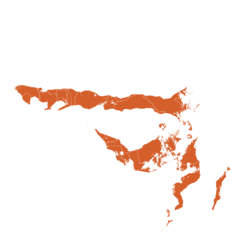
This technology can be used in the colored agro-ecological zones. Any zones shown in white are not suitable for this technology.
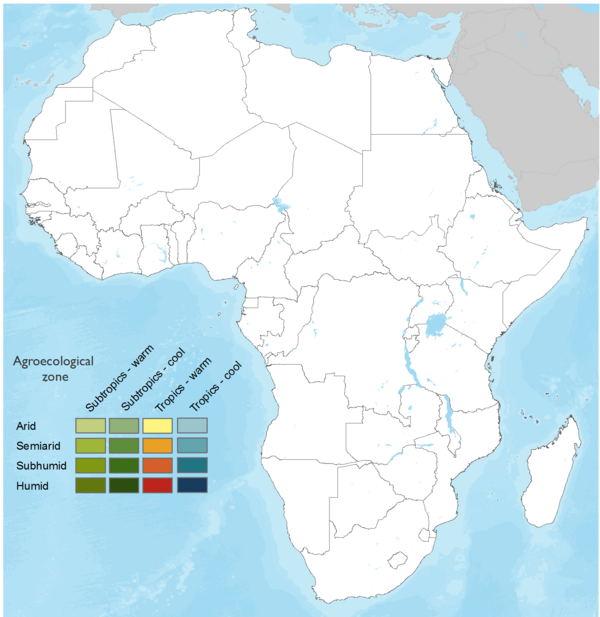
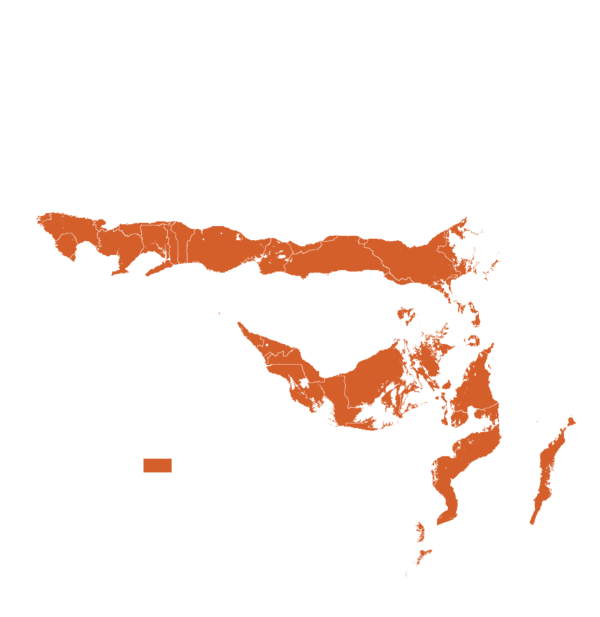
Agro-ecological zones where this technology can be used
AEZ Subtropic - warm Subtropic - cool Tropic - warm Tropic - cool
Arid
Semiarid
Subhumid
Humid

Source: HarvestChoice/IFPRI 2009

The United Nations Sustainable Development Goals that are applicable to this technology.
Sustainable Development Goal 1: no poverty
Goal 1: no poverty

Increases farmer incomes through higher yields, off-season production, and market opportunities.
Sustainable Development Goal 2: zero hunger
Goal 2: zero hunger

Improves food security through higher potato production and quality seed access.
Sustainable Development Goal 17: partnerships for the goals
Goal 17: partnerships for the goals

Requires collaboration among research, government, private sector, and farmers.

1. Seed Selection and Preparation

  • Use quality planting material: Source certified Elite III disease-free seed potatoes to ensure healthy crop establishment and high yield potential.
  • Prepare seed tubers: Plant small tubers whole, while larger tubers should be cut into pieces containing 1–3 healthy buds (“eyes”).
  • Apply suberization: Allow cut seed pieces to dry and heal for 1–3 days in a cool, well-ventilated area to reduce rotting after planting.

2. Field Preparation

  • Assess soil conditions: Conduct soil testing to determine nutrient requirements and ensure suitable conditions (well-drained soils with good organic matter content and pH between 5.0 and 6.5).
  • Practice crop rotation: Avoid fields previously planted with tomatoes, peppers, eggplants, or other nightshade crops to reduce disease risks.
  • Prepare the planting bed: Create a fine, well-prepared seedbed with ridges and incorporate approximately 10 t/ha of well-decomposed organic manure.

3. Planting and Nutrient Management

  • Plant at the right conditions: Start planting when soil temperatures reach 7–10°C or above.
  • Maintain recommended spacing: Plant seed pieces at 8–10 cm depth, with approximately 25–30 cm between plants and 75–90 cm between rows (adjust spacing depending on production objectives).
  • Apply balanced fertilization: Use soil test recommendations to guide fertilizer application. Apply NPK fertilizers as required while avoiding excessive nitrogen, which can reduce tuber development.

4. Crop Management

  • Ensure adequate water supply: Maintain consistent soil moisture throughout the crop cycle, with increased attention during early growth stages and adjustment according to plant development.
  • Perform earthing-up (hilling): Cover the base of plants with soil when they reach 15–20 cm height to protect tubers from sunlight and improve tuber development.
  • Implement Integrated Pest Management (IPM): Regularly monitor pests and diseases, including aphids, potato beetles, and early/late blight, using resistant varieties and targeted control measures.

5. Harvest and Post-Harvest Management

  • Harvest at the appropriate maturity stage: Harvest young potatoes 2–3 weeks after flowering or mature tubers once vines naturally die back.
  • Cure harvested tubers: Store harvested potatoes in dark, ventilated conditions at 10–15°C for 1–2 weeks to strengthen the skin and heal minor injuries.
  • Store under suitable conditions: Use cool, dark, and well-ventilated storage facilities with appropriate temperature and humidity control to maintain quality and reduce losses. Varieties such as AC Chaleur are particularly suitable for longer storage due to their excellent storage performance.

Last updated on Jul 29, 2026