
TAAT e-catalog
for
Development partners
https://e-catalogs.taat-africa.org/org/technologies/pac-740-orange-maize-hybrid
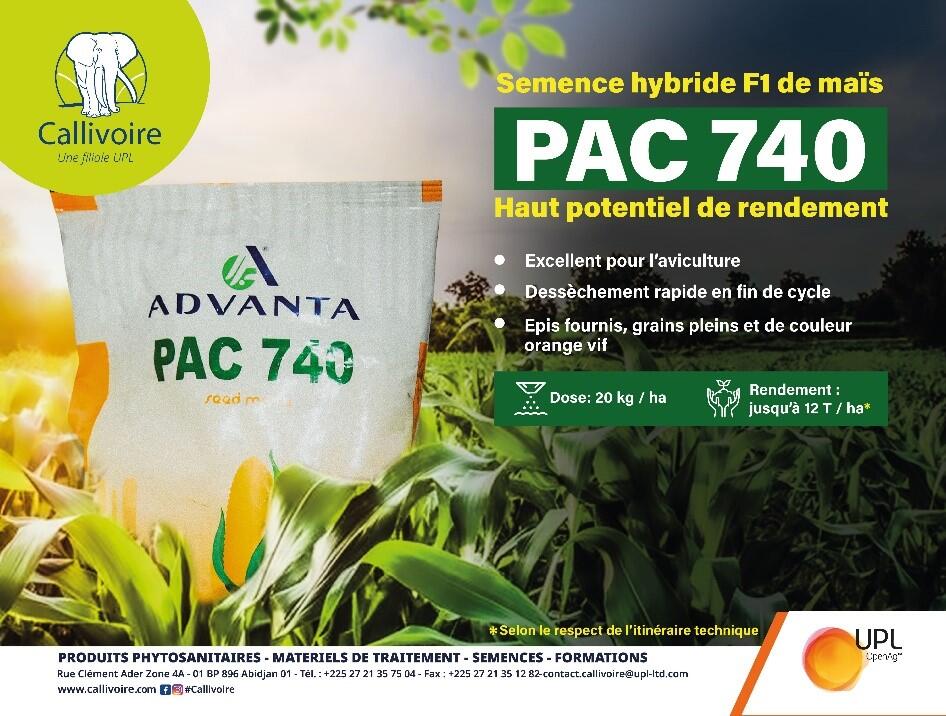
High yielding orange maize hybrid, medium maturity with high field tolerance to drought
The Orange Maize PAC 740 is a high-yielding maize variety designed to produce up to 11 metric tons per hectare, with a potential of 12 tons under optimal conditions. Maturing in just 115 days, it offers strong tolerance to maize leaf blight and thrives in drought-prone environments. Rich in protein, PAC 740 is ideal for both human consumption and poultry farming, providing farmers with a reliable solution for enhanced productivity even in challenging conditions across regions like India, Thailand, and several African countries.
This technology is pre-validated.
| Project | Countries | Beneficiaries | Budget (USD) & duration | Key figures |
|---|---|---|---|---|
|
EFPP Guinea Emergency Food Production Programme |
|
|
25.23 million African Development Bank (AfDB) 2022–2024 |
|
|
PADCV-PTA Projet d’Appui au Developpement des Chaines de Valeurs en soutien au Programme de Transformation de l’Agriculture |
|
|
321 million African Development Bank (AfDB) 2024–2029 |
|
|
PUPSAN Emergency Production and Food & Nutrition Security Project |
|
|
7.04 million African Development Bank (AfDB) 2023–2026 |
|
Figures in italic are from project plans and may change during implementation.
Adults 18 and over: Positive high
The poor: Positive medium
Under 18: Positive medium
Women: Positive high
Climate adaptability: Highly adaptable
Farmer climate change readiness: Significant improvement
Biodiversity: No impact on biodiversity
Carbon footprint: Much less carbon released
Soil quality: Does not affect soil health and fertility
Water use: Much less water used
Tolerance to Foliar Diseases, Especially Blight: This variety exhibits a robust tolerance to foliar diseases, particularly blight, ensuring a higher level of crop health and reducing the impact of diseases on overall yields.
Drought Tolerance: Developed with a focus on resilience, this maize variety demonstrates significant drought tolerance, allowing it to thrive in conditions of limited water availability and mitigate the adverse effects of moisture stress.
High Yields: The variety is designed to deliver high yields, enhancing overall productivity and providing farmers with a substantial increase in crop output compared to conventional varieties.
Dual-Purpose Potential: By serving as both a grain producer and a source of fodder, this hybrid seed offers a dual-purpose solution, catering to the diverse needs of farmers engaged in both crop cultivation and livestock management.
Double Yield Potential Compared to OPV: In comparison to Open Pollinated Varieties (OPVs), this hybrid seed presents a remarkable double yield potential. This means farmers can expect significantly higher returns on their investment, making it a financially attractive option.
Orange Maize Hybrids improve food and nutritional security, increase climate resilience, and enhance farmer incomes through high-yielding, drought-tolerant, and nutritionally enriched maize varieties. The technology can be integrated into food security, nutrition, climate resilience, seed systems, and maize value chain development programs. Its adoption contributes to SDG 1 (No Poverty), SDG 2 (Zero Hunger), SDG 3 (Good Health and Well-being), and SDG 13 (Climate Action).
To integrate this technology into your project, plan and budget for the following activities and prerequisites:
Total input costs
Estimated average gross income
Open source / open access
Scaling Readiness describes how complete a technology's development is and its ability to be scaled. It produces a score that measures a technology's readiness along two axes: the level of maturity of the idea itself, and the level to which the technology has been used so far.
Each axis goes from 0 to 9 where 9 is the “ready-to-scale” status. For each technology profile in the e-catalogs we have documented the scaling readiness status from evidence given by the technology providers. The e-catalogs only showcase technologies for which the scaling readiness score is at least 8 for maturity of the idea and 7 for the level of use.
The graph below represents visually the scaling readiness status for this technology, you can see the label of each level by hovering your mouse cursor on the number.
Read more about scaling readiness ›
Uncontrolled environment: validated
Common use by intended users, in the real world
| Maturity of the idea | Level of use | |||||||||
| 9 | ||||||||||
| 8 | ||||||||||
| 7 | ||||||||||
| 6 | ||||||||||
| 5 | ||||||||||
| 4 | ||||||||||
| 3 | ||||||||||
| 2 | ||||||||||
| 1 | ||||||||||
| 1 | 2 | 3 | 4 | 5 | 6 | 7 | 8 | 9 | ||
| Project | Countries | Beneficiaries | Budget (USD) & duration | Key figures |
|---|---|---|---|---|
|
EFPP Guinea Emergency Food Production Programme |
|
|
25.23 million African Development Bank (AfDB) 2022–2024 |
|
|
PADCV-PTA Projet d’Appui au Developpement des Chaines de Valeurs en soutien au Programme de Transformation de l’Agriculture |
|
|
321 million African Development Bank (AfDB) 2024–2029 |
|
|
PUPSAN Emergency Production and Food & Nutrition Security Project |
|
|
7.04 million African Development Bank (AfDB) 2023–2026 |
|
Figures in italic are from project plans and may change during implementation.
| Country | Testing ongoing | Tested | Adopted |
|---|---|---|---|
| Benin | –No ongoing testing | Tested | –Not adopted |
| Cameroon | –No ongoing testing | Tested | –Not adopted |
| Côte d'Ivoire | –No ongoing testing | Tested | Adopted |
| Ghana | –No ongoing testing | Tested | Adopted |
| Nigeria | –No ongoing testing | Tested | –Not adopted |
| Sierra Leone | –No ongoing testing | Tested | Adopted |
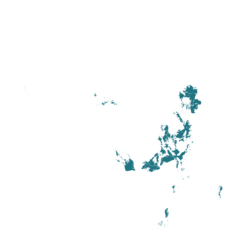
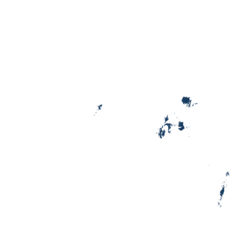
This technology can be used in the colored agro-ecological zones. Any zones shown in white are not suitable for this technology.
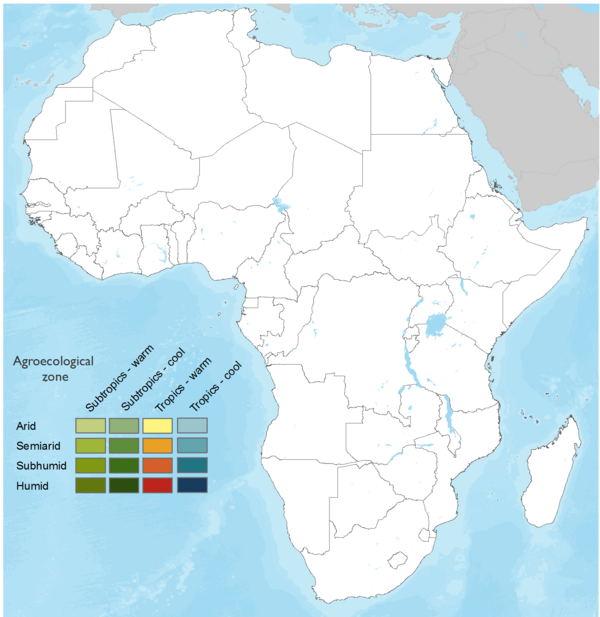

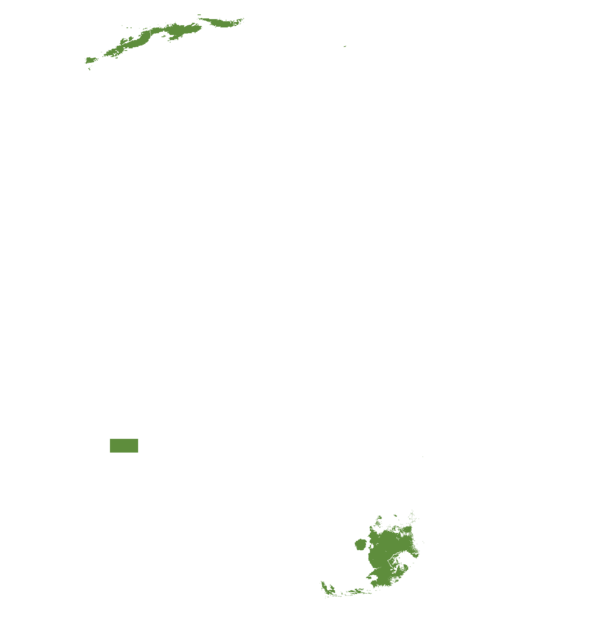




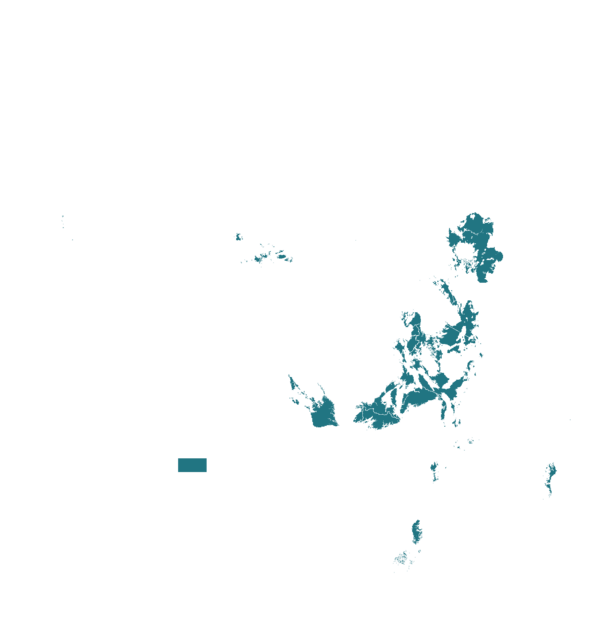

| AEZ | Subtropic - warm | Subtropic - cool | Tropic - warm | Tropic - cool |
|---|---|---|---|---|
| Arid | – | – | – | – |
| Semiarid | – | – | ||
| Subhumid | – | – | ||
| Humid |
Source: HarvestChoice/IFPRI 2009
The United Nations Sustainable Development Goals that are applicable to this technology.


Last updated on Sep 11, 2026
This technology can be used in the colored agro-ecological zones.








PAC 740: Orange maize hybrid
https://e-catalogs.taat-africa.org/org/technologies/pac-740-orange-maize-hybrid
Last updated on 11 September 2026, printed on Oct 25, 2026
Enquiries e-catalogs@taat.africa