Logo
TAAT e-catalog for Development partners
https://e-catalogs.taat-africa.org/org/technologies/improved-cowpea-varieties-short-duration-white-cowpea-varieties-for-boiled-grain-market
Request information View pitch brochure

Improved Cowpea Varieties: Short Duration White Cowpea Varieties for Boiled Grain Market

High-yielding, early maturing, and striga-resistant cowpea varieties for farmers!

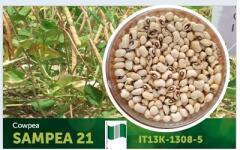
The IITA improved cowpea varieties are short-duration white cowpeas that mature in 65–76 days and are highly productive, yielding over 1.5 t/ha compared to 0.5 t/ha for traditional varieties. They are resistant to Striga, Alectra, and major diseases, while also being drought-tolerant, making them suitable for smallholder farmers in the Guinea, Sahel and Sudan Savanna zones. The seeds are medium to large, white, fast-cooking, and maintain their shape when boiled. Rich in protein (>23%) and essential micronutrients, these varieties enhance nutrition security while providing farmers with a reliable source of income, contributing to poverty reduction and sustainable development.

2

This technology is pre-validated.

9•7

Scaling readiness: idea maturity 9/9; level of use 7/9

Adults 18 and over: Positive high

Provide good nutrition, employment, and household income for most farmers

Others: Positive high

Animal industry: Source of fodder for animal feed

The poor: Positive high

Cheap source of protein and generates income for the poor

Under 18: Positive medium

Provides good nutrition

Women: Positive high

Source of income for women, easy to cook, saves women time, and energy saving as well

Climate adaptability: Highly adaptable

The technology was designed for adaptation in the dry Savanna, especially the Shael and Sudan Savannas agroecologies

Farmer climate change readiness: Significant improvement

The technology is packed with drought-tolerant varieties, protecting farmers' production in drought-prone areas and periods.

Biodiversity: Positive impact on biodiversity

Soil conservation and fertility restoration due to its nitrogen-fixing capability

Carbon footprint: Same amount of carbon released

During decomposition, cowpea plants release carbon, with studies showing that 60-64% of the initial plant carbon can be lost as CO2 within 68 days. This carbon release is a natural part of the carbon cycle and contributes to soil health and nutrient cycling

Environmental health: Greatly improves environmental health

Cowpea farming can contribute to environmental health in several ways, primarily through improved soil fertility, increased carbon sequestration, and reduced reliance on synthetic fertilizers and pesticides.

Soil quality: Improves soil health and fertility

By fixing nitrogen in the soil and improving soil structure, cowpea farming can help build healthier soils, reduce greenhouse gas emissions, and enhance overall ecosystem resilience

Water use: Much less water used

These drought tolerant varieties require less water for growth and development

Problem

  • Persistently low farmer income: With yields as low as 500 kg/ha, smallholders remain trapped in poverty, limiting rural development progress.
  • Severe pest, disease, and weed constraints: Striga, Alectra, and recurring infestations erode food security and sustainability of interventions.
  • Climate vulnerability: Drought-prone and low-fertility soils reduce the resilience of farming systems, leaving farmers exposed to shocks.
  • Weak nutrition outcomes: Farmers and consumers lack sufficient access to affordable, nutrient-dense cowpea, fueling malnutrition in vulnerable groups.
  • Barrier to scaling impact: Without improved varieties, donor investments in agriculture have limited, short-term effects.

Solution

  • High-impact agricultural solution: Improved varieties triple yields, raising farmer incomes and reducing rural poverty.
  • Climate resilience: Drought and Striga resistance make this technology ideal for vulnerable farming communities.
  • Nutrition-sensitive intervention: Protein- and micronutrient-rich seeds directly address malnutrition in food-insecure regions.
  • Alignment with SDGs: Contributes to Zero Hunger, Good Health, Poverty Reduction, and Climate Action.
  • Scalable investment: Proven demand from farmers and consumers ensures sustainability of donor-funded interventions.

Key points to design your program

A Solution for Cowpea Farming in Africa

This technology addresses key challenges in cowpea production, including low productivity, Striga and Alectra infestations, drought, and major diseases. Improved Cowpea Varieties mature within 65–76 days, much faster than traditional varieties, enabling early harvests and multiple cropping cycles in challenging environments.

They support several Sustainable Development Goals: SDG 2 by improving food security through higher yields, SDG 3 by enhancing nutrition with protein- and micronutrient-rich seeds, and SDG 13 by promoting climate resilience in smallholder farming systems.

This technology is ideal for development programs focused on improving food security, farmer incomes, and rural livelihoods. With support from organizations like IITA and national agricultural research programs, it provides technical assistance and ensures successful adoption for cowpea farmers across Africa.
 

IP

No formal IP rights

Scaling Readiness describes how complete a technology’s development is and its ability to be scaled. It produces a score that measures a technology’s readiness along two axes: the level of maturity of the idea itself, and the level to which the technology has been used so far.

Each axis goes from 0 to 9 where 9 is the “ready-to-scale” status. For each technology profile in the e-catalogs we have documented the scaling readiness status from evidence given by the technology providers. The e-catalogs only showcase technologies for which the scaling readiness score is at least 8 for maturity of the idea and 7 for the level of use.

The graph below represents visually the scaling readiness status for this technology, you can see the label of each level by hovering your mouse cursor on the number.

Read more about scaling readiness ›

Scaling readiness score of this technology

Maturity of the idea 9 out of 9

Uncontrolled environment: validated

Level of use 7 out of 9

Common use by projects NOT connected to technology provider

Maturity of the idea Level of use
9
8
7
6
5
4
3
2
1
1 2 3 4 5 6 7 8 9

Countries with a green colour
Tested & adopted
Countries with a bright green colour
Adopted
Countries with a yellow colour
Tested
Countries with a blue colour
Testing ongoing
Egypt Equatorial Guinea Ethiopia Algeria Angola Benin Botswana Burundi Burkina Faso Democratic Republic of the Congo Djibouti Côte d’Ivoire Eritrea Gabon Gambia Ghana Guinea Guinea-Bissau Cameroon Kenya Libya Liberia Madagascar Mali Malawi Morocco Mauritania Mozambique Namibia Niger Nigeria Republic of the Congo Rwanda Zambia Senegal Sierra Leone Zimbabwe Somalia South Sudan Sudan South Africa Eswatini Tanzania Togo Tunisia Chad Uganda Western Sahara Central African Republic Lesotho
Countries where the technology is being tested or has been tested and adopted
Country Testing ongoing Tested Adopted
Benin Testing ongoing Not tested Not adopted
Botswana Testing ongoing Not tested Not adopted
Burkina Faso No ongoing testing Tested Adopted
Cameroon Testing ongoing Not tested Not adopted
Central African Republic Testing ongoing Not tested Not adopted
Chad Testing ongoing Not tested Not adopted
Ghana No ongoing testing Tested Adopted
Malawi Testing ongoing Not tested Not adopted
Mali Testing ongoing Not tested Not adopted
Mozambique Testing ongoing Not tested Not adopted
Niger No ongoing testing Tested Adopted
Nigeria No ongoing testing Tested Adopted
Senegal Testing ongoing Not tested Not adopted
Sierra Leone No ongoing testing Tested Adopted
Somalia Testing ongoing Not tested Not adopted
South Africa Testing ongoing Not tested Not adopted
South Sudan Testing ongoing Not tested Not adopted
Sudan Testing ongoing Not tested Not adopted
Tanzania Testing ongoing Not tested Not adopted
Togo Testing ongoing Not tested Not adopted
Zambia Testing ongoing Not tested Not adopted
Zimbabwe Testing ongoing Not tested Not adopted

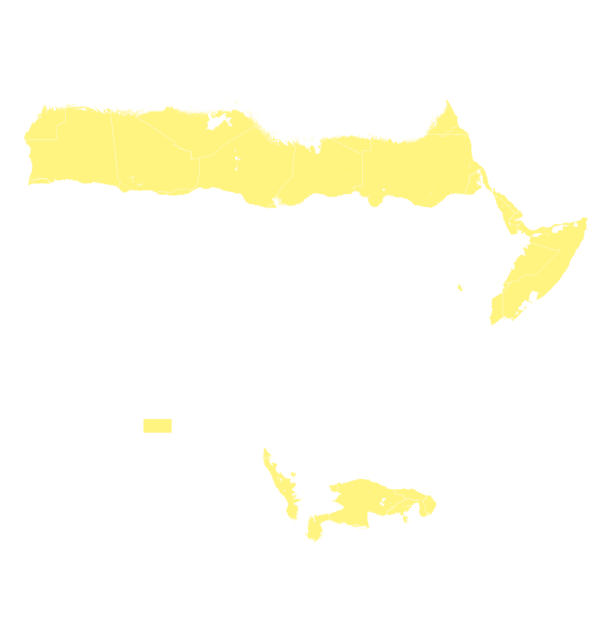
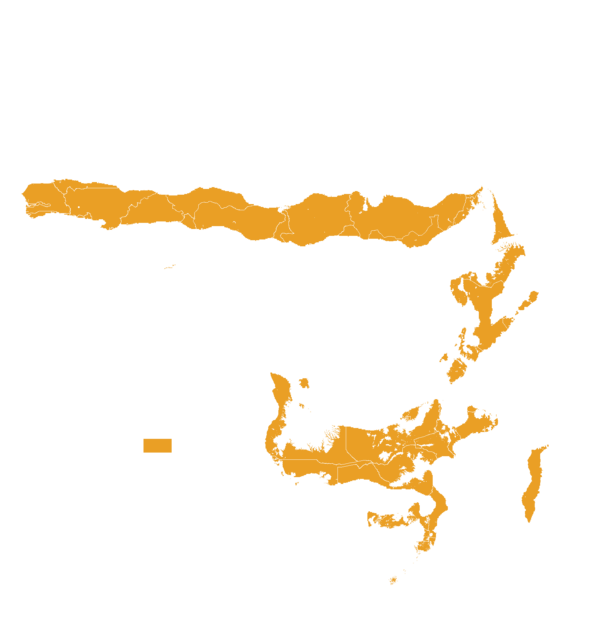
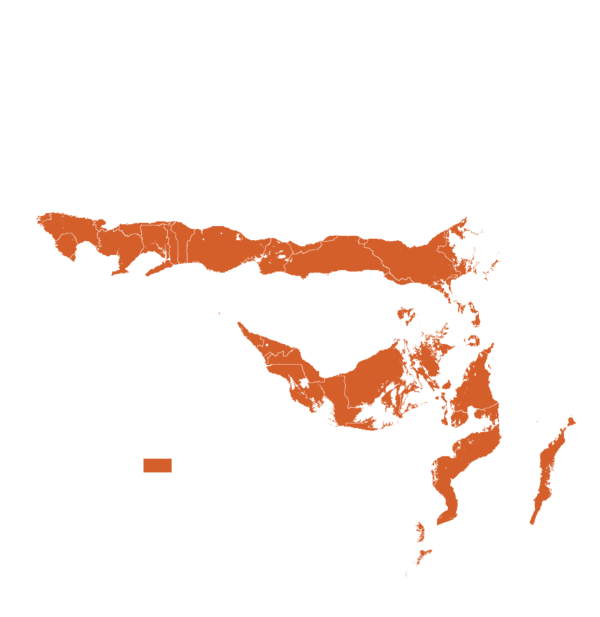
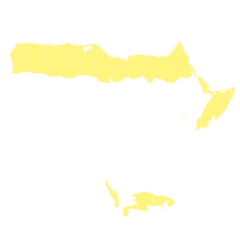
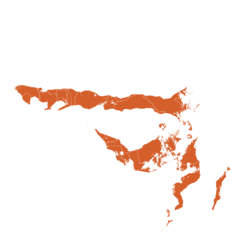
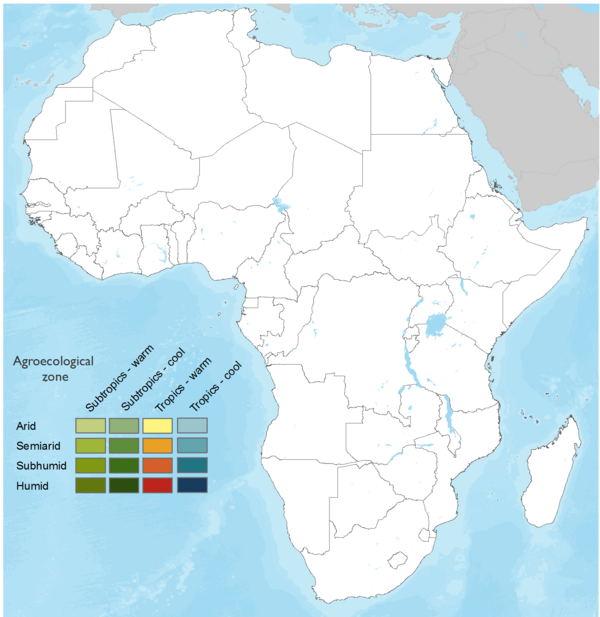
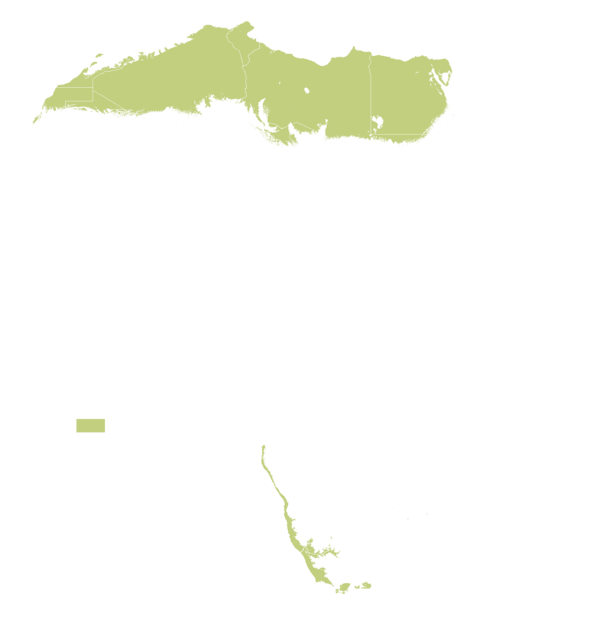
This technology can be used in the colored agro-ecological zones. Any zones shown in white are not suitable for this technology.

Agro-ecological zones where this technology can be used
AEZ Subtropic - warm Subtropic - cool Tropic - warm Tropic - cool
Arid
Semiarid
Subhumid
Humid

Source: HarvestChoice/IFPRI 2009

The United Nations Sustainable Development Goals that are applicable to this technology.

Sustainable Development Goal 1: no poverty
Goal 1: no poverty

Technology generates income for farmers, driving them out of poverty

Sustainable Development Goal 2: zero hunger
Goal 2: zero hunger

Technology provides affordable and nutritious food ,contributing to hunger alleviation

Sustainable Development Goal 3: good health and well-being
Goal 3: good health and well-being

Technology provides a cheap source of protein and micronutrients required for good health

Sustainable Development Goal 13: climate action
Goal 13: climate action

This is a climate-smart technology; the varieties are drought-tolerant

Good Agronomic Practices for Improved Cowpea Varieties

  1. Use quality seeds – Always buy seeds from certified sellers or trusted seed companies to ensure high germination and healthy plants.
  2. Prepare the land properly – Cowpea grows best in well-drained soils. Avoid planting in waterlogged areas.
  3. Plant at the right spacing – For short-duration varieties, use 75 cm between rows and 20 cm between plants within a row.
  4. Fertilize correctly – Apply NPK fertilizer two weeks after planting to support strong growth.
  5. Control weeds – Weed the field 3–4 times during the season, depending on weed pressure in your field.
  6. Protect against insects – Spray recommended insecticides 3–4 times in a season to reduce insect damage.
  7. Harvest on time – Harvest when pods are mature and dry to avoid losses.
  8. Dry properly before threshing – Ensure pods are well dried before threshing and storing to maintain grain quality.
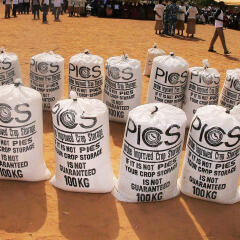
  9. Store safely – Use PICS bags or airtight containers to protect seeds from Bruchid damage during storage.

Last updated on 5 May 2026