TAAT e-catalog
for
Development partners
https://e-catalogs.taat-africa.org/org/technologies/six-steps-to-cassava-weed-management

Weed-free Fields, Bountiful Yields!
The "Six Steps Cassava Weed Management" technology is a comprehensive solution to the persistent issue of weed encroachment in cassava fields across Sub-Saharan Africa. By offering a decision support framework that covers various key control measures, it empowers farmers to keep their cassava crops free of weeds, resulting in significantly higher root yields. This innovative approach is adaptable to the diverse agricultural conditions and resources of small-scale farmers, making it a valuable tool for increasing cassava productivity and improving food security in the region.
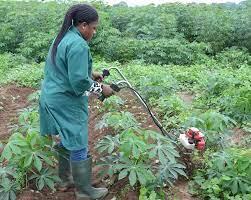
This technology is TAAT1 validated.
| Project | Countries | Beneficiaries | Budget (USD) & duration | Key figures |
|---|---|---|---|---|
|
ENSURE Enabling Environments for Sustainable Regional Agriculture Extension |
|
|
13.14 million 2024–2027 |
|
Figures in italic are from project plans and may change during implementation.
Adults 18 and over: Positive medium
The poor: No impact
Under 18: Positive low
Women: Positive medium
Climate adaptability: Highly adaptable
Farmer climate change readiness: Significant improvement
Biodiversity: No impact on biodiversity
Carbon footprint: A bit less carbon released
Environmental health: Moderately improves environmental health
Soil quality: Improves soil health and fertility
Water use: A bit less water used
The Six Steps to Cassava Weed Management is an integrated decision-support approach that combines site selection, appropriate land preparation, timely weed control, and good agronomic practices to improve cassava productivity and reduce production losses caused by weeds. It can be integrated into cassava value chain development, food security, climate-smart agriculture, sustainable intensification, and rural livelihood programmes. By improving weed management efficiency, optimizing labour and herbicide use, and reducing competition for water and nutrients during the critical early growth stages, the technology strengthens cassava productivity, farm profitability, and environmental sustainability. It supports SDGs 1 (No Poverty), 2 (Zero Hunger), 8 (Decent Work and Economic Growth), 12 (Responsible Consumption and Production), and 13 (Climate Action), while improving productivity and reducing labour constraints for women, youth, and smallholder cassava producers.
To successfully integrate this technology, consider the following key actions:
Cost for herbicide application
Cost for weed removal labor
Open source / open access
Scaling Readiness describes how complete a technology's development is and its ability to be scaled. It produces a score that measures a technology's readiness along two axes: the level of maturity of the idea itself, and the level to which the technology has been used so far.
Each axis goes from 0 to 9 where 9 is the “ready-to-scale” status. For each technology profile in the e-catalogs we have documented the scaling readiness status from evidence given by the technology providers. The e-catalogs only showcase technologies for which the scaling readiness score is at least 8 for maturity of the idea and 7 for the level of use.
The graph below represents visually the scaling readiness status for this technology, you can see the label of each level by hovering your mouse cursor on the number.
Read more about scaling readiness ›
Uncontrolled environment: validated
Common use by projects NOT connected to technology provider
| Maturity of the idea | Level of use | |||||||||
| 9 | ||||||||||
| 8 | ||||||||||
| 7 | ||||||||||
| 6 | ||||||||||
| 5 | ||||||||||
| 4 | ||||||||||
| 3 | ||||||||||
| 2 | ||||||||||
| 1 | ||||||||||
| 1 | 2 | 3 | 4 | 5 | 6 | 7 | 8 | 9 | ||
| Project | Countries | Beneficiaries | Budget (USD) & duration | Key figures |
|---|---|---|---|---|
|
ENSURE Enabling Environments for Sustainable Regional Agriculture Extension |
|
|
13.14 million 2024–2027 |
|
Figures in italic are from project plans and may change during implementation.
| Country | Testing ongoing | Tested | Adopted |
|---|---|---|---|
| Democratic Republic of the Congo | –No ongoing testing | Tested | Adopted |
| Nigeria | –No ongoing testing | Tested | Adopted |
| Tanzania | –No ongoing testing | Tested | Adopted |
| Zambia | –No ongoing testing | Tested | Adopted |
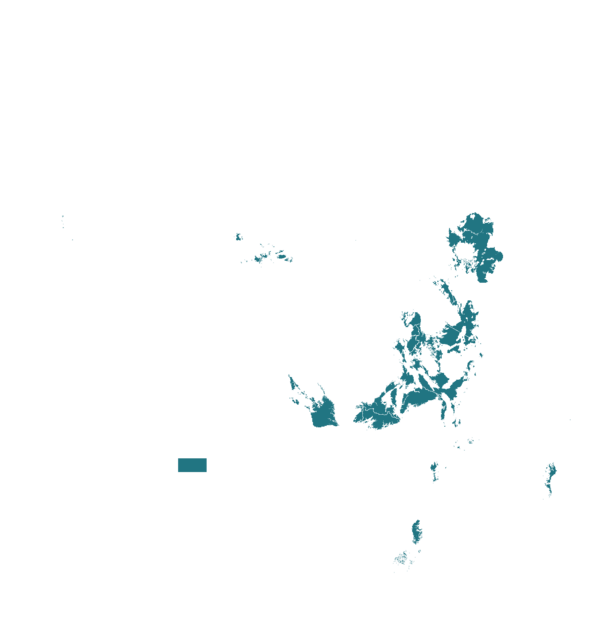
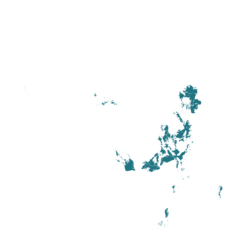
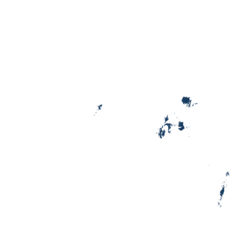
This technology can be used in the colored agro-ecological zones. Any zones shown in white are not suitable for this technology.
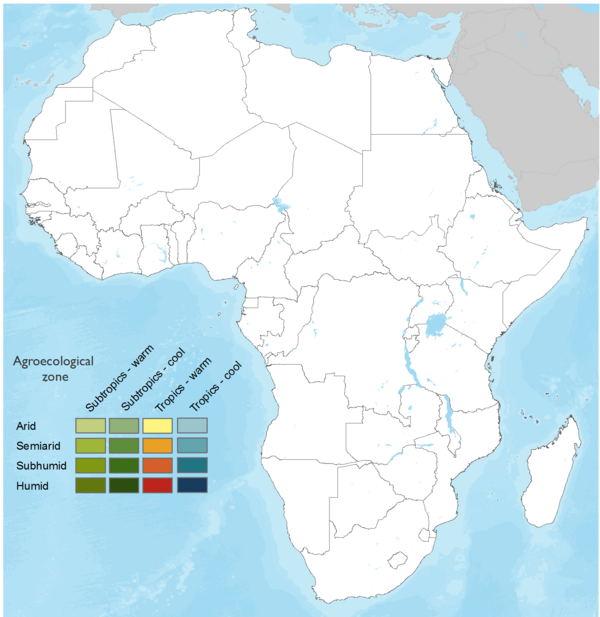





| AEZ | Subtropic - warm | Subtropic - cool | Tropic - warm | Tropic - cool |
|---|---|---|---|---|
| Arid | – | – | – | – |
| Semiarid | – | – | ||
| Subhumid | – | – | ||
| Humid | – | – |
Source: HarvestChoice/IFPRI 2009
The United Nations Sustainable Development Goals that are applicable to this technology.

A video demonstrating how to apply these steps is also available here.
Last updated on Sep 11, 2026
This technology can be used in the colored agro-ecological zones.






Six Steps to Cassava Weed Management
https://e-catalogs.taat-africa.org/org/technologies/six-steps-to-cassava-weed-management
Last updated on 11 September 2026, printed on Oct 8, 2026
Enquiries e-catalogs@taat.africa