
TAAT e-catalog
for
Development partners
https://e-catalogs.taat-africa.org/org/technologies/isat-intelligent-agricultural-systems-advisory-tool-for-climate-risk-management-and-farm-decision-making
Turning climate forecasts into actionable farm guidance!
iSAT is a climate information and advisory system designed to support smallholder farmers in managing climate risks through tailored, location-specific agricultural guidance. It combines climate forecasts, crop information, and local farmer knowledge using decision tree logic to generate practical recommendations for both pre-season planning and in-season farm management.

This technology is pre-validated.
|
Target Groups |
Positive Impacts |
|
Smallholder farmers & youth entrepreneurs in rainfed systems |
|
|
Women in low-literacy farming communities |
|
|
Farmers in climate-vulnerable regions (drought/flood-prone areas) |
|
Climate adaptability: Highly adaptable
It supports both pre-season planning and in-season adjustments, making it highly flexible to climate variability and change.
Farmer climate change readiness: Significant improvement
iSAT improves farmer readiness by providing timely climate forecasts and practical guidance on planting dates, crop selection, and adaptive farm practices, helping farmers anticipate and respond to climate risks rather than react after losses occur.
iSAT improves climate risk management, agricultural productivity, and resilience by providing farmers with timely, location-specific, and crop-specific agro-advisories based on climate forecasts. It helps farmers make informed decisions on crop selection, planting dates, input use, pest and disease management, and climate adaptation practices. The tool can be integrated into climate-smart agriculture, food security, agricultural extension, digital agriculture, climate adaptation, and rural resilience programs. Its adoption contributes to SDG 2 (Zero Hunger), SDG 13 (Climate Action), SDG 1 (No Poverty), and SDG 15 (Life on Land).
To integrate this technology into your project, plan and budget for the following activities and prerequisites:
Track key indicators such as the number of farmers reached and actively using iSAT, adoption of recommended climate-smart practices, changes in crop yields and production costs, reduction in climate-related losses, reach of advisory services across target areas, farmer satisfaction, and improvements in resilience to climate variability.
Open source / open access
Scaling Readiness describes how complete a technology's development is and its ability to be scaled. It produces a score that measures a technology's readiness along two axes: the level of maturity of the idea itself, and the level to which the technology has been used so far.
Each axis goes from 0 to 9 where 9 is the “ready-to-scale” status. For each technology profile in the e-catalogs we have documented the scaling readiness status from evidence given by the technology providers. The e-catalogs only showcase technologies for which the scaling readiness score is at least 8 for maturity of the idea and 7 for the level of use.
The graph below represents visually the scaling readiness status for this technology, you can see the label of each level by hovering your mouse cursor on the number.
Read more about scaling readiness ›
Uncontrolled environment: tested
Common use by projects NOT connected to technology provider
| Maturity of the idea | Level of use | |||||||||
| 9 | ||||||||||
| 8 | ||||||||||
| 7 | ||||||||||
| 6 | ||||||||||
| 5 | ||||||||||
| 4 | ||||||||||
| 3 | ||||||||||
| 2 | ||||||||||
| 1 | ||||||||||
| 1 | 2 | 3 | 4 | 5 | 6 | 7 | 8 | 9 | ||
|
Target Groups |
Positive Impacts |
|
Smallholder farmers & youth entrepreneurs in rainfed systems |
|
|
Women in low-literacy farming communities |
|
|
Farmers in climate-vulnerable regions (drought/flood-prone areas) |
|
|
Target Groups |
Unintended Impacts |
Mitigation Measures |
|
Smallholder farmers & youth entrepreneurs in rainfed systems |
|
|
|
Women in low-literacy farming communities |
|
|
|
Farmers in climate-vulnerable regions |
|
|
|
Target groups |
Adoption barriers |
Mitigation measures |
|
Smallholder farmers & youth entrepreneurs in rainfed systems |
|
|
|
Women in low-literacy farming communities |
|
|
|
Farmers in climate-vulnerable regions |
|
|
| Country | Testing ongoing | Tested | Adopted |
|---|---|---|---|
| Kenya | –No ongoing testing | –Not tested | Adopted |
| Senegal | –No ongoing testing | –Not tested | Adopted |
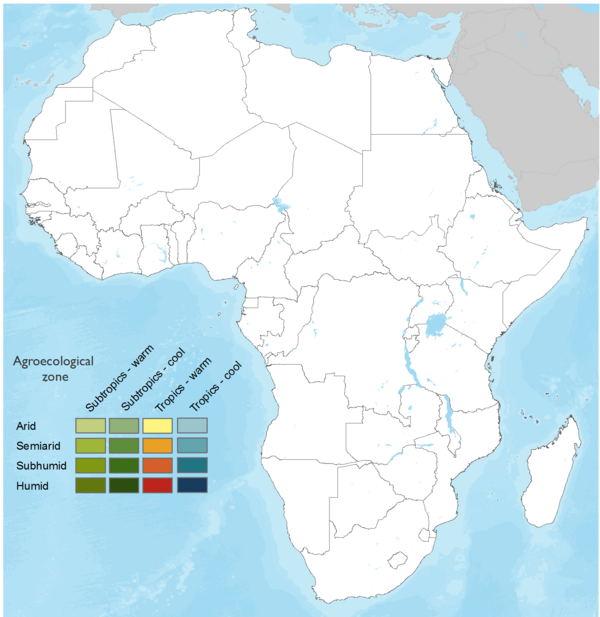
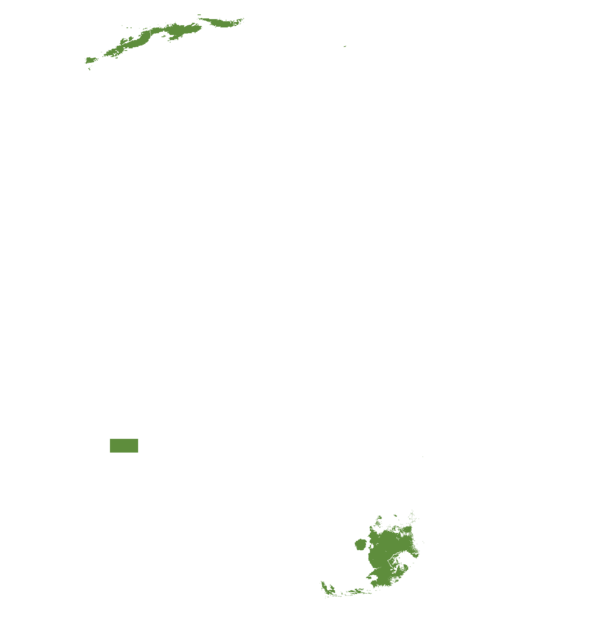
This technology can be used in the colored agro-ecological zones. Any zones shown in white are not suitable for this technology.


| AEZ | Subtropic - warm | Subtropic - cool | Tropic - warm | Tropic - cool |
|---|---|---|---|---|
| Arid | – | – | – | – |
| Semiarid | – | |||
| Subhumid | – | – | – | – |
| Humid | – | – | – | – |
Source: HarvestChoice/IFPRI 2009
The United Nations Sustainable Development Goals that are applicable to this technology.

iSAT helps reduce rural poverty by improving farmers’ productivity, lowering production costs, and increasing incomes through better climate-informed farming decisions.
iSAT supports food security by enabling farmers to optimize crop choices, planting dates, and farm management to increase yields and reduce climate-related losses.

iSAT strengthens climate adaptation by helping farmers anticipate and respond to climate variability through timely, location-specific agro-advisories.

iSAT promotes sustainable land use by guiding farmers toward efficient input use and climate-smart practices that protect soils and ecosystems.
1. Access the system (Contact the institution for support)
Farmers access iSAT through different channels depending on local availability:
2. Registration
To start receiving services, the farmer must register:
3. Receive pre-season advice
Before the planting season:
4. Follow in-season updates
During the growing season:
5. Apply decision-tree recommendations
iSAT uses structured decision logic:
6. Receive training and support
7. Use feedback and improvement loop
Last updated on Sep 11, 2026
This technology can be used in the colored agro-ecological zones.





iSAT: Intelligent Agricultural Systems Advisory Tool for Climate Risk Management and Farm Decision-Making
https://e-catalogs.taat-africa.org/org/technologies/isat-intelligent-agricultural-systems-advisory-tool-for-climate-risk-management-and-farm-decision-making
Last updated on 11 September 2026, printed on Oct 20, 2026
Enquiries e-catalogs@taat.africa