TAAT e-catalog
for
Development partners
https://e-catalogs.taat-africa.org/org/technologies/agentbi-digital-field-agent-management-platform
The missing layer in last-mile delivery, built for field agents, designed for the system
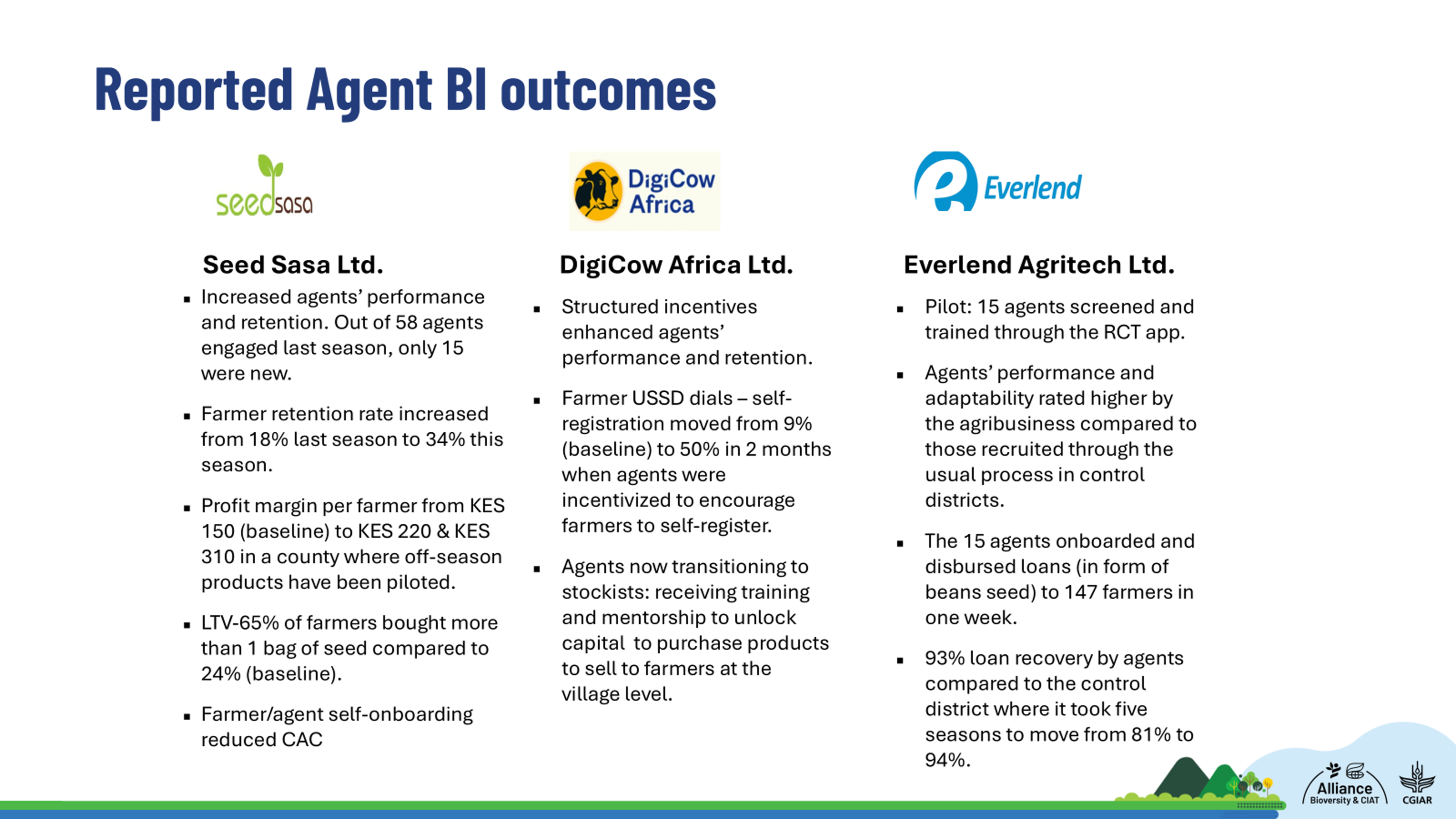
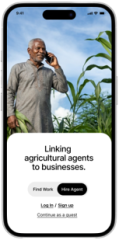
AgentBI is a modular digital platform for recruiting, training, deploying and managing agricultural field agents delivering agricultural services to farmers. It assesses agents' competencies and motivations and classifies them into four profiles: Value Chain Coordinator, Commercial Agent, Knowledge Champion and Community Mobilizer. These profiles guide agent selection, role assignment and differentiated training across programme delivery activities. The platform provides digital dashboards for monitoring agent activities, performance and engagement across implementation areas. It structures professional development through three career phases: Entry, Growth and Mastery, supported by incentives, recognition and mentorship. A feedback mechanism allows agents to assess organisational practices, including payment reliability and fairness. AgentBI can be deployed as a complete system or through selected modules integrated into existing programme management systems.
This technology is pre-validated.
|
Target group |
Positive impacts |
|---|---|
|
Women field agents with limited digital literacy |
|
|
Women farmers in remote areas |
|
|
Women farmers without mobile phones |
|
|
Farmers in remote areas without mobile phones |
|
Climate adaptability: Highly adaptable
AgentBI's modular design allows its training content and deployment strategies to be adapted to different climatic contexts.
Farmer climate change readiness: Moderate improvement
Training modules on various climate adaptation measures including drought tolerant seeds, irrigation techniques will be uploaded on the platform for agents to use in training farmers.
AgentBI can be integrated into agricultural innovation scaling, digital extension, rural market development and financial inclusion programmes that rely on field agents to reach smallholder farmers. By improving agent recruitment, training, supervision and retention, it supports more structured last-mile service delivery. The technology is relevant to SDGs 2 (Zero Hunger), 8 (Decent Work and Economic Growth), with opportunities to strengthen the participation and professional development of women and youth.
For effective integration into development programmes:
Open source / open access
Scaling Readiness describes how complete a technology's development is and its ability to be scaled. It produces a score that measures a technology's readiness along two axes: the level of maturity of the idea itself, and the level to which the technology has been used so far.
Each axis goes from 0 to 9 where 9 is the “ready-to-scale” status. For each technology profile in the e-catalogs we have documented the scaling readiness status from evidence given by the technology providers. The e-catalogs only showcase technologies for which the scaling readiness score is at least 8 for maturity of the idea and 7 for the level of use.
The graph below represents visually the scaling readiness status for this technology, you can see the label of each level by hovering your mouse cursor on the number.
Read more about scaling readiness ›
Uncontrolled environment: validated
Used by some intended users, in the real world
| Maturity of the idea | Level of use | |||||||||
| 9 | ||||||||||
| 8 | ||||||||||
| 7 | ||||||||||
| 6 | ||||||||||
| 5 | ||||||||||
| 4 | ||||||||||
| 3 | ||||||||||
| 2 | ||||||||||
| 1 | ||||||||||
| 1 | 2 | 3 | 4 | 5 | 6 | 7 | 8 | 9 | ||
|
Target group |
Positive impacts |
|---|---|
|
Women field agents with limited digital literacy |
|
|
Women farmers in remote areas |
|
|
Women farmers without mobile phones |
|
|
Farmers in remote areas without mobile phones |
|
|
Target group |
Unintended impacts |
Mitigation measures |
|---|---|---|
|
Women field agents with limited digital literacy |
|
|
|
Women farmers in remote areas |
|
|
|
Women farmers without mobile phones |
|
|
|
Farmers in remote areas without mobile phones |
|
|
|
Target group |
Adoption barriers |
Mitigation measures |
|
Women field agents with limited digital literacy |
|
|
|
Women farmers in remote areas |
|
|
|
Women farmers without mobile phones |
|
|
|
Farmers in remote areas without mobile phones |
|
|
| Country | Testing ongoing | Tested | Adopted |
|---|---|---|---|
| Ethiopia | –No ongoing testing | Tested | Adopted |
| Kenya | –No ongoing testing | Tested | Adopted |
| Malawi | –No ongoing testing | Tested | Adopted |
| Nigeria | –No ongoing testing | Tested | Adopted |
| Uganda | –No ongoing testing | Tested | Adopted |
| Zambia | –No ongoing testing | Tested | Adopted |
This technology can be used in the colored agro-ecological zones. Any zones shown in white are not suitable for this technology.
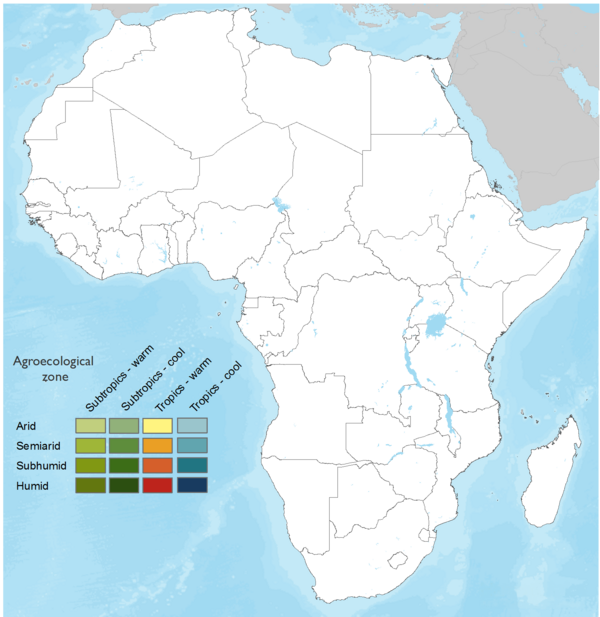
| AEZ | Subtropic - warm | Subtropic - cool | Tropic - warm | Tropic - cool |
|---|---|---|---|---|
| Arid | – | – | – | – |
| Semiarid | – | – | – | – |
| Subhumid | – | – | – | – |
| Humid | – | – | – | – |
Source: HarvestChoice/IFPRI 2009
The United Nations Sustainable Development Goals that are applicable to this technology.
Improves farmer's access to agricultural information, inputs and advisory services through trained field agents.
Supports field agent's professional development through training, competency assessment and performance monitoring.
AgentBI can be used as a complete digital field agent management platform or through selected modules integrated into existing organizational systems.
Step 1. Set up the platform: Register the organisation and configure AgentBI or the selected modules according to the intended field activities and management requirements.
Step 2. Register and assess agents: Create agent profiles and assess their competencies and motivations to identify suitable roles.
Step 3. Assign roles and provide training: Match agents to appropriate responsibilities and provide differentiated onboarding and training based on their profiles.
Step 4. Deploy and monitor agents: Assign agents to field activities and use digital dashboards to monitor their activities, performance and engagement.
Step 5. Manage incentives and career development: Apply differentiated incentives, recognition and mentorship according to agent profiles, performance and career phases.
Step 6. Review feedback and adjust management: Collect agent feedback on organisational practices and use monitoring information to adjust supervision and agent management.
Last updated on Oct 30, 2026
AgentBI: Digital field agent management platform
https://e-catalogs.taat-africa.org/org/technologies/agentbi-digital-field-agent-management-platform
Last updated on 30 October 2026, printed on Nov 3, 2026
Enquiries e-catalogs@taat.africa