Logo
TAAT e-catalog for government
https://e-catalogs.taat-africa.org/gov/technologies/isat-intelligent-agricultural-systems-advisory-tool-for-climate-risk-management-and-farm-decision-making
Request information View pitch brochure

iSAT: Intelligent Agricultural Systems Advisory Tool for Climate Risk Management and Farm Decision-Making

Turning climate forecasts into actionable farm guidance!

iSAT (Intelligent Agricultural Systems Advisory Tool) is a digital climate advisory system that helps governments improve agricultural planning and resilience. It provides farmers with location-specific and crop-specific guidance based on climate forecasts, using structured decision tree logic. This allows national systems to move from generic advisories to more precise, data-driven recommendations that support climate risk management in rainfed agriculture.

2

This technology is pre-validated.

8•7

Scaling readiness: idea maturity 8/9; level of use 7/9

Positive impacts: 10

Target Groups

Positive Impacts

Smallholder farmers & youth entrepreneurs in rainfed systems

  • Better timing of planting and input use;
  • Higher yields; Reduced crop losses;
  • Improved income stability;
  • Youth can create digital advisory-related agribusiness opportunities

Women in low-literacy farming communities

  • Improved access to climate and farm advice in local languages;
  • Better household food production decisions; reduced risk of crop failure;
  • Empowerment through access to information without literacy barriers

Farmers in climate-vulnerable regions (drought/flood-prone areas)

  • Early warning on droughts and floods;
  • Improved preparedness and adaptation;
  • Reduced climate-related losses; better resilience and recovery capacity
More...

Climate adaptability: Highly adaptable

It supports both pre-season planning and in-season adjustments, making it highly flexible to climate variability and change.

Farmer climate change readiness: Significant improvement

iSAT improves farmer readiness by providing timely climate forecasts and practical guidance on planting dates, crop selection, and adaptive farm practices, helping farmers anticipate and respond to climate risks rather than react after losses occur.

Problem

  • Governments struggle to provide accurate, localized climate and agricultural advice that reaches all farmers in different regions and farming systems.
  • Existing advisory systems often remain too general, making it difficult to guide farmers on the right crops, planting dates, and farm practices based on their specific location.
  • Increasing climate variability and extreme weather events make agricultural planning more uncertain and increase risks to national food production.
  • There is often a weak link between climate forecasts and practical, actionable recommendations that farmers can directly apply in the field.
  • Limited feedback and monitoring systems make it difficult to assess whether advisory services are actually improving productivity, resilience, and resource use efficiency.
  • As a result, governments face challenges in scaling climate-smart agriculture policies and improving national food security outcomes.

Solution

  • iSAT provides a nationally scalable advisory system that delivers localized and crop-specific recommendations based on climate conditions and farmer location.
  • It replaces generic messaging with decision tree–based logic, ensuring farmers receive precise guidance on crops, planting dates, and farm practices adapted to their context.
  • By using climate forecasts and in-season updates, iSAT helps governments translate climate variability into actionable farm-level responses, reducing national production risks.
  • The tool strengthens the link between meteorological data and agricultural decision-making, ensuring forecasts are directly converted into practical recommendations.
  • Through feedback loops (yield and impact reporting), iSAT supports governments in monitoring effectiveness and improving policy and advisory systems over time.
  • Overall, it strengthens climate-smart agriculture implementation and food security planning at scale.

Key points to design your project

The iSAT tool strengthens the connection between climate forecasts and practical agricultural decision-making by transforming climate information into timely, location-specific, and crop-specific advisories. It supports national priorities related to food security, climate-smart agriculture, and rural resilience by helping farmers reduce production losses, optimize input use, and better manage climate risks in rainfed farming systems.

To successfully integrate iSAT into a project, consider the following prerequisites and implementation activities:

  • Target smallholder farmers, particularly those dependent on rainfed agriculture.
  • Prioritize climate-vulnerable areas characterized by high rainfall variability, frequent droughts, or other climate-related risks.
  • Conduct awareness and outreach campaigns through extension services, farmer organizations, and cooperatives to promote understanding and uptake of the tool.
  • Establish partnerships with ILRI, meteorological services, agricultural research institutions, and extension agencies to support the generation and dissemination of advisories.
  • Deploy multiple communication channels—including SMS, IVR, mobile applications, radio, and voice messages—to maximize accessibility and reach.
  • Build the capacity of extension agents and farmers through training on how to access, interpret, and apply iSAT recommendations in their farming activities.

Key indicators to monitor include:

  • Number of farmers registered and actively using iSAT.
  • Adoption rate of recommended practices, such as optimized planting dates, input use, and pest and disease management measures.
  • Changes in crop yields and production costs among users.
  • Reduction in climate-related crop losses and farming risks.
  • Reach of advisory services across target regions and farming communities.
  • Farmer satisfaction and perceived usefulness of the advisories received.

IP

Open source / open access

Scaling Readiness describes how complete a technology\’s development is and its ability to be scaled. It produces a score that measures a technology\’s readiness along two axes: the level of maturity of the idea itself, and the level to which the technology has been used so far.

Each axis goes from 0 to 9 where 9 is the “ready-to-scale” status. For each technology profile in the e-catalogs we have documented the scaling readiness status from evidence given by the technology providers. The e-catalogs only showcase technologies for which the scaling readiness score is at least 8 for maturity of the idea and 7 for the level of use.

The graph below represents visually the scaling readiness status for this technology, you can see the label of each level by hovering your mouse cursor on the number.

Read more about scaling readiness ›

Scaling readiness score of this technology

Maturity of the idea 8 out of 9

Uncontrolled environment: tested

Level of use 8 out of 9

Common use by projects NOT connected to technology provider

Maturity of the idea Level of use
9
8
7
6
5
4
3
2
1
1 2 3 4 5 6 7 8 9

Positive impact 10

Target Groups

Positive Impacts

Smallholder farmers & youth entrepreneurs in rainfed systems

  • Better timing of planting and input use;
  • Higher yields; Reduced crop losses;
  • Improved income stability;
  • Youth can create digital advisory-related agribusiness opportunities

Women in low-literacy farming communities

  • Improved access to climate and farm advice in local languages;
  • Better household food production decisions; reduced risk of crop failure;
  • Empowerment through access to information without literacy barriers

Farmers in climate-vulnerable regions (drought/flood-prone areas)

  • Early warning on droughts and floods;
  • Improved preparedness and adaptation;
  • Reduced climate-related losses; better resilience and recovery capacity

Unintended impact 5

Target Groups

Unintended Impacts

Mitigation Measures

Smallholder farmers & youth entrepreneurs in rainfed systems

  • Over-reliance on advisory messages without local judgment;
  • Unequal benefit between digitally connected and non-connected farmers
  • Train farmers on combining isat with local knowledge;
  • Ensure m   ulti-channel access (SMS, IVR, radio, voice)

Women in low-literacy farming communities

  • Risk of exclusion if men control phones;
  • Misunderstanding of complex information
  • Use voice-based (IVR) messages in local languages;
  • Promote women group-based access and simplified messaging

Farmers in climate-vulnerable regions

  • Misinterpretation of forecasts leading to poor decisions;
  • Possible overdependence on forecasts
  • Strengthen training and extension support;
  • Combine isat advice with indigenous knowledge and continuous guidance

Barriers 6

Target groups

Adoption barriers

Mitigation measures

Smallholder farmers & youth entrepreneurs in rainfed systems

  • Low digital literacy;
  • Limited phone/internet access;
  • Trust issues in digital tools
  • Provide training via extension agents;
  • Use SMS, IVR, and radio; build trust through farmer groups and demonstrations

Women in low-literacy farming communities

  • Limited phone ownership;
  • Cultural restrictions on technology access
  • Use voice-based systems;
  • Promote shared access models;
  • Engage women groups and community leaders

Farmers in climate-vulnerable regions

  • Weak infrastructure and connectivity;
  • Limited extension coverage;
  • Distrust due to climate uncertainty
  • Use offline-friendly channels (radio, IVR);
  • Strengthen extension partnerships;
  • Improve local validation and communication of forecasts

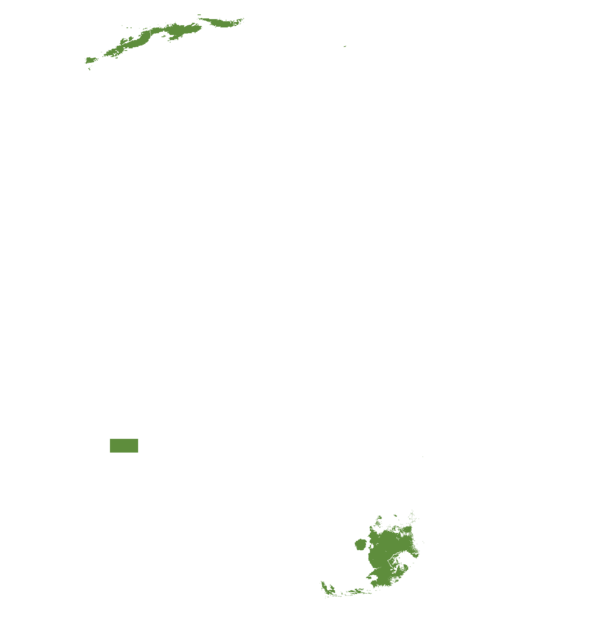
Countries with a green colour
Tested & adopted
Countries with a bright green colour
Adopted
Countries with a yellow colour
Tested
Countries with a blue colour
Testing ongoing
Egypt Equatorial Guinea Ethiopia Algeria Angola Benin Botswana Burundi Burkina Faso Democratic Republic of the Congo Djibouti Côte d’Ivoire Eritrea Gabon Gambia Ghana Guinea Guinea-Bissau Cameroon Kenya Libya Liberia Madagascar Mali Malawi Morocco Mauritania Mozambique Namibia Niger Nigeria Republic of the Congo Rwanda Zambia Senegal Sierra Leone Zimbabwe Somalia South Sudan Sudan South Africa Eswatini Tanzania Togo Tunisia Chad Uganda Western Sahara Central African Republic Lesotho
Countries where the technology is being tested or has been tested and adopted
Country Testing ongoing Tested Adopted
Kenya No ongoing testing Not tested Adopted
Senegal No ongoing testing Not tested Adopted

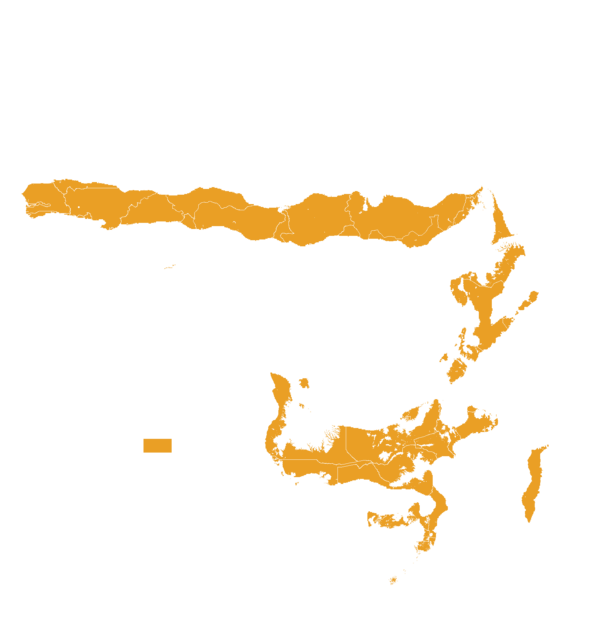
This technology can be used in the colored agro-ecological zones. Any zones shown in white are not suitable for this technology.
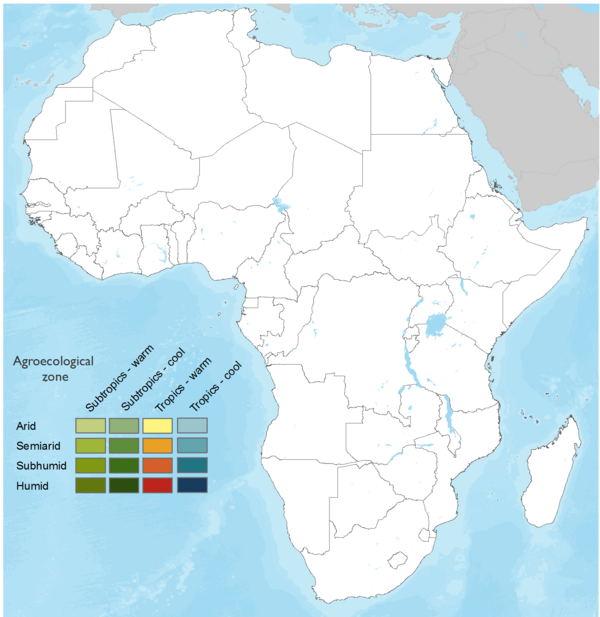
Agro-ecological zones where this technology can be used
AEZ Subtropic - warm Subtropic - cool Tropic - warm Tropic - cool
Arid
Semiarid
Subhumid
Humid

Source: HarvestChoice/IFPRI 2009

The United Nations Sustainable Development Goals that are applicable to this technology.
Sustainable Development Goal 1: no poverty
Goal 1: no poverty

iSAT helps reduce rural poverty by improving farmers’ productivity, lowering production costs, and increasing incomes through better climate-informed farming decisions.
Sustainable Development Goal 2: zero hunger
Goal 2: zero hunger

iSAT supports food security by enabling farmers to optimize crop choices, planting dates, and farm management to increase yields and reduce climate-related losses.

Sustainable Development Goal 13: climate action
Goal 13: climate action

iSAT strengthens climate adaptation by helping farmers anticipate and respond to climate variability through timely, location-specific agro-advisories.
Sustainable Development Goal 15: life on land
Goal 15: life on land

iSAT promotes sustainable land use by guiding farmers toward efficient input use and climate-smart practices that protect soils and ecosystems.

1. Access the system (Contact the institution for support)

Farmers access iSAT through different channels depending on local availability:

  • Mobile or web application (for smartphones or internet users)
  • SMS or Interactive Voice Response (IVR) system (for low or no internet areas)
  • Voice messages or phone calls in local languages
  • Radio broadcasts in some rural communities

2. Registration

To start receiving services, the farmer must register:

  • Registration is done via call center, online platform, or agricultural extension agents
  • The farmer provides key information such as:
    • Location
    • Crops or farming system
    • Type of climate information needed
    • Type of phone or access channel available

3. Receive pre-season advice

Before the planting season:

  • iSAT provides seasonal climate forecasts (e.g., rainfall levels, drought or heavy rain risk)
  • Farmers receive guidance on:
    • Which crops are most suitable
    • Best planting periods
    • Recommended crop varieties adapted to expected conditions

4. Follow in-season updates

During the growing season:

  • iSAT sends regular updates based on real-time or forecasted conditions
  • Farmers receive advice on:
    • Fertilizer application timing
    • Pest and disease control (e.g., armyworm alerts)
    • Irrigation or water conservation measures
    • Responses to dry spells or heavy rainfall

5. Apply decision-tree recommendations

iSAT uses structured decision logic:

  • Farmers follow simple “if–then” type guidance based on climate conditions
  • Example:
    • If heavy rain is expected → adjust fertilizer or protect crops
    • If dry spell is expected → apply water-saving practices or switch strategies

6. Receive training and support

  • Farmers are supported through training sessions led by extension agents or experts
  • Training helps them understand:
    • How to interpret climate information
    • How to apply recommendations correctly
    • How to adapt practices to local conditions

7. Use feedback and improvement loop

  • Farmers share information on:
    • Yields achieved
    • Costs and input use
    • Effectiveness of advice
  • This feedback helps improve future advisories and system performance

Last updated on Aug 28, 2026