Logo
TAAT e-catalog for private sector
https://e-catalogs.taat-africa.org/com/technologies/farming-with-alternative-pollinators-integrated-pollinator-habitat-for-sustainable-agriculture
Request information View pitch brochure

Farming with Alternative Pollinators: Integrated Pollinator Habitat for Sustainable Agriculture

Boost yields. Protect biodiversity. Increase profits.

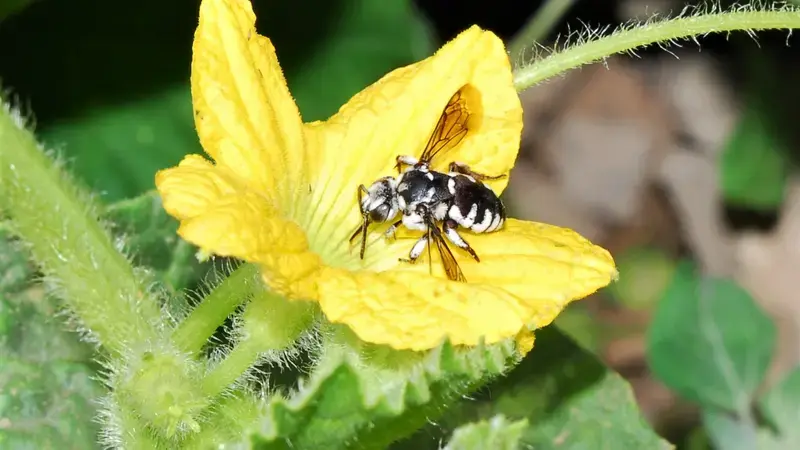
This approach is a field-based production system that combines commercial crop cultivation with the integration of marketable flowering plants within the same production area. The practice uses selected habitat enhancement plants arranged in dedicated field margins or strips according to farm size and cropping systems. These plants are managed as part of the production strategy, with species selection based on agronomic compatibility, market opportunities, and flowering characteristics.
2

This technology is pre-validated.

8•7

Scaling readiness: idea maturity 8/9; level of use 7/9

IP

Open source / open access

Problem

  • Yield and quality losses resulting from inadequate pollination, particularly for pollinator-dependent crops. Some crops, such as melon, zucchini and pumpkin can lose up to 90% of their productivity without effective pollination.
  • High production costs associated with pest management and high pesticide dependency.
  • Limited profitability of conventional biodiversity measures, where productive land is removed from cultivation without generating income.
  • Insufficient pollinator habitats within commercial farming systems, i.e. monoculture reducing pollination efficiency and crop performance.

Solution

  • Increases farmer profitability, delivering an average 121% increase in net income of different crops, improving purchasing power and business sustainability.
  • Raises crop productivity through improved pollination services, leading to higher and more reliable production volumes.
  • Reduces production risks as Marketable Habitat Enhancement Plants (MHEP) provide additional income even when the main crop fails.
  • Reduces reliance on pesticides through natural pest control, decreasing input costs and supporting sustainable production standards and healthy.
  • Strengthens climate and business resilience by diversifying farm income and improving ecosystem health.
  • Creates opportunities for new markets, including marketable companion habitat such as basil, coriander, sunflower, and other high-value plants.

Key points to design your business plan

By increasing farm profitability while improving biodiversity and climate resilience, Farming with Alternative Pollinators (FAP) enables farmers to produce more with nature, reducing production risks and dependence on chemical inputs. To successfully adopt FAP, farmers should consider the following key elements:

1. Technical and Material Requirements

  • Access quality seeds for a diverse range of Marketable Habitat Enhancement Plants (MHEP), such as crops, medecinal plants, spices, and ornamental plants.
  • Establish a multi-species planting system that synchronizes flowering, with one-third of MHEP flowering before or after the main crop and two-thirds flowering simultaneously to provide continuous forage for pollinators.
  • Create pollinator-friendly habitats using low-cost local materials, such as hollow stems, wood logs, dry mud with holes, and water sources to support beneficial insects.

2. Farm Management Practices

  • Adopt pollinator-friendly pest management by avoiding or severely restricting broad-spectrum pesticides and using them only when necessary.
  • Prioritize marketable habitat plants that provide both ecological benefits and additional income opportunities.

3. Capacity Building

  • Participate in training on the identification of wild pollinators, their habitat requirements, and their role in improving crop productivity.
  • Develop skills to monitor beneficial insects, recognizing pollinators and natural enemies as valuable allies rather than treating all insects as pests.

4. Technical Support and Partnerships

  • Collaborate with ICARDA and other relevant partners to access technical guidance, training, and implementation support throughout the adoption process.

Positive impacts: 12

Target Groups Positives Impacts
Women smallholder farmers in arid and semi-arid regions
  • Increased income opportunities through the integration of Marketable Habitat Enhancement Plants (MHEP) that can generate additional revenue.
  • Improved resilience to climate variability through diversified production systems.
  • Increased participation of women in sustainable agricultural practices and decision-making.
  • Enhanced access to knowledge on pollinators, biodiversity, and improved farm management.
Low-income smallholder farmers with limited literacy and access to technical knowledge
  • Increased farm profitability through improved yields and additional income from MHEP.
  • Reduced production risks through diversified farm outputs.
  • Improved understanding of beneficial insects and sustainable farming practices.
  • Reduced dependency on expensive external inputs.
Smallholder farmers highly dependent on external agricultural inputs, particularly pesticides
  • Reduced dependence on costly chemical inputs through improved natural pest control.
  • Lower pest abundance (average 64.8% reduction in FAP fields).
  • Improved farm profitability through reduced input costs and increased productivity.
  • Increased awareness of beneficial insects and integrated pest management.
More...

Climate adaptability: Highly adaptable

Farmer climate change readiness: Significant improvement

Biodiversity: Positive impact on biodiversity

Environmental health: Greatly improves environmental health

Water use: More water used

Farming with Alternative Pollinators: Integrated Pollinator Habitat for Sustainable Agriculture

https://www.researchgate.net/publication/377298471_Farming_with_alternative_pollinators_provides_benefits_also_in_large-scale_fields

Scaling Readiness describes how complete a technology\’s development is and its ability to be scaled. It produces a score that measures a technology\’s readiness along two axes: the level of maturity of the idea itself, and the level to which the technology has been used so far.

Each axis goes from 0 to 9 where 9 is the “ready-to-scale” status. For each technology profile in the e-catalogs we have documented the scaling readiness status from evidence given by the technology providers. The e-catalogs only showcase technologies for which the scaling readiness score is at least 8 for maturity of the idea and 7 for the level of use.

The graph below represents visually the scaling readiness status for this technology, you can see the label of each level by hovering your mouse cursor on the number.

Read more about scaling readiness ›

Scaling readiness score of this technology

Maturity of the idea 8 out of 9

Uncontrolled environment: tested

Level of use 8 out of 9

Common use by projects NOT connected to technology provider

Maturity of the idea Level of use
9
8
7
6
5
4
3
2
1
1 2 3 4 5 6 7 8 9

Positive impact 12

Target Groups Positives Impacts
Women smallholder farmers in arid and semi-arid regions
  • Increased income opportunities through the integration of Marketable Habitat Enhancement Plants (MHEP) that can generate additional revenue.
  • Improved resilience to climate variability through diversified production systems.
  • Increased participation of women in sustainable agricultural practices and decision-making.
  • Enhanced access to knowledge on pollinators, biodiversity, and improved farm management.
Low-income smallholder farmers with limited literacy and access to technical knowledge
  • Increased farm profitability through improved yields and additional income from MHEP.
  • Reduced production risks through diversified farm outputs.
  • Improved understanding of beneficial insects and sustainable farming practices.
  • Reduced dependency on expensive external inputs.
Smallholder farmers highly dependent on external agricultural inputs, particularly pesticides
  • Reduced dependence on costly chemical inputs through improved natural pest control.
  • Lower pest abundance (average 64.8% reduction in FAP fields).
  • Improved farm profitability through reduced input costs and increased productivity.
  • Increased awareness of beneficial insects and integrated pest management.

Unintended impact 8

Target Groups Unintended Impacts Mitigation measures
Women smallholder farmers in arid and semi-arid regions
  • Additional labour requirements for establishing and managing MHEP and pollinator habitats may increase women’s workload.
  • Women may have limited control over land, production decisions, or income generated from additional crops.
  • Water scarcity in arid regions may create competition between MHEP and main crops.
  • Promote labour-efficient FAP designs adapted to women farmers’ capacities and available resources.
  • Ensure women’s participation in training, farmer groups, and decision-making processes.
  • Select MHEP adapted to local water availability and agroecological conditions.
  • Encourage household/community awareness to support women’s involvement and benefit-sharing.
Low-income smallholder farmers with limited literacy and access to technical knowledge
  • Complexity of FAP management (e.g., flowering synchronization, insect identification) may discourage adoption.
  • Misinterpretation of habitat plants as weeds may reduce acceptance.
  • Use practical, demonstration-based training approaches.
  • Develop visual and locally adapted training materials suitable for low-literacy farmers.
  • Establish farmer field demonstrations and peer-learning approaches.
  • Provide continuous technical support during early adoption stages.
Smallholder farmers highly dependent on external agricultural inputs, particularly pesticides
  • Initial reduction in pesticide use may create concerns about increased pest pressure.
  • Farmers may perceive restrictions on pesticide use as a production risk.
  • Transition period may require additional monitoring and technical support.
  • Provide training on integrated pest management and pest threshold monitoring.
  • Demonstrate economic benefits of reduced pesticide dependency.
  • Provide technical guidance during transition periods.
  • Promote evidence-based pesticide use rather than complete elimination where not justified.

Barriers 12

Target Groups Adoption Barriers Mitigation Measures
Women smallholder farmers in arid and semi-arid regions
  • Limited access to land, agricultural inputs, finance, and extension services.
  • Underrepresentation of women in agricultural programs and demonstrations.
  • Limited access to markets for MHEP products.
  • Limited recognition of women’s role in farm management.
  • Develop targeted outreach and training programs for women farmers.
  • Work with local organizations and extension services to reach women farmers.
  • Facilitate access to MHEP seeds and market linkages.
  • Include gender-responsive indicators in project monitoring.
Low-income smallholder farmers with limited literacy and access to technical knowledge
  • Limited knowledge of pollinators and ecosystem services.
  • Difficulty accessing technical advice and training.
  • Risk aversion due to limited financial capacity.
  • Limited access to quality MHEP seeds.
  • Strengthen extension service support and farmer coaching.
  • Promote participatory selection of MHEP according to farmer needs and local markets.
  • Establish demonstration plots showing economic benefits.
  • Facilitate access to seeds and locally available resources
Smallholder farmers highly dependent on external agricultural inputs, particularly pesticides
  • Strong dependence on chemical pest control practices.
  • Perception that all insects are harmful.
  • Lack of knowledge on natural enemies and pollination benefits.
  • Limited confidence in alternative pest management approaches.
  • Train farmers to identify beneficial insects and natural enemies.
  • Establish demonstration farms comparing FAP and conventional practices.
  • Engage plant protection specialists and extension agents.
  • Promote farmer observation and monitoring of field ecosystems.

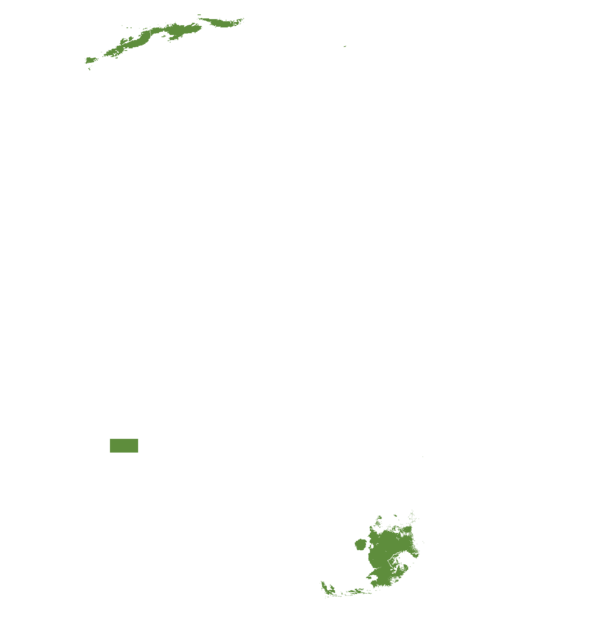
Countries with a green colour
Tested & adopted
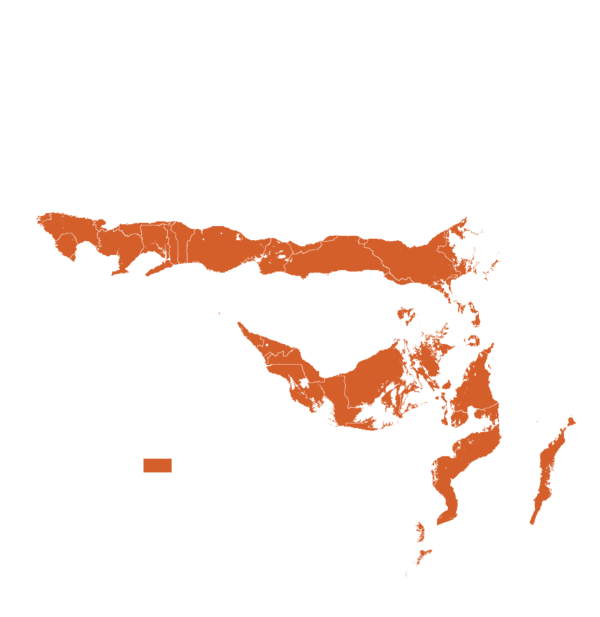
Countries with a bright green colour
Adopted
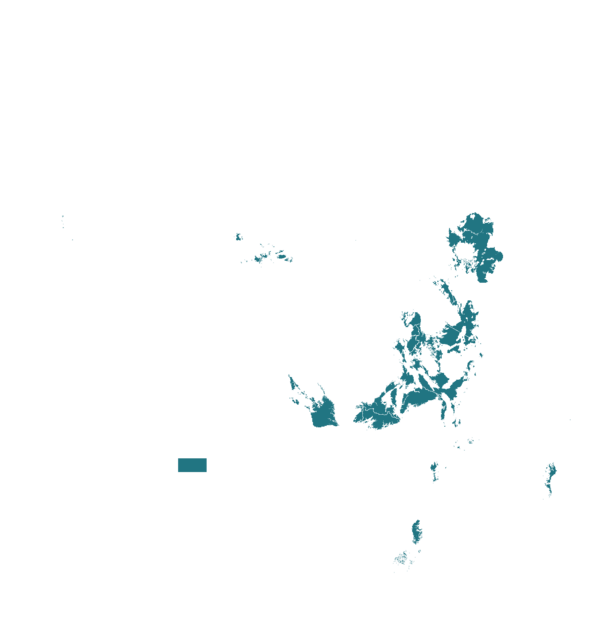
Countries with a yellow colour
Tested
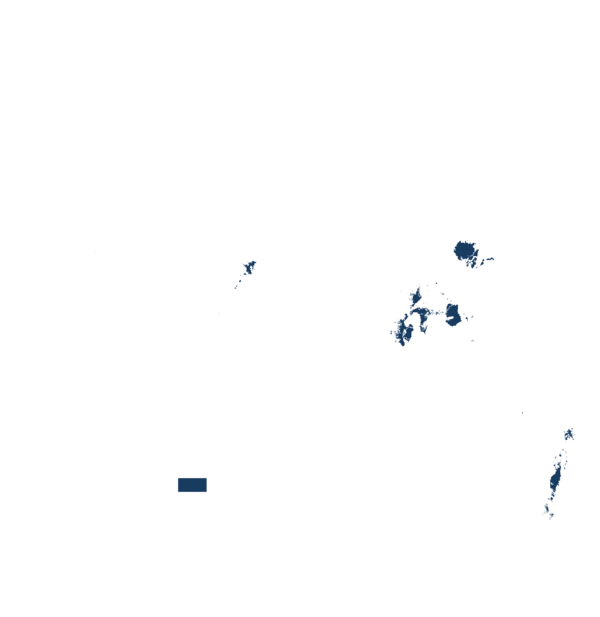
Countries with a blue colour
Testing ongoing
Egypt Equatorial Guinea Ethiopia Algeria Angola Benin Botswana Burundi Burkina Faso Democratic Republic of the Congo Djibouti Côte d’Ivoire Eritrea Gabon Gambia Ghana Guinea Guinea-Bissau Cameroon Kenya Libya Liberia Madagascar Mali Malawi Morocco Mauritania Mozambique Namibia Niger Nigeria Republic of the Congo Rwanda Zambia Senegal Sierra Leone Zimbabwe Somalia South Sudan Sudan South Africa Eswatini Tanzania Togo Tunisia Chad Uganda Western Sahara Central African Republic Lesotho
Countries where the technology is being tested or has been tested and adopted
Country Testing ongoing Tested Adopted
Algeria No ongoing testing Tested Not adopted
Egypt No ongoing testing Tested Not adopted
Jordan No ongoing testing Tested Not adopted
Morocco Testing ongoing Not tested Adopted
Palestine No ongoing testing Tested Not adopted
Türkiye No ongoing testing Tested Not adopted
Uzbekistan No ongoing testing Tested Not adopted

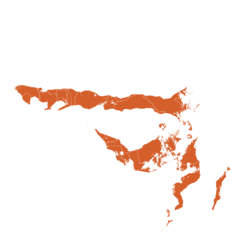
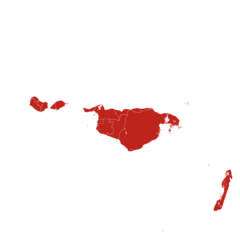
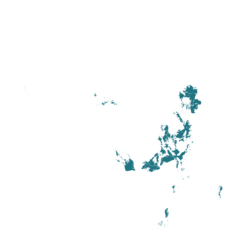
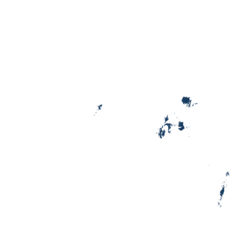
This technology can be used in the colored agro-ecological zones. Any zones shown in white are not suitable for this technology.
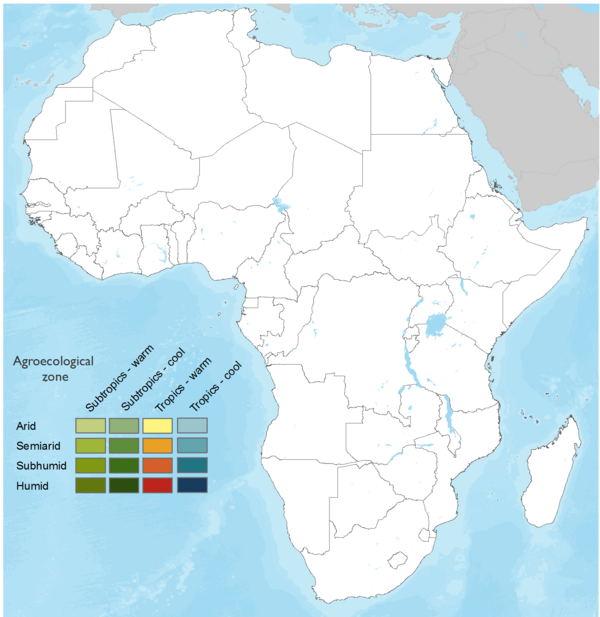

Agro-ecological zones where this technology can be used
AEZ Subtropic - warm Subtropic - cool Tropic - warm Tropic - cool
Arid
Semiarid
Subhumid
Humid

Source: HarvestChoice/IFPRI 2009

The United Nations Sustainable Development Goals that are applicable to this technology.
Sustainable Development Goal 1: no poverty
Goal 1: no poverty

FAP helps lift smallholders out of poverty by providing a method-inherent financial incentive, such as the average 121% increase in net income per surface area observed in field trials
Sustainable Development Goal 2: zero hunger
Goal 2: zero hunger

The approach enhances global food security by significantly increasing the yield quantity and quality of essential pollinator-dependent crops

Sustainable Development Goal 3: good health and well-being
Goal 3: good health and well-being

FAP promotes human well-being by reducing the agricultural dependency on harmful broad-spectrum pesticides through enhanced biological pest control

Sustainable Development Goal 13: climate action
Goal 13: climate action

The strategy builds climate change resilience by using marketable habitat enhancement plants (MHEP) as a financial safety net and buffer against crop losses caused by extreme weather

Step-by-Step Implementation of Farming with Alternative Pollinators (FAP)

Step 1: Select Marketable Habitat Enhancement Plants (MHEP)

  • Engage farmers and technical experts in a participatory selection process.
  • Identify the Marketable Habitat Enhancement Plants (MHEP) that:
    • Attract pollinators and beneficial insects.
    • Have market value and provide additional income opportunities.
    • Are adapted to local climate and farming conditions.
  • Examples include coriander, sunflower, basil, anise, and legumes.

Step 2: Design the Farm Layout

Adapt the FAP design according to farm size:

  • Smallholder fields (~300 m²):
    • Allocate 75% of the area to the main crop.
    • Dedicate 25% to MHEP habitat zones along field margins.
  • Large-scale fields (~1 ha):
    • Establish 1-meter-wide MHEP strips every 15.5 meters.
    • Maintain approximately 93% main crop and 7% MHEP.

Step 3: Plan MHEP Planting for Continuous Flowering

  • Select and sow a combination of MHEP species with different flowering periods.
  • Synchronize flowering to provide continuous food resources for pollinators:
    • One-third of MHEP species flower before or after the main crop.
    • Two-thirds flower at the same time as the main crop.
  • Extend pollinator food availability from 46–63 days in conventional monocultures to 80.5–93 days under FAP.

Step 4: Create Pollinator-Friendly Habitat Conditions

Enhance the farm environment by providing:

  • Nesting sites using low-cost local materials:
    • Hollow stems.
    • Wood logs.
    • Dry mud blocks with holes.
  • Water sources to support pollinator survival.
  • Bare soil patches for ground-nesting pollinators.


Last updated on Aug 7, 2026