Logo
TAAT e-catalog for private sector
https://e-catalogs.taat-africa.org/com/technologies/agentbi-digital-field-agent-management-platform
Request information View pitch brochure

AgentBI: Digital field agent management platform

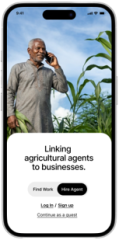
The missing layer in last-mile delivery, built for field agents, designed for the system

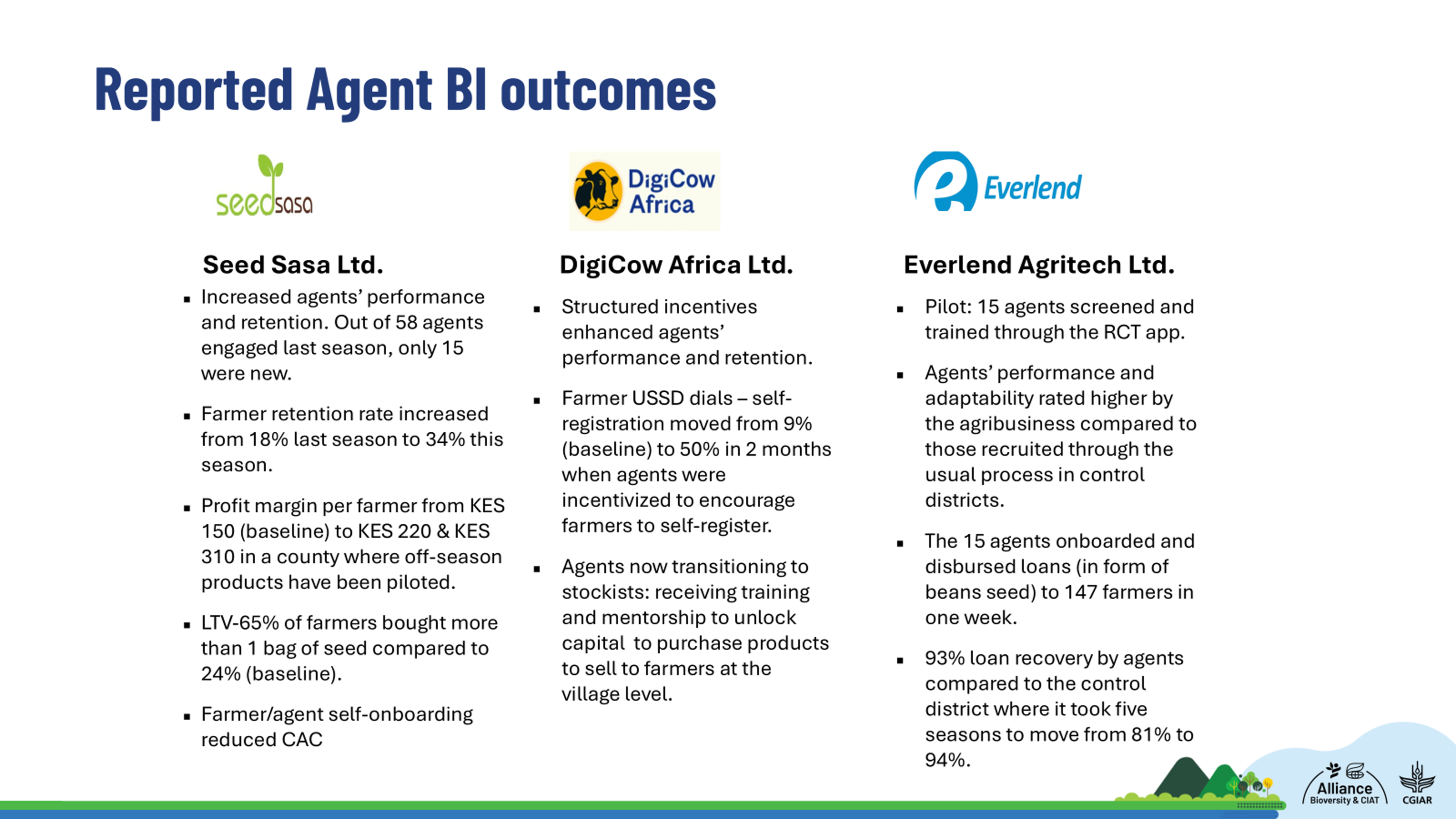
AgentBI is a modular digital platform for recruiting, training, deploying and managing agricultural field agents involved in input distribution, sales and farmer advisory services. It assesses agents' competencies and motivations to classify them into four profiles: Value Chain Coordinator, Commercial Agent, Knowledge Champion and Community Mobilizer. These profiles guide role assignment, onboarding and differentiated training according to operational needs. Through digital dashboards, agribusinesses can monitor agent activities, sales performance and engagement. The platform supports professional development through three career phases: Entry, Growth and Mastery, linked to incentives, recognition and mentorship. Agents can also provide feedback on organisational practices, including payment reliability and fairness. AgentBI can operate as an integrated system or through selected modules connected to existing business systems.
2

This technology is pre-validated.

9•8

Scaling readiness: idea maturity 9/9; level of use 8/9

IP

Open source / open access

Problem

  • High agent turnover: Frequent agent departures and limited career progression disrupt sales and distribution networks, increase recruitment and training costs, and weaken customer relationships.
  • Limited field visibility: Fragmented information on agent activities and customer interactions makes it difficult to monitor field operations and respond to changing market needs.
  • Inefficient recruitment and deployment: Inadequate assessment of agents' competencies and motivations leads to mismatches between assigned roles and commercial responsibilities.
  • Misaligned incentives and limited feedback: Uniform incentives do not adequately reflect differences in agent motivations, while weak feedback mechanisms limit management's understanding of field challenges.
  • Inconsistent rural market coverage: Poor coordination and unstable agent networks create gaps in customer outreach and continuity of agricultural product and service delivery.

Solution

  • Agent retention and career development: AgentBI structures professional progression through Entry, Growth and Mastery phases, supported by differentiated incentives, recognition and mentorship to strengthen agent engagement and retention.
  • Field activity and performance monitoring: Digital dashboards consolidate information on agent activities and performance, enabling businesses to supervise field operations and identify operational gaps.
  • Competency based recruitment and role matching: Assessments of agents' competencies and motivations identify suitable profiles to guide recruitment, role assignment and differentiated onboarding.
  • Tailored incentives and agent feedback: Differentiated incentives address agent motivations, while feedback mechanisms capture concerns about payment reliability, fairness and organisational practices.
  • Coordinated rural sales and distribution: Agent profiling, training and performance monitoring provide a structured approach to managing field teams responsible for rural sales, distribution and customer services.

Key points to design your business plan

AgentBI supports agribusinesses, seed companies and input distributors that rely on field agents for rural sales, distribution and customer services. Its competency-based recruitment, differentiated training, performance monitoring and career development functions help address agent turnover, recruitment mismatches and limited visibility into field operations.

For effective integration into business operations:

  • Assess whether agent turnover, recruitment mismatches and limited supervision are affecting sales, distribution costs and customer relationships.
  • Contact the Alliance of Bioversity International and CIAT to confirm platform availability, access conditions, costs and technical support.
  • Assess existing digital infrastructure and deploy AgentBI as a complete platform or integrate selected modules into current business systems.
  • Plan for agent competency assessments, differentiated onboarding, digital access and designated supervisors.
  • Align performance monitoring, incentives, career development and agent feedback with existing sales and distribution processes.

Positive impacts: 12

Target group

Positive impacts

Women field agents with limited digital literacy

  • Improved digital competencies: Structured training and ongoing support can help women agents develop the digital skills needed to use AgentBI effectively.
  • Greater professional recognition: Competency assessment, training records and performance tracking can make their field experience and professional achievements more visible.
  • Improved career opportunities: Credentialing and career pathways can help qualified women agents access recognition and professional advancement as they strengthen their digital skills.

Women farmers in remote areas

  • Improved access to agricultural services: Better coordination and deployment of field agents can help extend agricultural services to women in underserved communities.
  • Greater trust and engagement: Assigning women agents where appropriate can strengthen trust and participation among women farmers, as demonstrated in EMBE field experiments.
  • More consistent follow-up: Agent supervision and performance monitoring can help organisations identify underserved areas and improve the continuity of farmer engagement.

Women farmers without mobile phones

  • Agent-assisted access to services: Field agents can register and support women farmers without requiring them to operate the AgentBI platform or own a mobile phone.
  • Improved confidence in service delivery: Appropriate matching of women farmers with women agents can strengthen trust and engagement during face-to-face interactions.
  • Access to agricultural information: Trained field agents can communicate information directly during visits, reducing dependence on personal digital devices.

Farmers in remote areas without mobile phones

  • Improved last-mile outreach: Agent deployment and supervision can help organisations reach farmers who are geographically isolated and lack personal mobile communication.
  • Agent-assisted registration and follow-up: Farmers can be registered and supported through field agents without personally using digital tools.
  • Improved visibility of underserved communities: Geographic deployment planning and agent activity monitoring can help organisations identify gaps in service coverage and organise follow-up.
More...

Climate adaptability: Highly adaptable

AgentBI's modular design allows its training content and deployment strategies to be adapted to different climatic contexts.

Farmer climate change readiness: Moderate improvement

Training modules on various climate adaptation measures including drought tolerant seeds, irrigation techniques will be uploaded on the platform for agents to use in training farmers.

Scaling Readiness describes how complete a technology's development is and its ability to be scaled. It produces a score that measures a technology's readiness along two axes: the level of maturity of the idea itself, and the level to which the technology has been used so far.

Each axis goes from 0 to 9 where 9 is the “ready-to-scale” status. For each technology profile in the e-catalogs we have documented the scaling readiness status from evidence given by the technology providers. The e-catalogs only showcase technologies for which the scaling readiness score is at least 8 for maturity of the idea and 7 for the level of use.

The graph below represents visually the scaling readiness status for this technology, you can see the label of each level by hovering your mouse cursor on the number.

Read more about scaling readiness ›

Scaling readiness score of this technology

Maturity of the idea 9 out of 9

Uncontrolled environment: validated

Level of use 8 out of 9

Used by some intended users, in the real world

Maturity of the idea Level of use
9
8
7
6
5
4
3
2
1
1 2 3 4 5 6 7 8 9

Positive impact 12

Target group

Positive impacts

Women field agents with limited digital literacy

  • Improved digital competencies: Structured training and ongoing support can help women agents develop the digital skills needed to use AgentBI effectively.
  • Greater professional recognition: Competency assessment, training records and performance tracking can make their field experience and professional achievements more visible.
  • Improved career opportunities: Credentialing and career pathways can help qualified women agents access recognition and professional advancement as they strengthen their digital skills.

Women farmers in remote areas

  • Improved access to agricultural services: Better coordination and deployment of field agents can help extend agricultural services to women in underserved communities.
  • Greater trust and engagement: Assigning women agents where appropriate can strengthen trust and participation among women farmers, as demonstrated in EMBE field experiments.
  • More consistent follow-up: Agent supervision and performance monitoring can help organisations identify underserved areas and improve the continuity of farmer engagement.

Women farmers without mobile phones

  • Agent-assisted access to services: Field agents can register and support women farmers without requiring them to operate the AgentBI platform or own a mobile phone.
  • Improved confidence in service delivery: Appropriate matching of women farmers with women agents can strengthen trust and engagement during face-to-face interactions.
  • Access to agricultural information: Trained field agents can communicate information directly during visits, reducing dependence on personal digital devices.

Farmers in remote areas without mobile phones

  • Improved last-mile outreach: Agent deployment and supervision can help organisations reach farmers who are geographically isolated and lack personal mobile communication.
  • Agent-assisted registration and follow-up: Farmers can be registered and supported through field agents without personally using digital tools.
  • Improved visibility of underserved communities: Geographic deployment planning and agent activity monitoring can help organisations identify gaps in service coverage and organise follow-up.

Unintended impact 12

Target group

Unintended impacts

Mitigation measures

Women field agents with limited digital literacy

  • Unfair performance assessment: Initial difficulties using digital tools may affect recorded performance, even when agents possess strong agricultural knowledge and field skills.
  • Reduced career opportunities or job insecurity : If digital proficiency is treated as an immediate performance requirement, competent agents may be disadvantaged in recognition, promotion or retention.
  • Unequal participation in training : Standardised training formats may not adequately address differences in digital experience and learning needs.
  • For unfair assessment : Evaluate field performance separately from initial digital proficiency and allow a reasonable learning period.
  • For career and job insecurity : Provide progressive digital capacity-building and coaching before making employment or advancement decisions based on digital performance.
  • For unequal training participation : Assess individual training needs and offer practical, accessible training sessions with additional support where required.

Women farmers in remote areas

  • Reduced engagement: Deploying agents without considering women farmers' preferences and local gender dynamics may limit trust and participation.
  • Unequal service coverage: Performance targets based mainly on the number of visits or registrations may encourage agents to prioritise more accessible communities.
  • Underrepresentation in programme results: If monitoring focuses on total farmers reached without examining participation by gender and location, limited outreach to remote women farmers may remain unnoticed.
  • For reduced engagement : Consider recruiting and deploying women agents where this responds to farmers' needs, and consult women farmers on appropriate service arrangements.
  • For unequal coverage: Adjust agent targets to account for travel time and geographic constraints, and establish appropriate outreach objectives for remote communities.
  • For underrepresentation: Monitor participation by gender and location, and use the findings to adjust agent deployment and follow-up.

Women farmers without mobile phones

  • Inaccurate or unverified information: Data entered by agents on behalf of farmers may contain errors or fail to reflect their needs if adequate confirmation procedures are absent.
  • Missed communications: Women without phones may miss service updates if organisations rely primarily on direct mobile messages.
  • Reduced participation: If agents do not consider women's preferences or circumstances when organising visits, some women may have fewer opportunities to engage with services.
  • For inaccurate information : Confirm recorded information directly with farmers during registration and provide accessible procedures for correcting errors.
  • For missed communications : Maintain face-to-face communication and agent-assisted follow-up for farmers without personal phones.
  • For reduced participation: Consult women farmers on suitable contact arrangements and consider women agents where appropriate.

Farmers in remote areas without mobile phones

  • Unequal attention from agents : When performance targets emphasise high numbers of visits or registrations, agents may give less attention to remote farmers who require longer travel times.
  • Delayed follow-up : If agent visits are infrequent and farmers cannot be contacted directly by mobile phone, changes in their needs may not be identified promptly.
  • Outdated or inaccurate records : Information entered by agents may remain uncorrected when farmers have limited opportunities to review or update it.
  • For unequal attention: Set realistic performance targets that reflect travel time and monitor coverage of remote communities.
  • For delayed follow-up: Establish regular outreach schedules and accessible local arrangements for contacting agents between visits.
  • For inaccurate records: Include in-person verification and updating of farmer information during scheduled field visits.

Barriers 12

Target group

Adoption barriers

Mitigation measures

Women field agents with limited digital literacy

  • Limited digital skills: Insufficient familiarity with digital tools may make it difficult to complete training, enter field information or use performance-related functions.
  • Limited access to appropriate learning support: Agents who need additional practice may struggle if initial training is too short or insufficiently adapted.
  • Constraints on training participation: Depending on local circumstances, travel requirements or care responsibilities may limit some women's ability to attend training sessions.
  • For limited digital skills : Provide practical introductory training, supervised exercises and progressive learning opportunities.
  • For insufficient support : Offer individual coaching, refresher sessions and additional time to develop digital proficiency.
  • For participation constraints : Organise training at accessible locations and times, considering participants' availability and responsibilities.

Women farmers in remote areas

  • Limited availability of suitable agents : In some communities, the absence of agents with whom women feel comfortable interacting may reduce their participation.
  • Infrequent outreach: Long travel times may limit opportunities for women farmers to meet agents and receive follow-up services.
  • Inappropriate visit arrangements: Visit times or locations may not accommodate women's agricultural and household responsibilities.
  • For agent availability: Consider women farmers' preferences when recruiting and assigning agents, including the deployment of women agents where appropriate.
  • For infrequent outreach: Plan regular visits to remote communities and adapt agent workloads to geographic conditions.
  • For unsuitable arrangements: Consult women farmers and schedule visits at accessible times and locations.

Women farmers without mobile phones

  • Limited access to direct digital communication: Farmers without phones cannot independently receive mobile-based notifications or use optional self-registration channels.
  • Dependence on agent availability: Registration, information exchange and follow-up may depend more heavily on opportunities for direct interaction with agents.
  • Limited opportunities to verify information: Without a personal phone, farmers may have fewer options to review information recorded on their behalf between visits.
  • For digital communication: Maintain agent-assisted registration and provide essential information through direct contact.
  • For dependence on agents: Organise accessible in-person registration and follow-up opportunities.
  • For information verification: Introduce verbal confirmation and accessible correction procedures during agent visits.

Farmers in remote areas without mobile phones

  • Limited opportunities for direct contact: Distance and lack of personal mobile communication may make it difficult to reach agents between visits.
  • Dependence on scheduled field visits: Access to registration, information and follow-up may be delayed when outreach visits are infrequent.
  • Limited opportunities to update records: Farmers may struggle to communicate changes in their circumstances or service needs when agents are not present.
  • For limited contact: Establish accessible community contact points or locally appropriate communication arrangements.
  • For dependence on visits: Schedule regular outreach and adjust agent deployment targets to account for travel time.
  • For record updates: Include farmer information verification and updating in routine field visits.

Countries with a green colour
Tested & adopted
Countries with a bright green colour
Adopted
Countries with a yellow colour
Tested
Countries with a blue colour
Testing ongoing
Egypt Equatorial Guinea Ethiopia Algeria Angola Benin Botswana Burundi Burkina Faso The Democratic Republic of the Congo Djibouti Côte d'Ivoire Eritrea Gabon Gambia Ghana Guinea Guinea-Bissau Cameroon Kenya Libya Liberia Madagascar Mali Malawi Morocco Mauritania Mozambique Namibia Niger Nigeria Congo Rwanda Zambia Senegal Sierra Leone Zimbabwe Somalia South Sudan The Republic of the Sudan South Africa Eswatini Tanzania, United Republic Togo Tunisia Chad Uganda Western Sahara Central African Republic Lesotho
Countries where the technology is being tested or has been tested and adopted
Country Testing ongoing Tested Adopted
Ethiopia –No ongoing testing Tested Adopted
Kenya –No ongoing testing Tested Adopted
Malawi –No ongoing testing Tested Adopted
Nigeria –No ongoing testing Tested Adopted
Uganda –No ongoing testing Tested Adopted
Zambia –No ongoing testing Tested Adopted

This technology can be used in the colored agro-ecological zones. Any zones shown in white are not suitable for this technology.
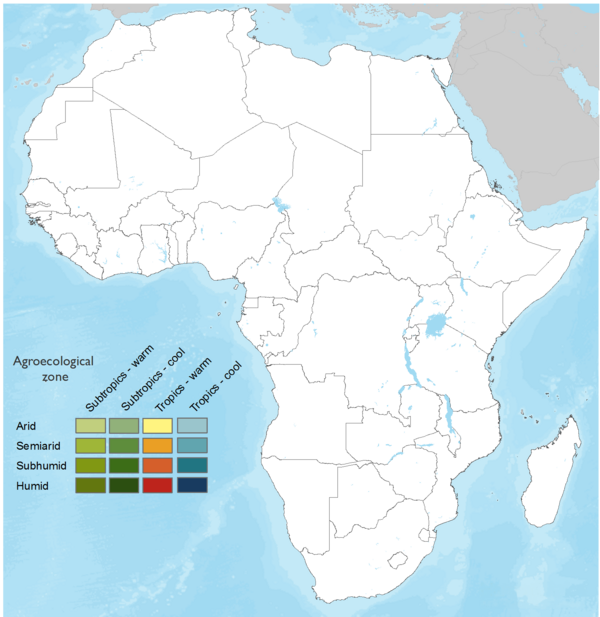
Agro-ecological zones where this technology can be used
AEZ Subtropic - warm Subtropic - cool Tropic - warm Tropic - cool
Arid – – – –
Semiarid – – – –
Subhumid – – – –
Humid – – – –

Source: HarvestChoice/IFPRI 2009

The United Nations Sustainable Development Goals that are applicable to this technology.
Sustainable Development Goal 2: zero hunger
Goal 2: zero hunger

Improves farmer's access to agricultural information, inputs and advisory services through trained field agents.
Sustainable Development Goal 8: decent work and economic growth
Goal 8: decent work and economic growth

Supports field agent's professional development through training, competency assessment and performance monitoring.

AgentBI can be used as a complete digital field agent management platform or through selected modules integrated into existing organizational systems. 

Step 1. Set up the platform: Register the organisation and configure AgentBI or the selected modules according to the intended field activities and management requirements.

Step 2. Register and assess agents: Create agent profiles and assess their competencies and motivations to identify suitable roles.

Step 3. Assign roles and provide training: Match agents to appropriate responsibilities and provide differentiated onboarding and training based on their profiles.

Step 4. Deploy and monitor agents: Assign agents to field activities and use digital dashboards to monitor their activities, performance and engagement.

Step 5. Manage incentives and career development: Apply differentiated incentives, recognition and mentorship according to agent profiles, performance and career phases.

Step 6. Review feedback and adjust management: Collect agent feedback on organisational practices and use monitoring information to adjust supervision and agent management.

Downloads

Last updated on Oct 30, 2026