TAAT e-catalog
for
Development partners
https://e-catalogs.taat-africa.org/org/technologies/applied-biosystems-comprehensive-animal-health-diagnostic-tools
Boost efficiency in animal sample extraction and improve target amplification
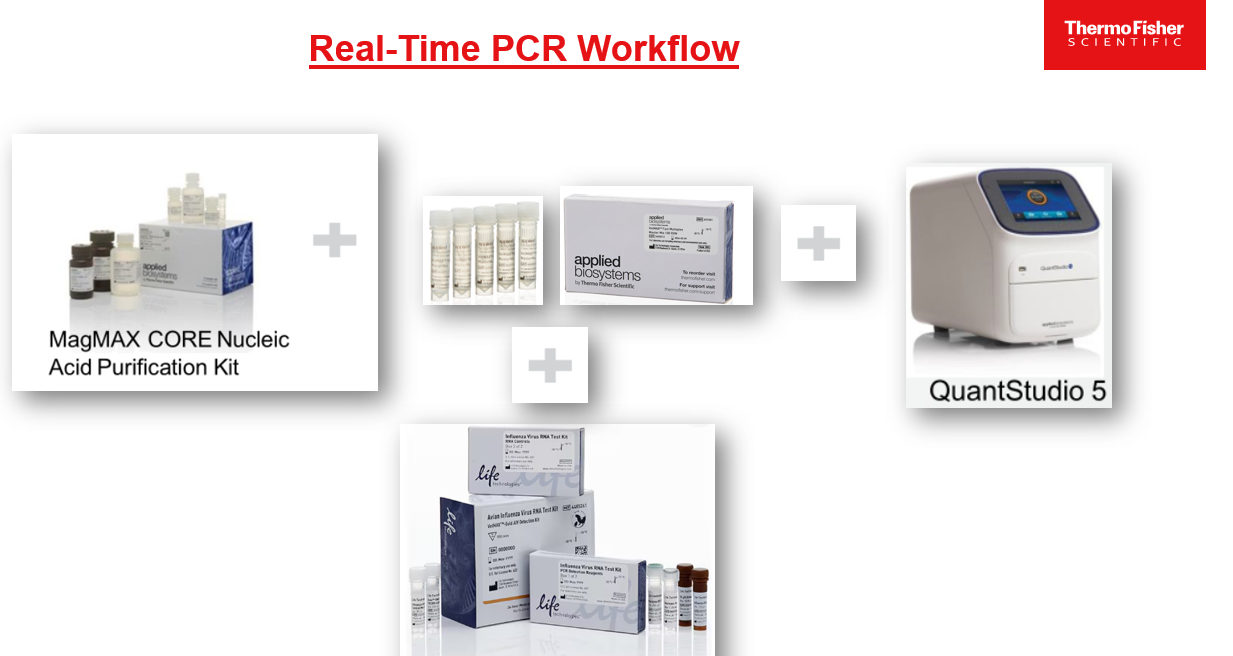
Thermo Fisher’s Animal Health technologies, including the VetMAX™-Gold AIV Detection Kit, VetMAX Master Mixes, MagMAX Core Sample Extraction Kits, and QuantStudio 5, are advanced tools for boosting efficiency in animal sample extraction and improve target amplification and identification. - Real Time PCR Diagnostics Kits : These kits detects pathogens with high sensitivity and specificity, allowing quick and reliable results to help control outbreaks. - VetMAX Master Mixes: These are pre-formulated reagents for PCR (Polymerase Chain Reaction) tests, which amplify DNA, making it easier to identify pathogens in animal samples. (Sentence after this deleted) - MagMAX Core Sample Extraction Kits: These kits efficiently extract DNA and RNA from a variety of animal sample types, enabling accurate downstream applications like PCR. They streamline the sample preparation process, facilitating high-quality nucleic acid recovery. - QuantStudio 5: This is a real-time PCR system that enables precise, quantitative results for pathogen detection in animal samples. It supports high-throughput testing with user-friendly software, making it ideal for veterinary labs.
This technology is validated.
Adults 18 and over: No impact
The poor: No impact
Under 18: No impact
Women: No impact
Farmer climate change readiness: Significant improvement
It ensures rapid disease management, promoting healthier livestock, and enhancing the sustainability of their farming operations.
Livestock health risks: Animal disease outbreaks can undermine efforts to improve livestock productivity and strengthen the resilience of farming households.
Losses among smallholders: Disease-related mortality and lower production can threaten the incomes and food security of livestock-dependent communities.
Limited diagnostic infrastructure: Veterinary laboratories in target regions may lack reliable equipment, reagents, and sample-processing capacity.
Delayed outbreak detection: Gaps in laboratory testing can slow surveillance and delay appropriate responses to animal disease threats.
Weak diagnostic consistency: Inconsistent testing workflows can make it more difficult to generate reliable evidence for disease monitoring and management.
Challenges demonstrating programme results: Limited diagnostic data can constrain the assessment of disease prevalence, outbreak response, and progress in improving animal health.
Strengthen veterinary diagnostic capacity: Development partners can support access to real-time PCR diagnostic kits, extraction kits, PCR reagents, and suitable laboratory equipment.
Improve diagnostic workflows: Supporting integrated sample extraction and PCR testing can help laboratories produce more reliable pathogen-detection results.
Build technical capacity: Training laboratory personnel in sample collection, nucleic acid extraction, PCR procedures, quality assurance, and result interpretation can strengthen the effective use of the technology.
Expand disease surveillance: Improved laboratory testing capacity can support animal disease monitoring and investigation of suspected outbreaks.
Support timely disease management: More reliable diagnostic results can help veterinary services and livestock stakeholders make better-informed decisions about outbreak control.
Monitor diagnostic performance: Tracking indicators such as testing volume, turnaround time, pathogen detection, and laboratory performance can help assess the contribution of diagnostic services to animal health management.
Comprehensive Animal Health Diagnostic Tools improve disease surveillance, early pathogen detection, and outbreak response through advanced molecular diagnostic technologies. The technology can be integrated into livestock development, animal health, veterinary services, food safety, and disease surveillance programs. Its adoption contributes to SDG 2 (Zero Hunger), SDG 3 (Good Health and Well-being), SDG 12 (Responsible Consumption and Production), and SDG 15 (Life on Land).
To integrate this technology into your project, plan and budget for the following activities and prerequisites:
Installation of a qPCR workflow for extraction to result
Scaling Readiness describes how complete a technology's development is and its ability to be scaled. It produces a score that measures a technology's readiness along two axes: the level of maturity of the idea itself, and the level to which the technology has been used so far.
Each axis goes from 0 to 9 where 9 is the “ready-to-scale” status. For each technology profile in the e-catalogs we have documented the scaling readiness status from evidence given by the technology providers. The e-catalogs only showcase technologies for which the scaling readiness score is at least 8 for maturity of the idea and 7 for the level of use.
The graph below represents visually the scaling readiness status for this technology, you can see the label of each level by hovering your mouse cursor on the number.
Read more about scaling readiness ›
Uncontrolled environment: validated
Common use by intended users, in the real world
| Maturity of the idea | Level of use | |||||||||
| 9 | ||||||||||
| 8 | ||||||||||
| 7 | ||||||||||
| 6 | ||||||||||
| 5 | ||||||||||
| 4 | ||||||||||
| 3 | ||||||||||
| 2 | ||||||||||
| 1 | ||||||||||
| 1 | 2 | 3 | 4 | 5 | 6 | 7 | 8 | 9 | ||
| Country | Testing ongoing | Tested | Adopted |
|---|---|---|---|
| Kenya | –No ongoing testing | Tested | –Not adopted |
| Namibia | –No ongoing testing | Tested | –Not adopted |
| South Africa | –No ongoing testing | Tested | Adopted |
| Zimbabwe | –No ongoing testing | Tested | –Not adopted |
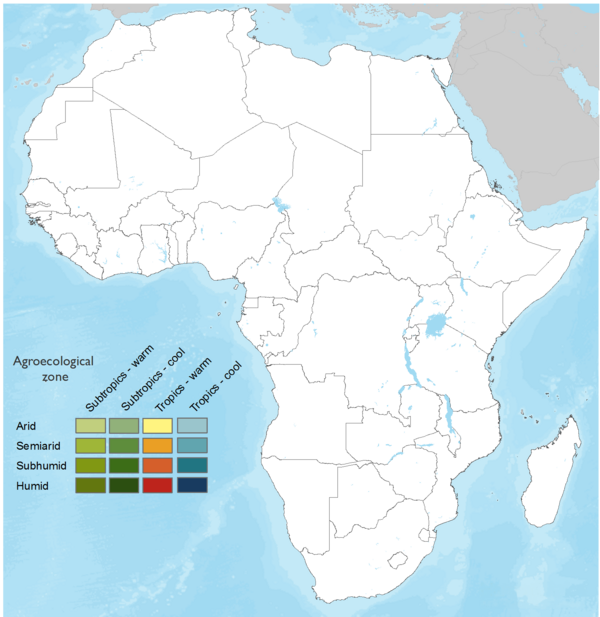
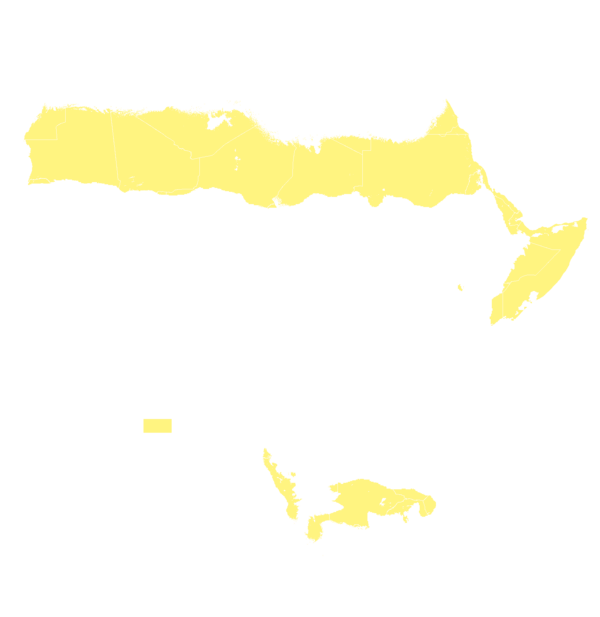
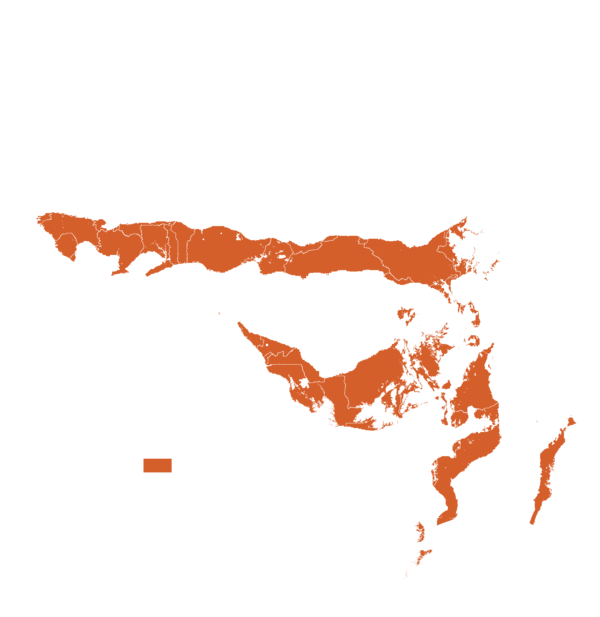
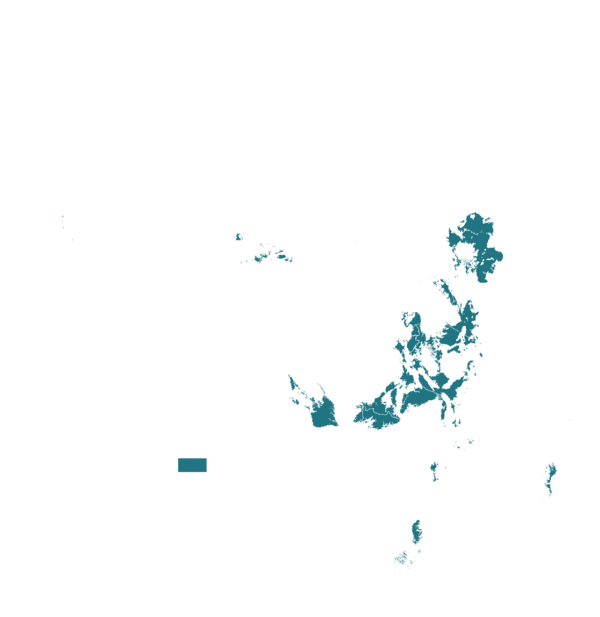
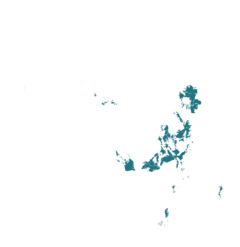
This technology can be used in the colored agro-ecological zones. Any zones shown in white are not suitable for this technology.













| AEZ | Subtropic - warm | Subtropic - cool | Tropic - warm | Tropic - cool |
|---|---|---|---|---|
| Arid | ||||
| Semiarid | ||||
| Subhumid | ||||
| Humid |
Source: HarvestChoice/IFPRI 2009
The United Nations Sustainable Development Goals that are applicable to this technology.

It promotes food security through healthier livestock and better productivity

It improves animal health and reducing the spread of diseases
It helps prevent the spread of outbreaks to urban areas. Healthy livestock are essential for providing a reliable food supply to urban populations, contributing to food security in cities and surrounding communities.
It improves the sustainability and efficiency of livestock production, minimizing waste, and ensuring responsible resource.
To use Thermo Fisher’s Animal Health technology suite, follow these steps:
Collect Samples:
Extract Nucleic Acids (DNA/RNA):
Prepare for PCR Testing:
Run PCR Test:
Interpret Results:
With this workflow users can efficiently and accurately diagnose animal diseases, helping to protect animal health and improve agricultural productivity.
Last updated on Oct 20, 2026
This technology can be used in the colored agro-ecological zones.

















Applied Biosystems: Comprehensive Animal Health Diagnostic Tools
https://e-catalogs.taat-africa.org/org/technologies/applied-biosystems-comprehensive-animal-health-diagnostic-tools
Last updated on 20 October 2026, printed on Nov 17, 2026
Enquiries e-catalogs@taat.africa