
TAAT e-catalog
for
government
https://e-catalogs.taat-africa.org/gov/technologies/mucunaseed-mucuna-cover-crop-seed-multiplication-and-supply-system
Reliable Mucuna seed for healthier, resilient and more productive farms!
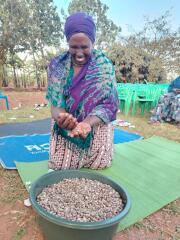
MucunaSeed is a decentralized seed multiplication and supply system for Mucuna pruriens, a cover crop suitable for coffee, banana, and other perennial farming systems. The system improves access to viable Mucuna seed by multiplying seed at research stations and making it available to farmers, research institutions, and scaling partners for on-farm multiplication, testing, and wider distribution. By enabling farmers to establish Mucuna between or around perennial crops, the system supports soil restoration and sustainable land management. Mucuna provides dense soil cover that can help control erosion, suppress weeds, conserve soil moisture, moderate soil temperature, increase biomass, and improve soil health. The leguminous crop can also fix approximately 41–76 kg of nitrogen per hectare, supporting soil fertility management. The system can therefore support government programs focused on soil restoration, sustainable agriculture, erosion control, climate-resilient farming, and improved productivity of perennial crop systems. Its decentralized seed multiplication model also provides a practical pathway for expanding farmer access to Mucuna seed and supporting wider adoption.
This technology is pre-validated.
| Target Groups | Positive Impacts |
| Women smallholder farmers in remote areas |
|
| Youth smallholder farmers in remote areas |
|
| Smallholder farmers in remote areas |
|
Climate adaptability: Highly adaptable
The cover crop is drought tolerant providing cover under prolonged dry conditions. The high soil cover moderates soil moisture and temperature protecting the crops over longer time durations.
Farmer climate change readiness: Significant improvement
The biomass cover, deep rooting systems improve infiltration of water, soil moisture content, regulate soil temperature, delaying and reducing the extreme impacts of climate change.
Biodiversity: Positive impact on biodiversity
High buildup of earthworms observed in the soil over short time duration with positive effects on soil health.
Carbon footprint: A bit less carbon released
Mucuna increases biomass and returns plant material to the soil, which can contribute to soil carbon storage and reduce the need for herbicides.
Environmental health: Greatly improves environmental health
Mucuna improves water infiltration, reduces runoff and protects water quality, while reducing herbicide use and associated risks to ecosystems, biodiversity, and farmers.
Soil quality: Improves soil health and fertility
Improves soil structure and biological properties over short time durations
Water use: Same amount of water used
Its effect on water use overshadowed by its ability to minimizes evaporation from the soil and to improve water infiltration
MucunaSeed provides governments with a practical approach to expanding access to Mucuna seed for soil restoration and sustainable management of coffee, banana, and other perennial farming systems. By supporting local seed multiplication and distribution, the system can help farmers adopt Mucuna to control erosion, suppress weeds, conserve soil moisture, improve soil health, and support crop productivity.
To integrate this technology into your project, plan and budget for the following activities and prerequisites:
Estimated cost to deliver support to one farmer
Mucuna seed price in eastern DR Congo
Period from planting to seed harvest
Mucuna seed produced by adopters in eastern DR Congo
Open source / open access
Scaling Readiness describes how complete a technology's development is and its ability to be scaled. It produces a score that measures a technology's readiness along two axes: the level of maturity of the idea itself, and the level to which the technology has been used so far.
Each axis goes from 0 to 9 where 9 is the “ready-to-scale” status. For each technology profile in the e-catalogs we have documented the scaling readiness status from evidence given by the technology providers. The e-catalogs only showcase technologies for which the scaling readiness score is at least 8 for maturity of the idea and 7 for the level of use.
The graph below represents visually the scaling readiness status for this technology, you can see the label of each level by hovering your mouse cursor on the number.
Read more about scaling readiness ›
Uncontrolled environment: tested
Used by some intended users, in the real world
| Maturity of the idea | Level of use | |||||||||
| 9 | ||||||||||
| 8 | ||||||||||
| 7 | ||||||||||
| 6 | ||||||||||
| 5 | ||||||||||
| 4 | ||||||||||
| 3 | ||||||||||
| 2 | ||||||||||
| 1 | ||||||||||
| 1 | 2 | 3 | 4 | 5 | 6 | 7 | 8 | 9 | ||
| Target Groups | Positive Impacts |
| Women smallholder farmers in remote areas |
|
| Youth smallholder farmers in remote areas |
|
| Smallholder farmers in remote areas |
|
| Target Groups | Unintended Impacts | Mitigation Measures |
| Women smallholder farmers in remote areas |
|
|
| Youth smallholder farmers in remote areas |
|
|
| Smallholder farmers in remote areas |
|
|
| Target Groups | Barriers to Adoption | Mitigation Measures |
| Women smallholder farmers in remote areas |
|
|
| Youth smallholder farmers in remote areas |
|
|
| Smallholder farmers in remote areas |
|
|
Delivering the Mucuna seed and cover-crop package is estimated to cost approximately US$47.20 per farmer for seed-system development, training, extension and related support. This appears to be a programme delivery cost generally borne by a government, development project or implementation partner, rather than a confirmed fee paid by the farmer. Farmers invest directly in seed, sold locally in eastern DR Congo for approximately US$1 per kilogram, and in labor for minimum land preparation, planting and two initial weedings. The total farmer investment cannot yet be calculated because the required seed quantity per hectare and local labor costs have not been provided. Potential savings from reduced weeding can begin during the first production cycle, while seed producers can obtain their first cash return when seed is harvested after approximately 8–10 months. Further returns may come from selling surplus seed and improving coffee production, but the available information does not yet allow calculation of net income, payback period or ROI.
| Country | Testing ongoing | Tested | Adopted |
|---|---|---|---|
| The Democratic Republic of the Congo | –No ongoing testing | Tested | Adopted |
| Uganda | Testing ongoing | –Not tested | –Not adopted |
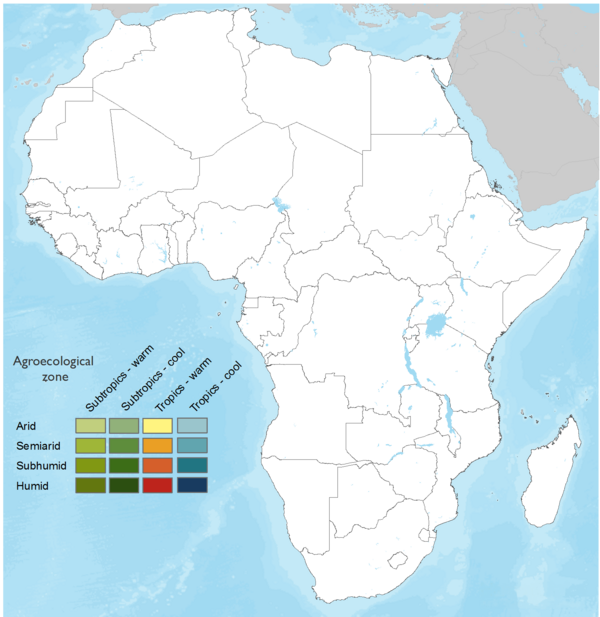
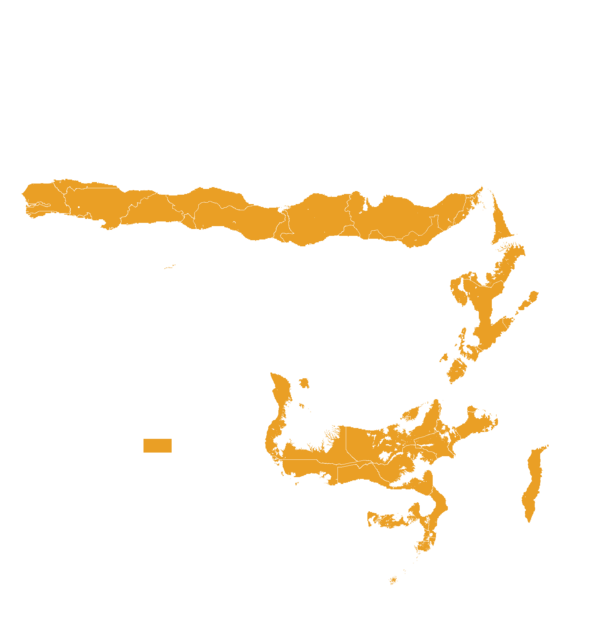
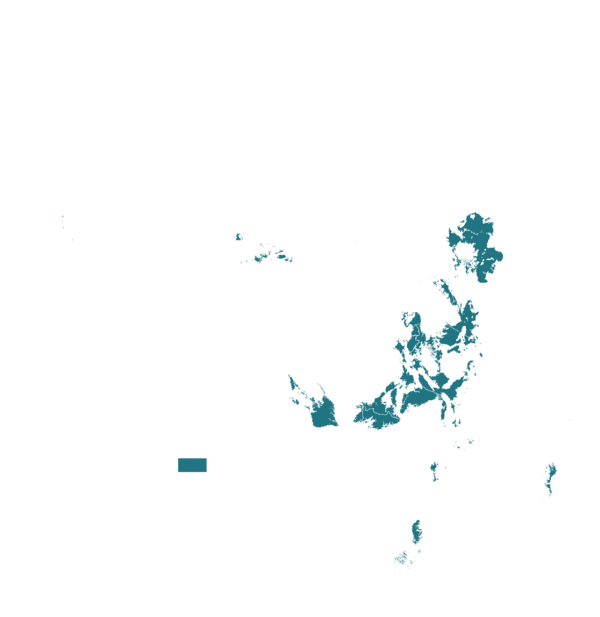
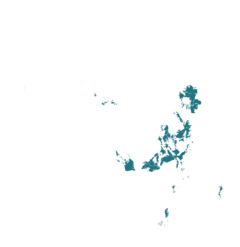
This technology can be used in the colored agro-ecological zones. Any zones shown in white are not suitable for this technology.








| AEZ | Subtropic - warm | Subtropic - cool | Tropic - warm | Tropic - cool |
|---|---|---|---|---|
| Arid | – | – | – | – |
| Semiarid | – | – | ||
| Subhumid | ||||
| Humid |
Source: HarvestChoice/IFPRI 2009
The United Nations Sustainable Development Goals that are applicable to this technology.

Farmer-led Mucuna seed production, sharing, and sales can create additional income opportunities for smallholder farmers.
Mucuna improves soil health, moisture conservation, and crop productivity, supporting more sustainable food production.

Mucuna strengthens climate resilience by protecting soil, conserving moisture, and reducing vulnerability to dry conditions.
Mucuna helps control erosion, restore degraded soils, and improve soil health and biodiversity.
MucunaSeed can be used by obtaining viable Mucuna seed, establishing the cover crop under appropriate field conditions, and managing it through maturity, seed harvest, and storage.
Step 1 – Access viable Mucuna seed
Obtain Mucuna pruriens seed from a seed multiplier, cooperative, research station, or another farmer using good seed production practices.
Step 2 – Prepare the field
Prepare the field using minimum tillage and avoid unnecessary soil disturbance before planting.
Step 3 – Plant Mucuna
Sow Mucuna at the start of the rainy season and allow it to grow through the year. Where farmers need to grow other food crops during the rainy season, Mucuna can be planted about one month before the end of the rainy season to establish cover for the dry season.
For intercropping with coffee, banana, or other perennial crops:
Step 4 – Manage the crop during establishment
Hand weed at about 1 month and 2 months after planting while Mucuna is becoming established.
Allow Mucuna to develop its soil cover to help control erosion, suppress weeds, conserve soil moisture, recycle nutrients, and fix atmospheric nitrogen.
Step 5 – Support Mucuna growth and seed production
Mucuna can be grown in sole fields, intercrops, or on support structures.
In open fields, install stakes to support the creeping plants at pod formation and reduce pod contact with the soil and the risk of rotting.
In coffee, banana, and other intercrops, keep Mucuna as a cover crop until maturity. For small quantities of seed, a few plants can also be grown on fences or existing trees.
Step 6 – Harvest and store the seed
Harvest seed after approximately 8–10 months, when pods are mature and brown.
Dry the pods until they crack easily, then thresh and store the seeds under dry conditions. Keep part of the seed for the next planting season and use surplus seed for sharing or sale.
Step 7 – Return plant material to the soil
After seed harvest, leave the remaining foliage as mulch, or incorporate green vines and leaves into the soil as green manure or use them to make compost.
Last updated on Nov 19, 2026
This technology can be used in the colored agro-ecological zones.











MucunaSeed: Mucuna cover-crop seed multiplication and supply system
https://e-catalogs.taat-africa.org/gov/technologies/mucunaseed-mucuna-cover-crop-seed-multiplication-and-supply-system
Last updated on 19 November 2026, printed on Nov 22, 2026
Enquiries e-catalogs@taat.africa