
TAAT e-catalog
for
government
https://e-catalogs.taat-africa.org/gov/technologies/kabuli-chickpea-improved-large-seeded-varieties-for-climate-resilient-production
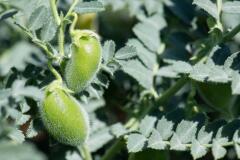
Improved large-seeded Kabuli chickpea varieties developed for diverse production environments in North Africa, West Asia, and Central Asia. The varieties offer yield potential of 2.0–3.0 t/ha, early maturity, and resistance or tolerance to major diseases such as Ascochyta blight and Fusarium wilt. Depending on the region, they also provide tolerance to drought and cold and are adapted to rainfed and irrigated conditions. Their large, high-protein seeds meet market preferences and can contribute to stronger national chickpea production, food and nutrition security, and climate resilience.
This technology is pre-validated.
| Target Groups | Positie Impacts |
| Women smallholder farmers |
|
| Youth farmers and agripreneurs |
|
| Farmers in climate- and disease-stressed areas |
|
| Farmer organisations and rural communities |
|
Climate adaptability: Highly adaptable
The varieties have demonstrated adaptation across diverse temperate, semi-arid, arid, Mediterranean, and continental environments, with tolerance to key stresses including drought and cold and suitability for autumn, winter, or early-spring production depending on the region.
Farmer climate change readiness: Significant improvement
Their drought and cold tolerance, early maturity, and disease resistance can help farmers reduce climate-related production risks and maintain more stable yields under increasingly variable conditions.
Carbon footprint: A bit less carbon released
Chickpea's ability to fix atmospheric nitrogen through Rhizobium symbiosis can reduce dependence on synthetic nitrogen fertilizers, potentially lowering emissions associated with fertilizer production and use.
Soil quality: Improves soil health and fertility
As a legume, chickpea contributes to biological nitrogen fixation, improving nitrogen availability for subsequent crops and supporting soil fertility when integrated into appropriate crop rotations.
Water use: A bit less water used
The varieties' drought tolerance and suitability for rainfed and dryland systems can improve productivity under limited water availability and reduce the need for supplementary irrigation in suitable environments.
These improved large-seeded winter Kabuli chickpea varieties, are ideal for regions affected by diseases such as Ascochyta blight and Fusarium wilt, as well as abiotic stresses like cold and drought. Offering high and stable yields (reaching potential yields of 2.0 to 3.0 t/ha), early maturity, and lodging resistance, they provide an effective solution for enhancing crop productivity, stabilizing farmer incomes, and promoting sustainable, climate-smart chickpea farming systems.
The following steps should be considered when integrating these improved winter Kabuli chickpea varieties into a project:
|
Variety |
Region |
Sowing-Maturity Cycle |
Yield Potential (t/ha) |
Ascochyta Blight Resistance |
Fusarium Wilt Resistance |
1000-Kernel Weight (g) |
Plant Architecture |
Protein Content (%) |
|
Djahangir |
Central Asia |
Early maturing (Spring-adapted) |
2.5 – 3.0 (18–25% higher than checks) |
Moderate to High resistance |
Moderate to High resistance |
Large to Medium size |
Upright, compact, lodging resistant |
High Protein |
|
Sids101 |
North Africa |
Early maturing (Short crop cycle) |
2.0 – 2.5 |
Partial resistance |
Partial resistance |
Large seed size/weight |
Upright |
High Protein |
|
Joud |
North Africa |
Early maturing (Short crop cycle) |
2.0 – 2.5 |
Partial resistance |
Partial resistance |
Large seed size/weight |
Upright |
High Protein |
|
Bochra |
North Africa |
Early maturing (Short crop cycle) |
2.0 – 2.5 |
Partial resistance |
Partial resistance |
Large seed size/weight |
Upright |
High Protein |
|
FLIP 93-93C |
North Africa
|
Early maturing (Short crop cycle) |
2.0 – 2.5 |
Partial resistance |
Partial resistance |
Large seed size/weight |
Upright |
High Protein |
|
FLIP97-7C |
West Asia |
Early maturity (Short duration) |
2.0 – 2.5 |
Resistant/tolerant |
Resistant/tolerant |
35.0 – 38.1 (Selected varieties) |
Upright, compact, machine-harvestable |
21.3% – 25.0% |
|
FLIP97-706C |
West Asia |
Early maturity (Short duration) |
2.0 – 2.5 |
Resistant/tolerant |
Resistant/tolerant |
35.0 – 38.1 (Selected varieties) |
Upright, compact, machine-harvestable |
21.3% – 25.0% |
|
Azkan |
West Asia |
Early maturity (Short duration) |
2.0 – 2.5 |
Resistant/tolerant |
Resistant/tolerant |
35.0 – 38.1 (Selected varieties) |
Upright, compact, machine-harvestable |
21.3% – 25.0% |
Higher yields than local check varieties
Protein content
Potential yield per Ha
Plant variety protection
Scaling Readiness describes how complete a technology\’s development is and its ability to be scaled. It produces a score that measures a technology\’s readiness along two axes: the level of maturity of the idea itself, and the level to which the technology has been used so far.
Each axis goes from 0 to 9 where 9 is the “ready-to-scale” status. For each technology profile in the e-catalogs we have documented the scaling readiness status from evidence given by the technology providers. The e-catalogs only showcase technologies for which the scaling readiness score is at least 8 for maturity of the idea and 7 for the level of use.
The graph below represents visually the scaling readiness status for this technology, you can see the label of each level by hovering your mouse cursor on the number.
Read more about scaling readiness ›
Uncontrolled environment: validated
Used by some projects NOT connected to technology provider
| Maturity of the idea | Level of use | |||||||||
| 9 | ||||||||||
| 8 | ||||||||||
| 7 | ||||||||||
| 6 | ||||||||||
| 5 | ||||||||||
| 4 | ||||||||||
| 3 | ||||||||||
| 2 | ||||||||||
| 1 | ||||||||||
| 1 | 2 | 3 | 4 | 5 | 6 | 7 | 8 | 9 | ||
| Target Groups | Positie Impacts |
| Women smallholder farmers |
|
| Youth farmers and agripreneurs |
|
| Farmers in climate- and disease-stressed areas |
|
| Farmer organisations and rural communities |
|
| Target Groups | Unintented Impacts | Mitigation Measures |
| Women smallholder farmers |
|
|
| Youth farmers and agripreneurs |
|
|
| Farmers in climate- and disease-stressed areas |
|
|
| Farmer organisations and rural communities |
|
|
| Target Groups | Adoption barriers | Mitigation Measures |
| Women smallholder farmers |
|
|
| Youth farmers and agripreneurs |
|
|
| Farmers in climate- and disease-stressed areas |
|
|
| Farmer organisations and rural communities |
|
|
| Country | Testing ongoing | Tested | Adopted |
|---|---|---|---|
| Afghanistan | –No ongoing testing | Tested | Adopted |
| Algeria | –No ongoing testing | Tested | Adopted |
| Azerbaijan | –No ongoing testing | Tested | Adopted |
| Egypt | –No ongoing testing | Tested | Adopted |
| Iran | –No ongoing testing | Tested | Adopted |
| Kazakhstan | –No ongoing testing | Tested | Adopted |
| Kyrgyz Republic | –No ongoing testing | Tested | Adopted |
| Lebanon | –No ongoing testing | Tested | Adopted |
| Morocco | –No ongoing testing | Tested | Adopted |
| Sudan | –No ongoing testing | Tested | Adopted |
| Tajikistan | –No ongoing testing | Tested | Adopted |
| Tunisia | –No ongoing testing | Tested | Adopted |
| Türkiye | –No ongoing testing | Tested | Adopted |
| Uzbekistan | –No ongoing testing | Tested | Adopted |
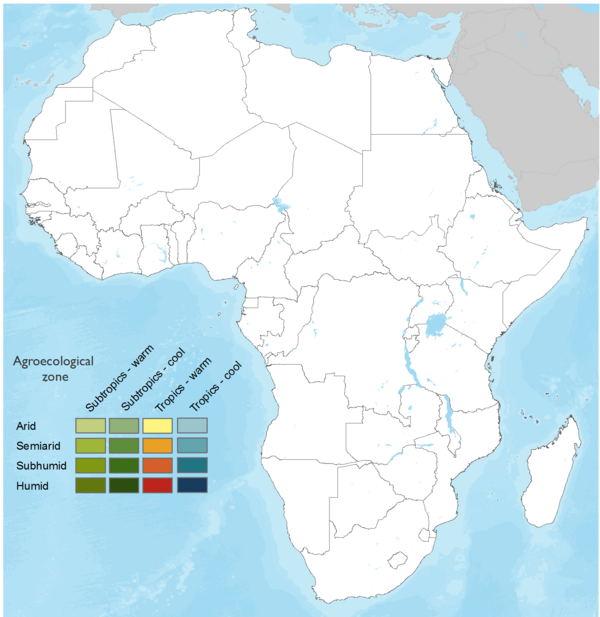
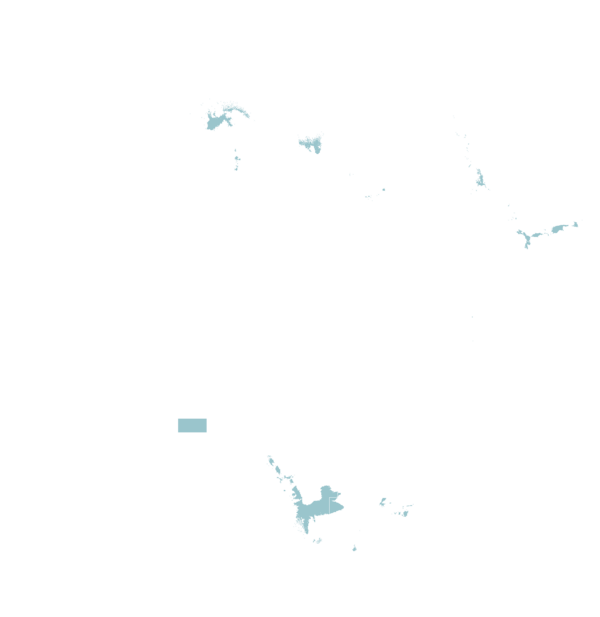
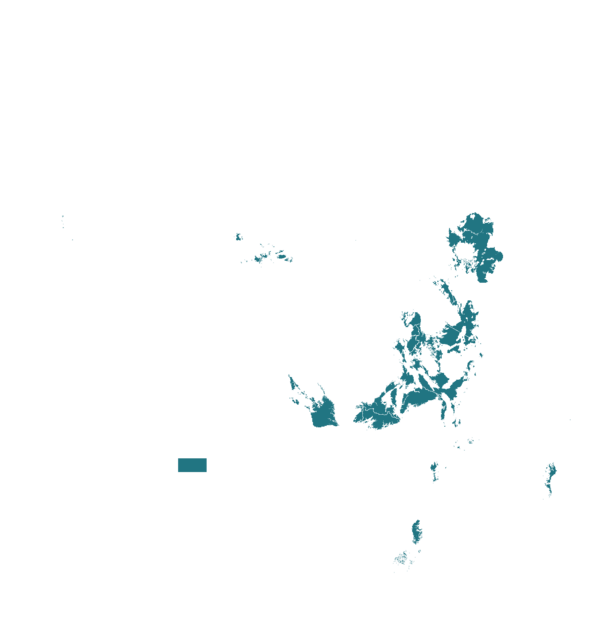
This technology can be used in the colored agro-ecological zones. Any zones shown in white are not suitable for this technology.






| AEZ | Subtropic - warm | Subtropic - cool | Tropic - warm | Tropic - cool |
|---|---|---|---|---|
| Arid | – | – | ||
| Semiarid | – | – | ||
| Subhumid | – | – | ||
| Humid | – | – |
Source: HarvestChoice/IFPRI 2009
The United Nations Sustainable Development Goals that are applicable to this technology.

By creating additional income opportunities through profitable, climate-smart chickpea production
By increasing domestic chickpea production, household food availability, and nutrition

By improving soil health and fertility through biological nitrogen fixation
To use the improved large-seeded winter Kabuli chickpea technology efficiently, farmers and operators should follow a structured, step-by-step agronomic and crop protection protocol tailored to their specific regional climate.
Step 1: Regional Variety Selection
To optimize performance, select and obtain certified seeds of the specific variety developed and tested for your country's environment.
Step 2: Optimized Planting & Sowing
Step 3: Nutrient Management & Soil Health
Improve crop establishment and overall productivity by utilizing both organic and inorganic soil inputs:
Step 4: Integrated Pest, Disease & Weed Management
Step 5: Harvesting & Safe Storage
Last updated on Sep 2, 2026
This technology can be used in the colored agro-ecological zones.










Kabuli chickpea: Improved Large-Seeded Varieties for Climate-Resilient Production
https://e-catalogs.taat-africa.org/gov/technologies/kabuli-chickpea-improved-large-seeded-varieties-for-climate-resilient-production
Last updated on 2 September 2026, printed on Sep 2, 2026
Enquiries e-catalogs@taat.africa